If you read nothing else
- Cloth from the Jalq'a communities north of Sucre, built on a dark ground and packed edge to edge with small woven figures in red, pink and white.
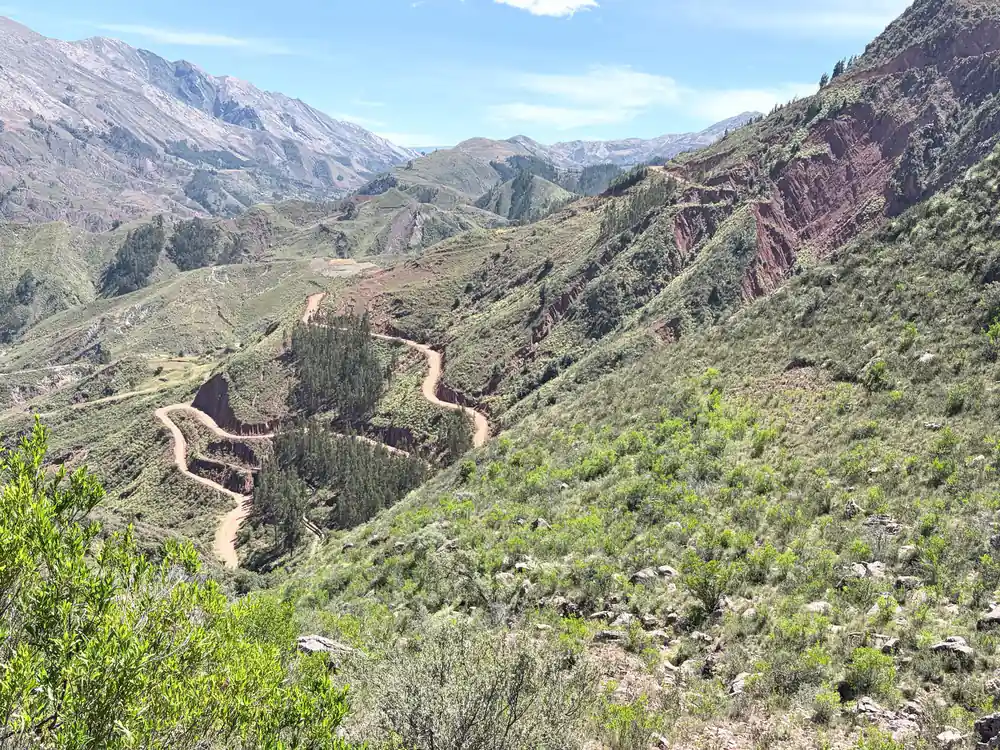
- The ridges and valleys around Chaunaca, Maragua and Potolo, the same ground the crater trek crosses as it drops down the Inca trail.
- A 10-hour guided trek from Chataquila down the Camino del Inca to Chaunaca and the crater, from US$95, with free cancellation up to 24 hours ahead.[1]
- Sucre has Jalq'a weaving classes that run 4 hours in a group limited to 4 participants, from US$22, which is an easy add-on to a crater day.[2]
- May to October is the ideal window for Sucre and the trekking regions of the Bolivian Andes, and the city keeps mild daytime temperatures all year.[3][4]
- Top choice Crater trek and Inca trail from US$95 Duration10 hours[1]Guide languagesSpanish, English[1]Rating4.76 from 100 reviews[1]Group sizeSmall group[6]CancellationCancel up to 24 hours in advance[1] Check availability
- Crater and cave paintings from US$106 Duration10 hours[5]Guide languagesEnglish, Spanish[5]Rating4.66 from 16 reviews[5]Group sizeLimited to 12 participants[5]CancellationCancel up to 24 hours in advance[5] See this tour
- Two days on the Inca trails from US$125 Duration2 days[6]Guide languagesEnglish, Spanish[6]Rating4.95 from 12 reviews[6]Group sizeLimited to 10 participants[6]CancellationCancel up to 24 hours in advance[6] See this tour
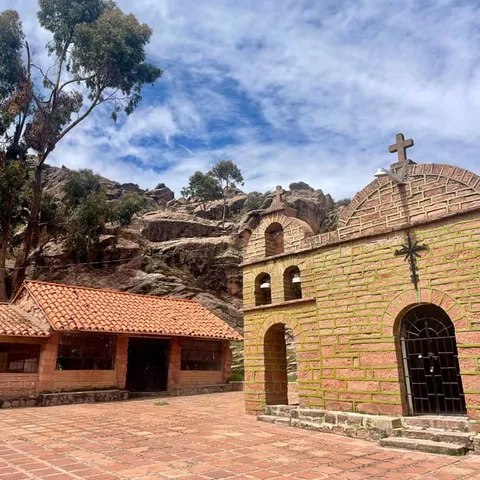
The museum is an integral part of the Indigenous Art Revival Program, initiated by ASUR in 1985. From its beginning, the program mainly aimed at reviving the traditional textiles and generate additional income for the indigenous communities of the Jalq’a and Tarabuco cultures.
Is the crater trek worth it for a weaving trip?
Ahead of the trip
Who the Jalqa are
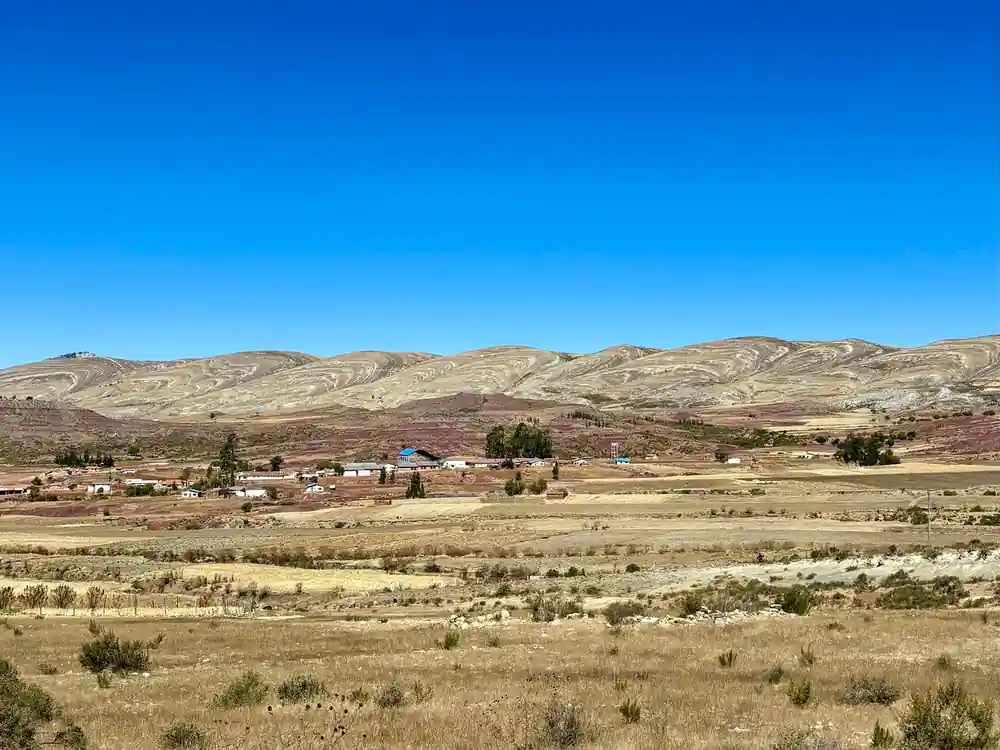
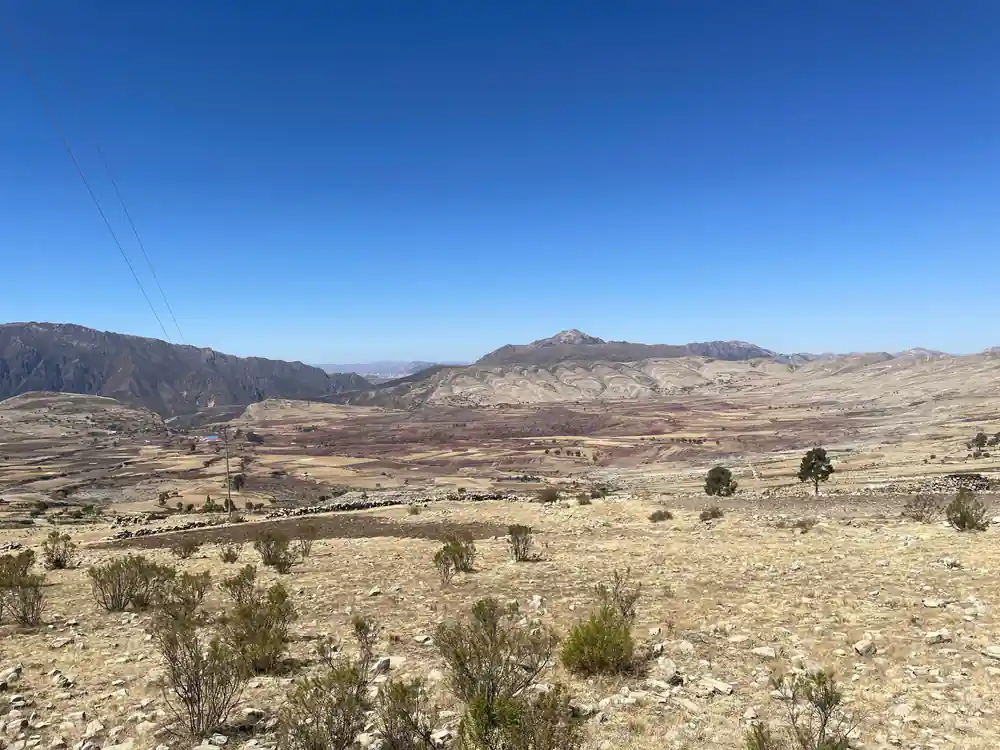
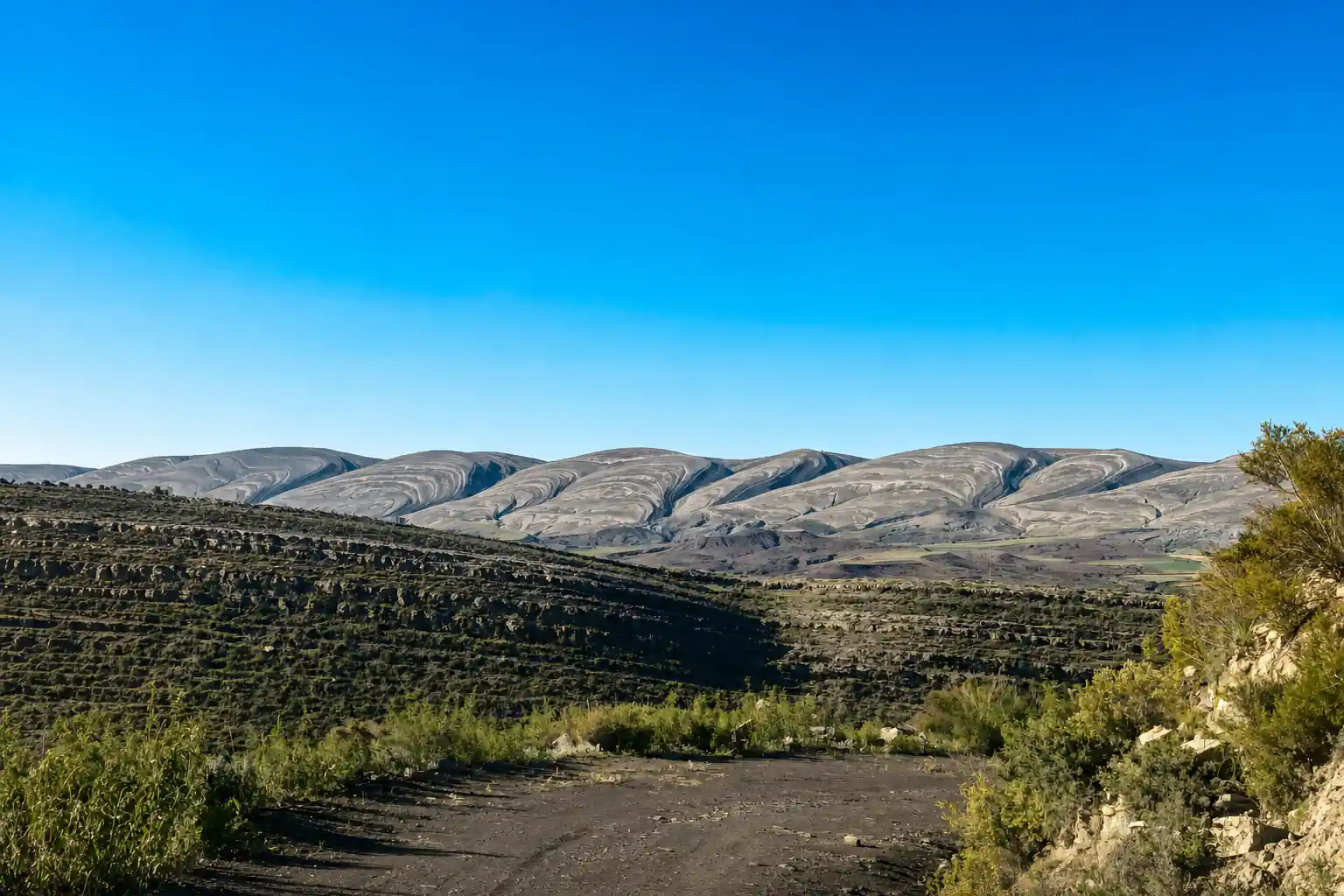
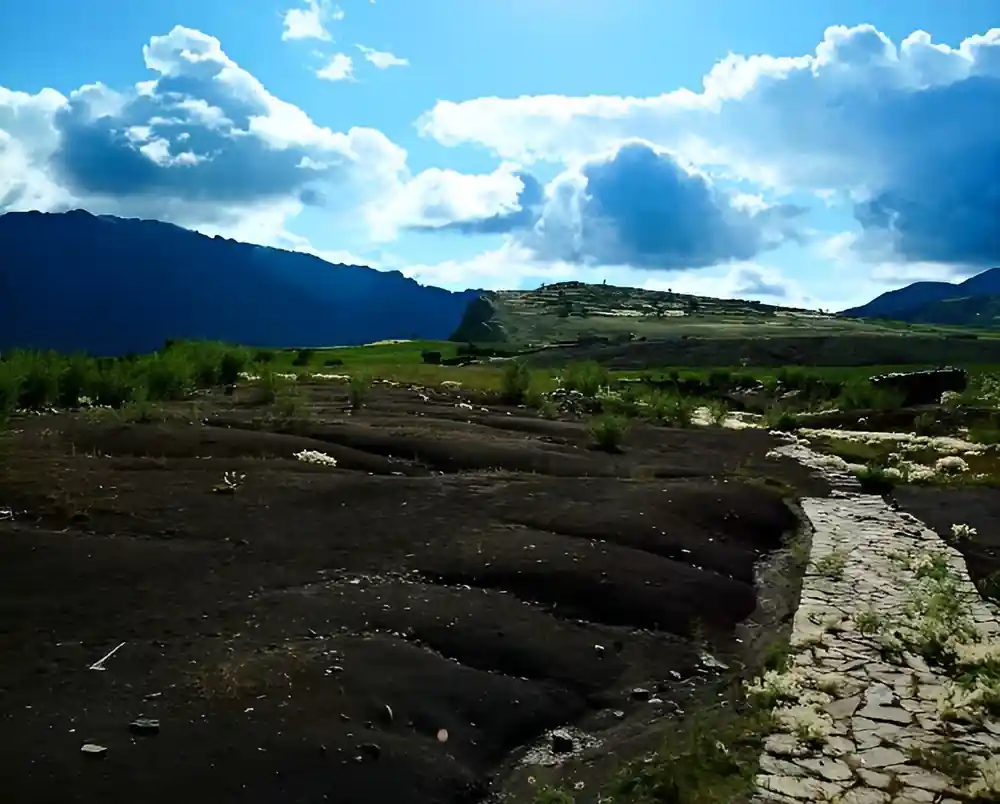
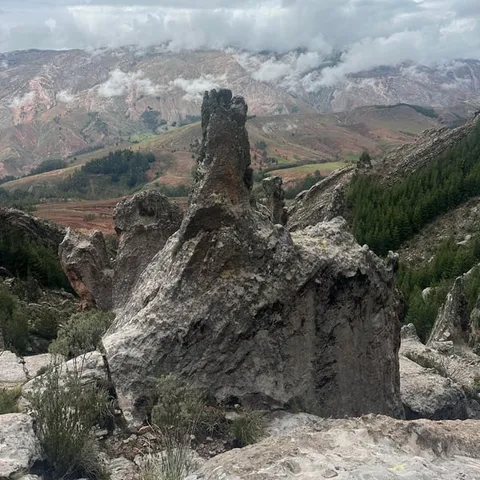
The Jalq'a are one of the indigenous peoples of Bolivia's southern highlands, and their heartland is the tangle of ridges and valleys north of Sucre, the country around Chaunaca, Maragua and Potolo. Most travellers cross it on the way to the Maragua Crater, a wide basin of ochre soil and green fields that looks volcanic but is not: it was formed by thousands of years of erosion rather than by an eruption.[9] Villages sit inside the basin and along the rim, and the roads and trails between them are the everyday routes of the people who live there, not a circuit built for visitors.
The Jalq'a name covers a group of communities rather than a single town. Families here farm potatoes, maize and broad beans on terraced slopes and keep sheep for wool, and weaving sits alongside that work as ordinary household labour rather than a performance for tourists. Cloth is made for family use, for festivals, for carrying children and for wrapping the dead. When you walk down from Chataquila towards Chaunaca you are crossing land that belongs to these communities, and the fields, dry-stone walls and footpaths you pass are part of a working landscape rather than a preserved one.
What makes Jalq'a weaving different
Jalq'a cloth usually starts from a dark ground, and onto that dark ground the weaver sets a crowded world of small figures in red, pink and white. The creatures are not decoration added at the end. Each one is woven in turn, often in long rows, and they run to the very edges of the piece until the surface looks closer to writing than to pattern when you see it up close. Nothing is symmetrical in the way a machine-made textile is, and that unevenness is deliberate. A single cloth can hold many separate figures, and no two of them are quite the same.
The vocabulary of shapes is deliberately mixed. You will find birds, llamas, insects, snakes and horned creatures that do not match anything you can point to in the field, and the effect is of a world underneath the landscape rather than a picture of it. Colour comes from the land where it can: cochineal for strong reds, plants and minerals for the rest, with mill-spun thread worked in when the market offers a shade the weaver wants. If you visit a workshop, ask before you photograph anyone's weaving, and ask before you handle a piece.
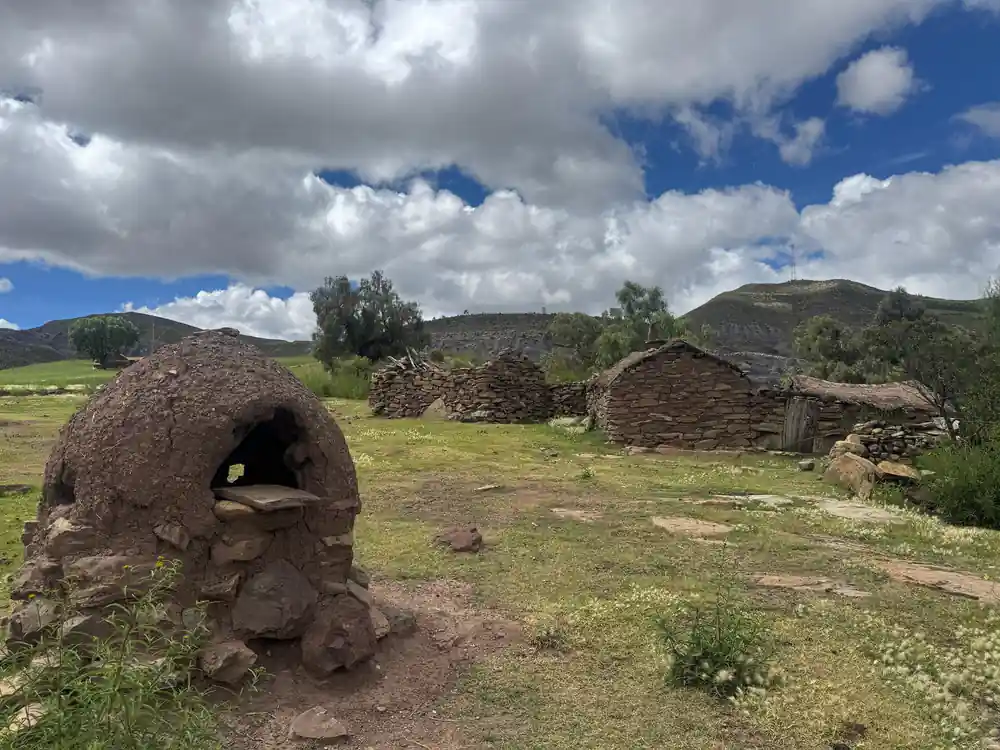
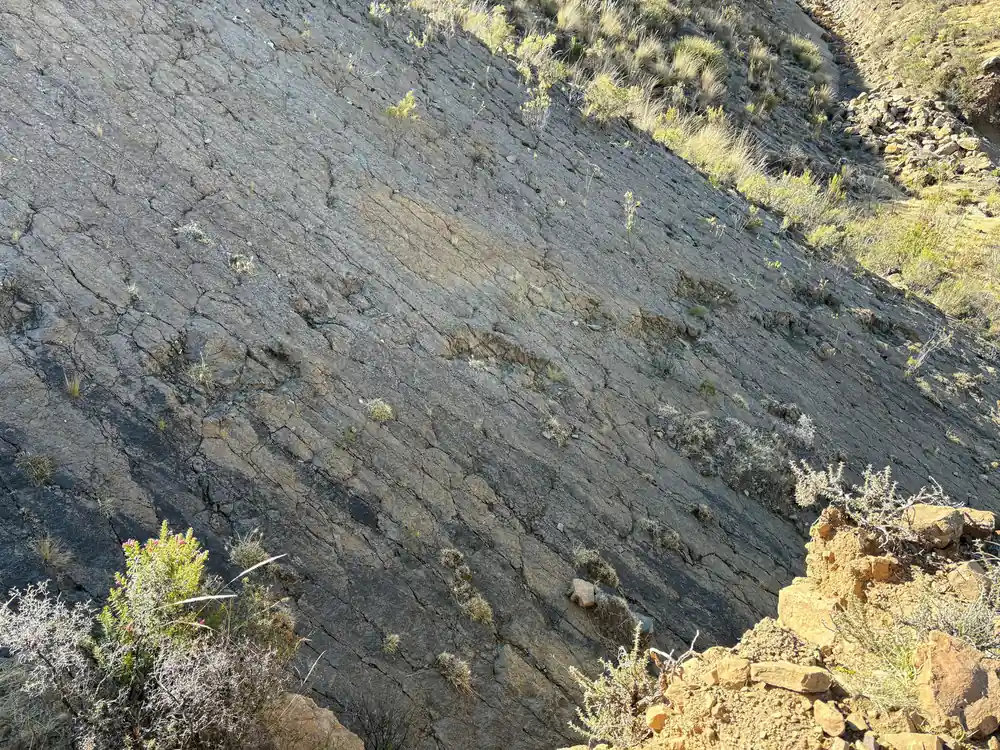
Terraced fields and dark rock fold into the Maragua basin.
Khurus, and the world underneath
Ask a weaver what the animals on a Jalq'a cloth are and you may hear the word khuru. Khurus are the small creatures of the underworld, a restless and teeming place that many Jalq'a textiles picture directly on the dark background. They are not monsters invented to frighten children. They belong to a world that shares the land with the living one, and cloth is one of the places where that world is spelled out. Many of the figures look half-formed, with too many legs or the wrong head, and that oddness is intentional.
Jalq'a work can look very different from the neat, symmetrical textiles sold in many Andean markets. The cloth is dense, uneven in rhythm and full of creatures that seem to be moving across it. You do not need to decode every figure to enjoy it, but a little context changes what you are looking at. Reading a piece is easier with someone who weaves beside you, or with a museum label that explains the figures. Once the idea has been explained, the designs stop looking random and start looking crowded on purpose.
How a piece is made
Most pieces are still woven on a backstrap loom, anchored to a post or a tree at one end and tensioned with the weaver's own body at the other. That makes the loom portable. Weaving happens in the gaps between other jobs: in a doorway, under a tree, in the shade at the edge of a field. A single cloth can take many sittings over a long stretch rather than one continuous effort, and a weaver often has more than one piece on the go. The loom itself is simple, and almost all of the skill sits in the hands and in the memory of the pattern.
Before the loom comes the wool. Fleece is cleaned, spun by hand, dyed and wound into balls, and only then is it ready to be set up. Where plant and insect dyes are used, colours shift with the season, the water and the pot, and a repeat of the same design will not match the original exactly. If you are buying, ask how a piece was dyed and whether it was woven by hand. Weavers are usually glad to explain, and the answer changes what you are paying for.
from US$95
A 10-hour day from Sucre down the Inca trail to Chaunaca and on to the Maragua Crater, with a live guide in Spanish and English.[1]
A tradition that nearly went
Over time the market for handwoven cloth shrank, fewer young people learned the full repertoire of patterns, and a great deal of local knowledge about dyeing and design came close to disappearing with the generation that held it. In 1985 ASUR began its Indigenous Art Revival Program, with the aim of reviving traditional textiles and generating additional income for the Jalq'a and Tarabuco communities.[10] The program has continued since, and the cloth you see for sale in Sucre today sits at the end of that long effort.
The museum in Sucre is an integral part of that program.[10] It is a sensible first stop before you buy anything, and it gives the cloth the labelling and context that a market stall never will. Bear in mind when you look at a price tag that a handwoven piece takes a long time to make, and that it will not be the cheapest thing on the table. Ask who made a piece and where they live, because the answer usually tells you whether the money is going where you hope.
Meeting weavers on the crater trek
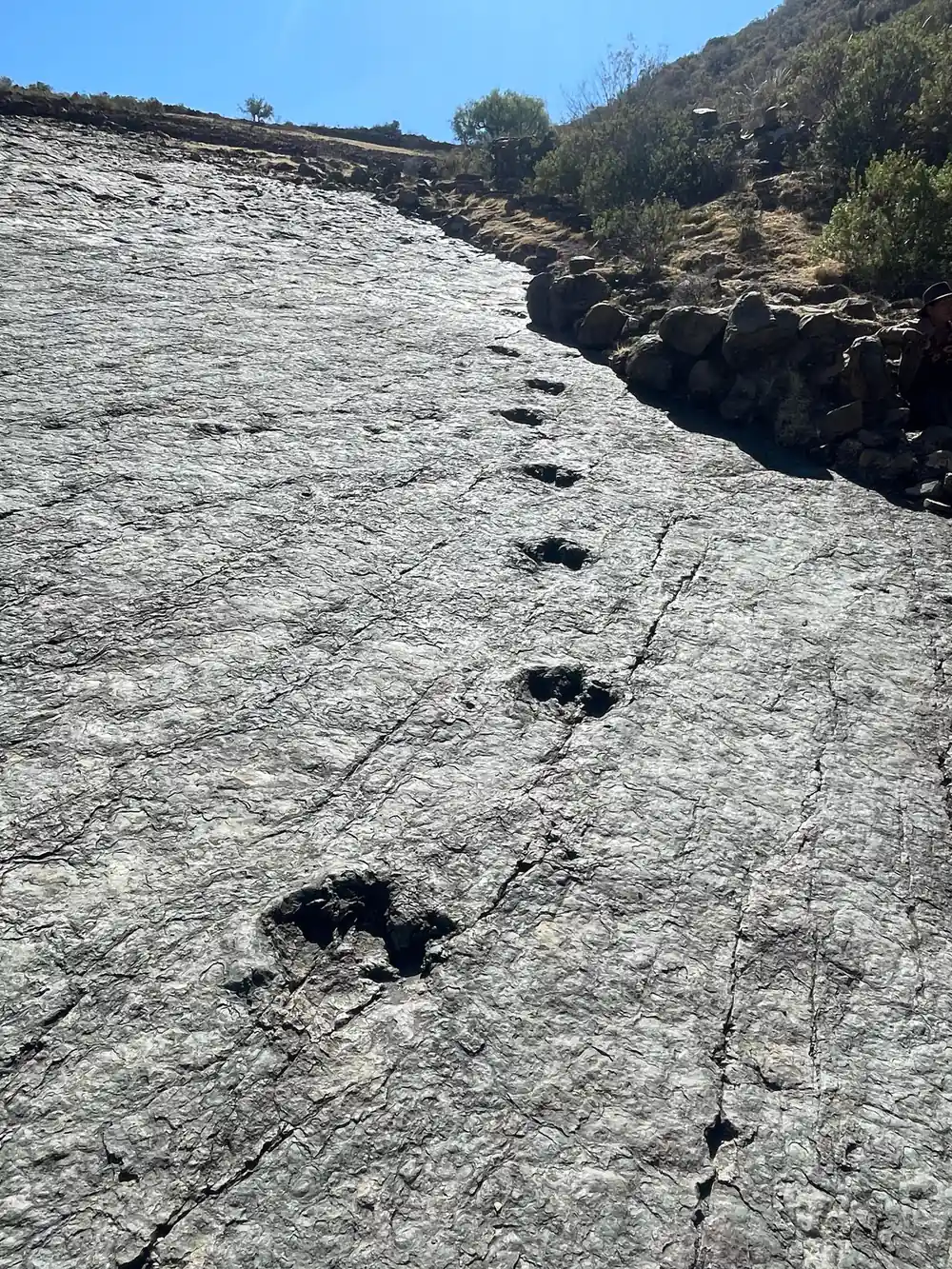
The day trek into the crater starts at Chataquila and follows a pre-Hispanic camino, the Inca trail of Chataquila, downhill for 6km as far as Chaunaca before carrying on towards the crater.[8] It is a trek rather than a workshop, and the listed stops are the pickup point, Chataquila, the Camino del Inca, Chaunaca and the Maragua Crater itself.[1] The tour lasts 10 hours with a live guide in Spanish and English and costs from US$95, and pickup is included; check availability for details.[1]
If you want to sit at a loom yourself, the Jalq'a Weaving Classes in Sucre last 4 hours, are limited to 4 participants and cost from US$22.[2] Pairing a crater day with a class gives you both halves of the subject: the landscape the patterns come from, and the technique in your own hands. Sucre sits at around 2,810 metres.[4] Build in time to adjust before you commit to a full day in the hills.
Where else to see the textiles
Sucre is a good place to study Jalq'a work properly. The city's indigenous art museum is an integral part of the Indigenous Art Revival Program that ASUR began in 1985, and it shows cloth with the context and labelling that a market stall never will.[10] A day spent exploring the historic area of the city includes the Museo ASUR among its stops, which lets you fold a visit into a general day of sightseeing.[11]
In the markets, learn to tell handwoven cloth from machine cloth. Look at the selvedges, feel the weight of the wool and check whether the figures on a piece vary from row to row; on a printed imitation they repeat with mechanical regularity. Handle several pieces before you decide, and ask who made each one. Buying from a named weaver or a cooperative keeps the money closer to the villages you walked through, and it is a straightforward way to put something back into the craft.
From-prices for Maragua crater trips
From-prices for a crater day or a weaving class
From-prices in US dollars for these listings:[1][2][5][12]
When to plan your crater day
Plan your Jalqa day trip
Choose your trek
The one-day crater trek lasts 10 hours and costs from US$95, with a live guide in Spanish and English.[1]
Settle into Sucre
Sucre sits at around 2,810 metres.[4] Time in the city before a full day out makes the walking easier.
Ride to Chataquila
The transfer from Sucre to the Chataquila trailhead takes about 1.5 hours, then the walking starts.[8]
Walk the Inca trail
From Chataquila the pre-Hispanic camino runs downhill for 6km to Chaunaca.[8]
Carry on to Maragua
Maragua, the village on the trek itinerary below the crater rim, is listed at 3,100 metres.[7]
Add a weaving class
Jalq'a Weaving Classes in Sucre run 4 hours for up to 4 participants, from US$22.[2]
Walk the Inca trail into the crater, then learn the weave in Sucre
from US$95Reserve now & pay later