If you read nothing else
- The tracks sit at Niñu Mayu, on the walk down from Maragua village, where around 100 dinosaur footprints can be found.[1]
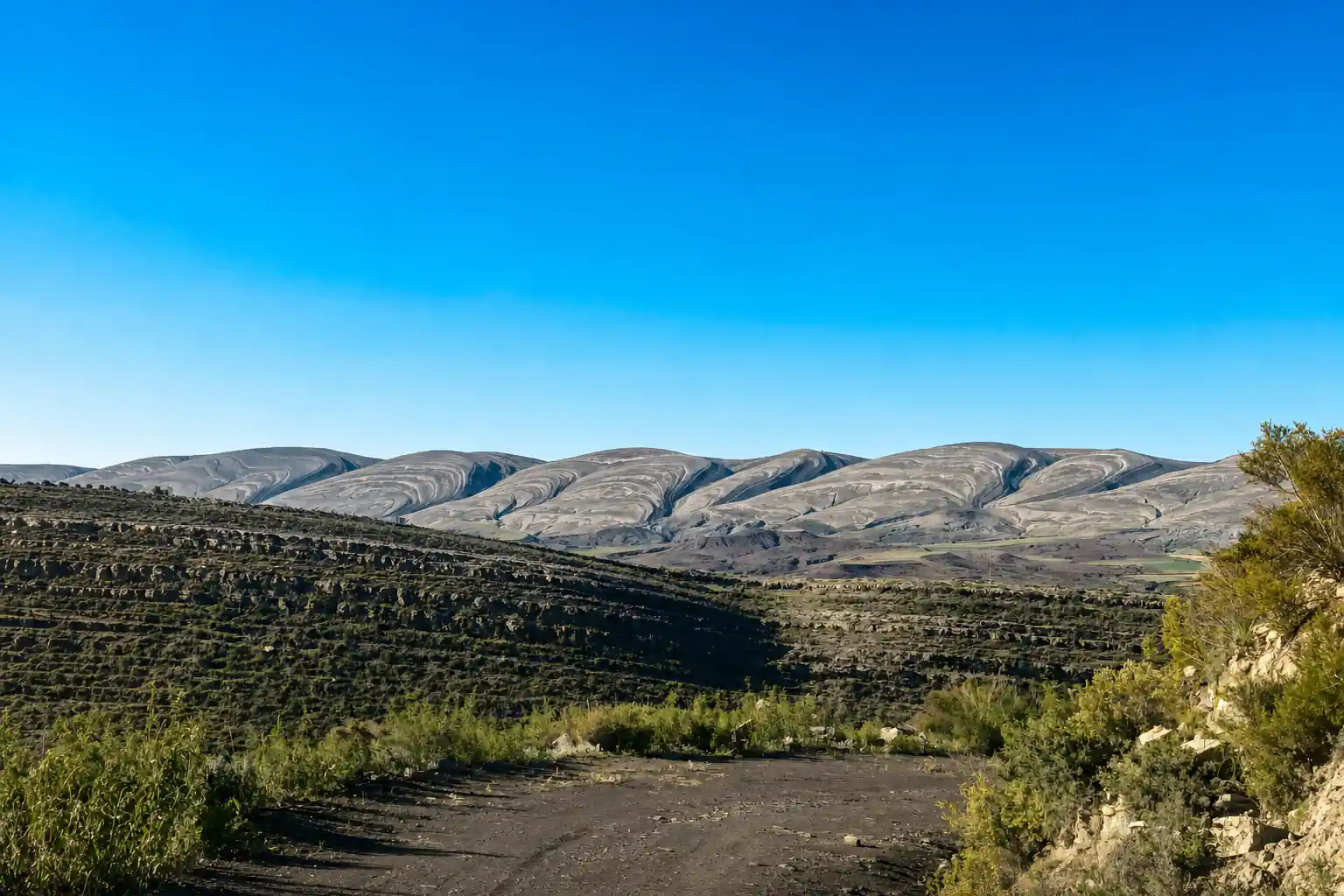
- Maragua Crater is not volcanic and was formed by thousands of years of erosion.[2] The prints sit on rock layers that are tilted and open to the sky.
- The trek runs 10 hours with pickup included, starts from US$95 and has free cancellation up to 24 hours ahead.[3]
- From Chataquila the route follows a pre-Hispanic camino downhill for 6 km, and Maragua village sits at 3,100 metres.[1][4]
- May to October is ideal for Sucre and the high-altitude trekking regions of the Bolivian Andes.[5] Sucre's daytime highs stay between 20°C and 23°C all year.[6]
- Top choice 1-Day Maragua Trek from US$95 Duration10 hours[3]Rating4.76 from 100 reviews[3]Guide languagesSpanish, English[3]CancellationFree up to 24 hours ahead[3] Check availability
- 2-Day Inca Trails Trek from US$125 Duration2 days[7]Rating4.95 from 12 reviews[7]Guide languagesEnglish, Spanish[7]CancellationFree up to 24 hours ahead[7] See this tour
- Sunrise and Cave Art from US$106 Duration10 hours[8]Rating4.66 from 16 reviews[8]Guide languagesEnglish, Spanish[8]CancellationFree up to 24 hours ahead[8] See this tour
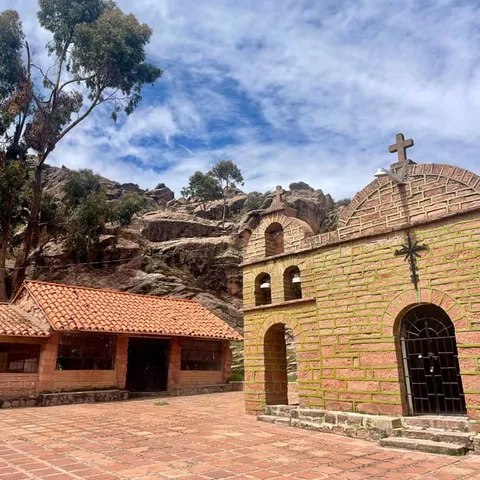
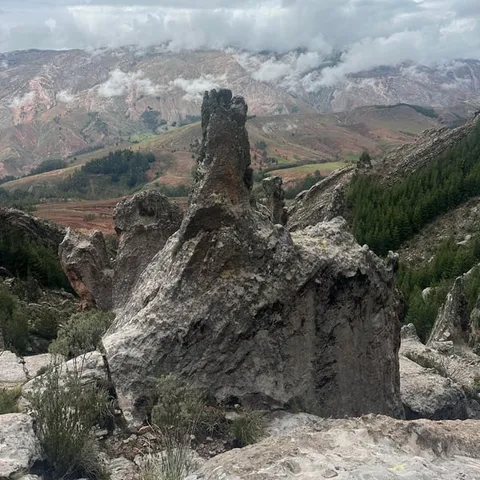
The museum is an integral part of the Indigenous Art Revival Program, initiated by ASUR in 1985. From its beginning, the program mainly aimed at reviving the traditional textiles and generate additional income for the indigenous communities of the Jalq’a and Tarabuco cultures.
Worth the walk to Niñu Mayu
Ahead of the trip
- Sucre's daytime highs stay between 20°C and 23°C all year, so pack for warm sun.[6]
- Maragua village sits at 3,100 metres, so give yourself a day to adjust first.[4]
- The ride from Sucre to the Chataquila trailhead takes about 1.5 hours.[1]
- Travel insurance that covers trekking is worth having for a day on rough ground.
On the day
- The trek is booked as a 10-hour day with pickup included.[3]
- Live tour guide in Spanish and English on the trek booked from this site.[3]
- The route runs by jeep to Chataquila, then on foot to Chaunaca and the crater.[3]
- Take water, a hat and a soft brush for clearing grit around prints before you shoot.
What a dinosaur footprint has to survive
A footprint is a hole, and that is the whole problem with it. Soft mud or sand takes the shape of a foot, and unless something fills that shape and hardens before the next flood, the next dry season or the next herd tramples it flat, the record is lost. The tracks at Niñu Mayu survived because sediment covered them and later turned to rock, and because that rock was lifted and tilted rather than ground away by weather.
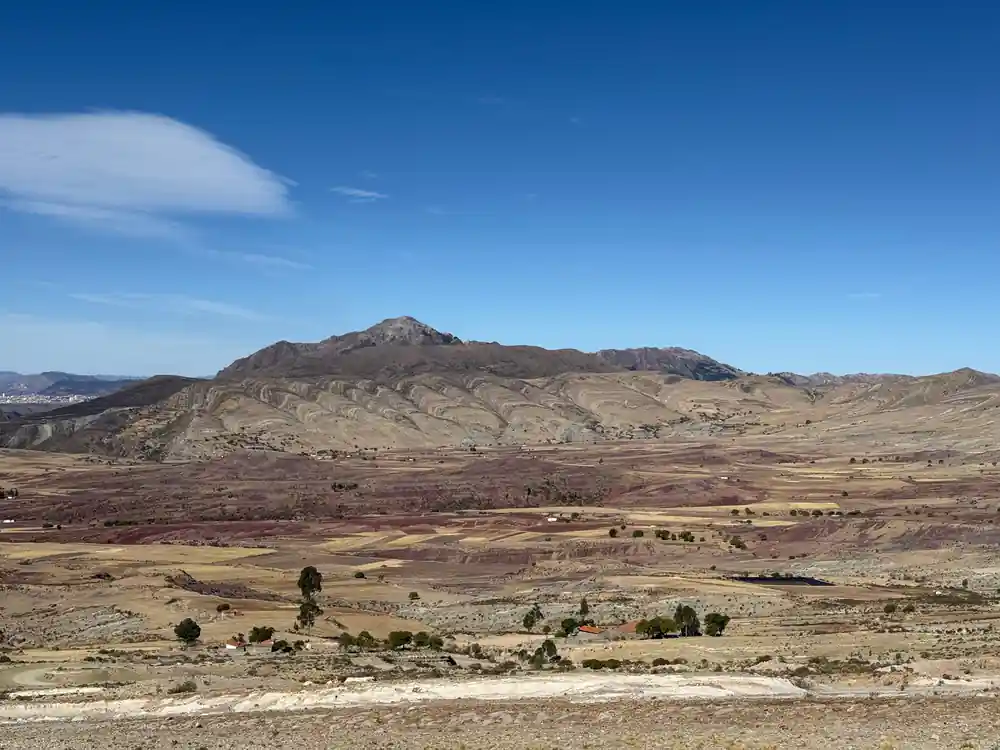
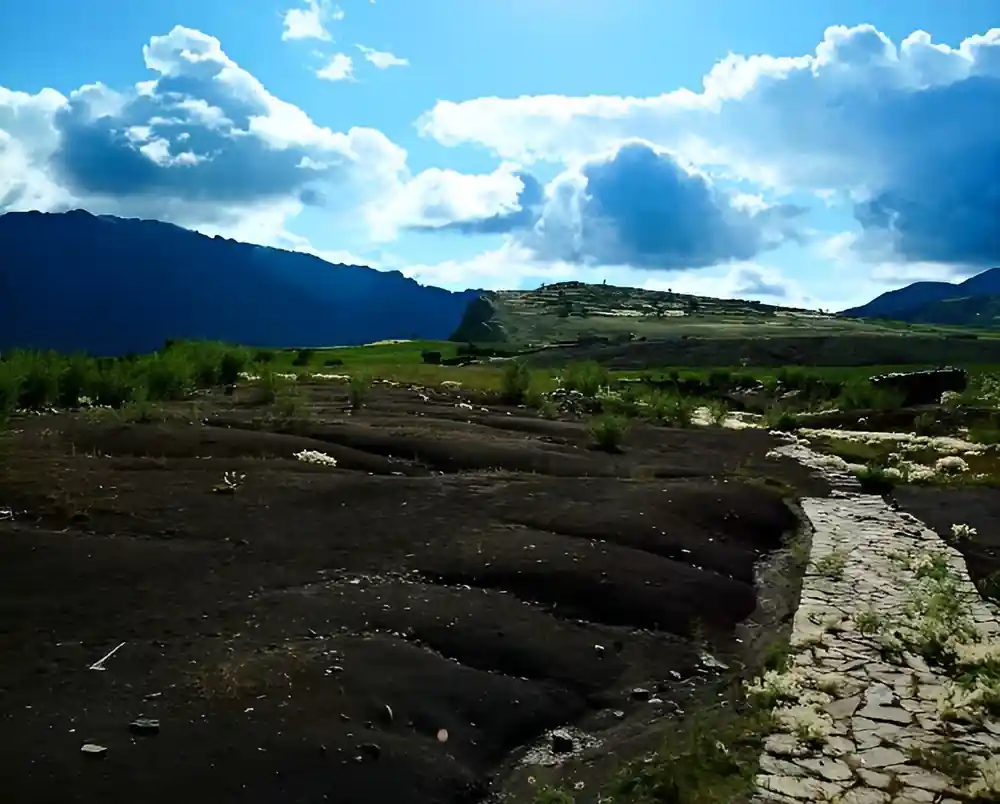
The Maragua basin cooperates. The crater is not volcanic and was formed by thousands of years of erosion.[2] Erosion is normally the enemy of tracks, but in a landscape carved by water and weather, the same processes that hollowed out the bowl also strip the cover off old layers, putting surfaces back into daylight that had not seen it for a very long time. The ground here reads like a stack of old pages, and the prints are one page that happens to be open.
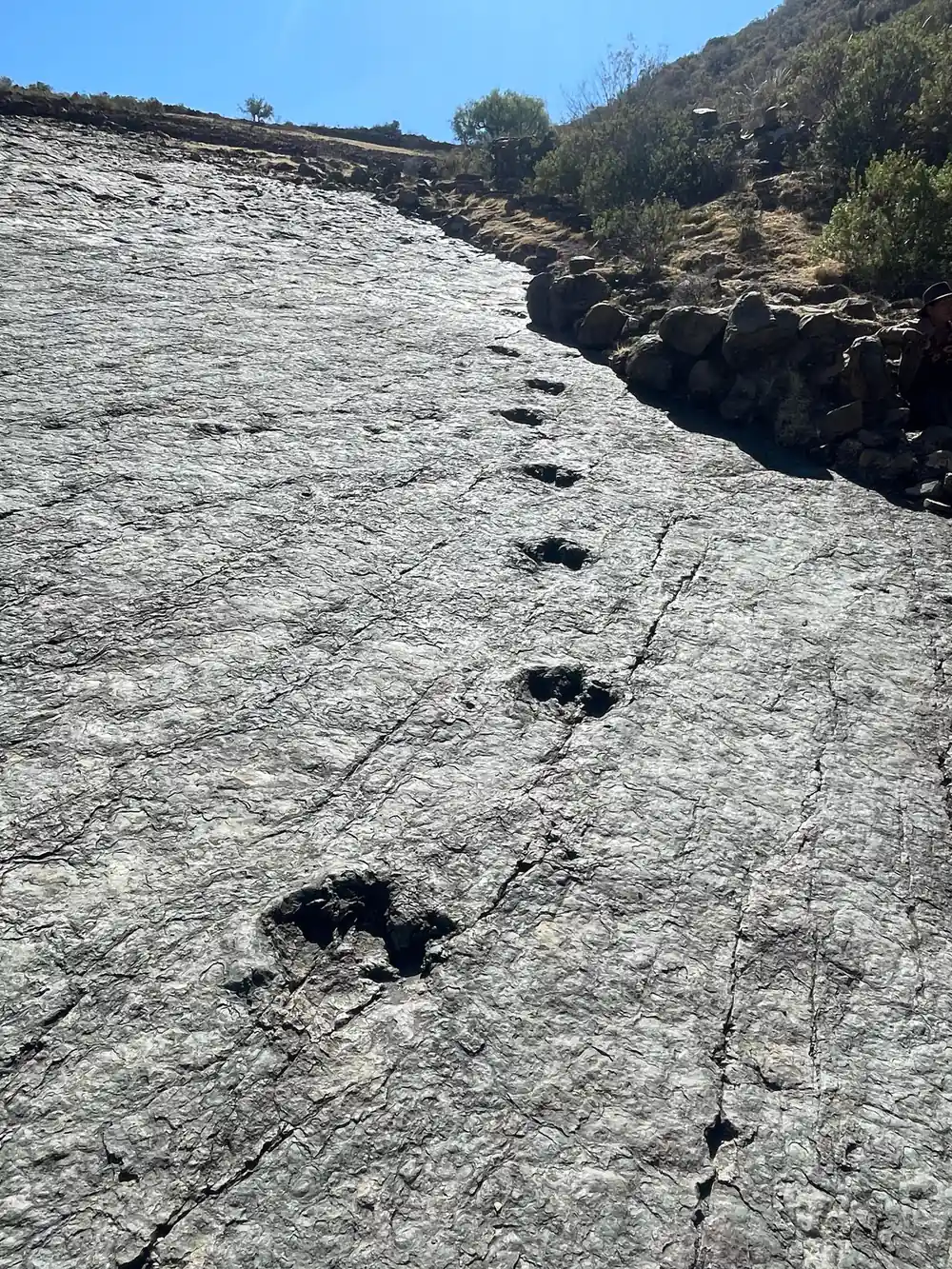
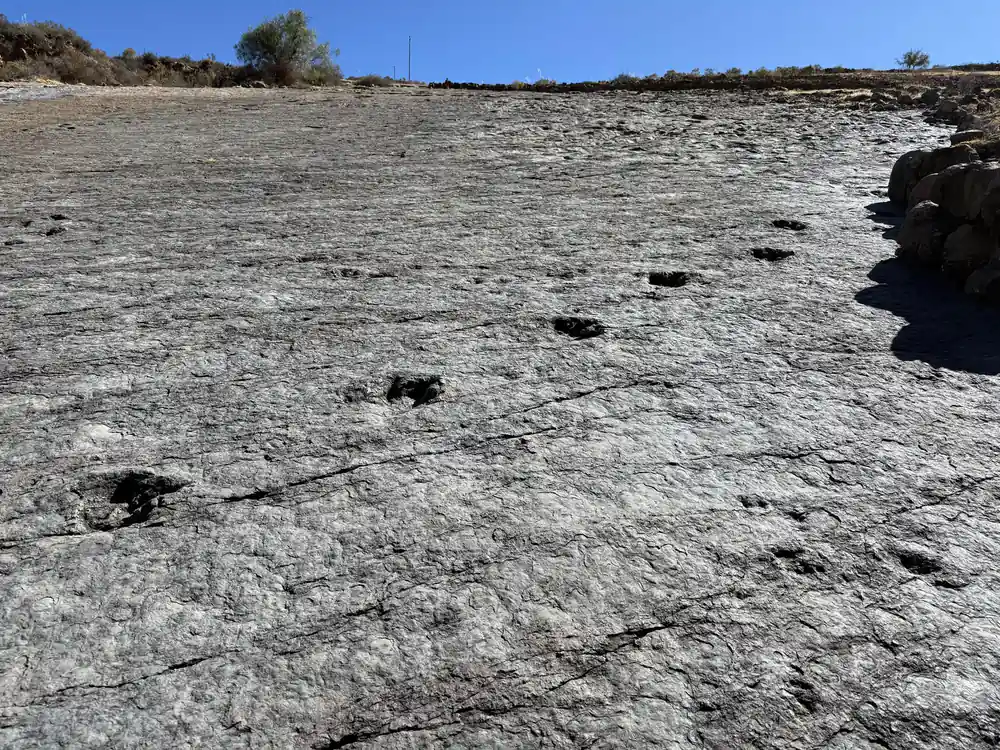
Around 100 dinosaur footprints can be found at Niñu Mayu, on the walk that continues down from Maragua village.[1] They are not laid out in a museum case, so expect to look for them. Low, slanting light does most of the work: the shadow inside each print is what makes the shape appear, and at midday the same rock can look like nothing much at all.
Why the tracks run up the tilted rock
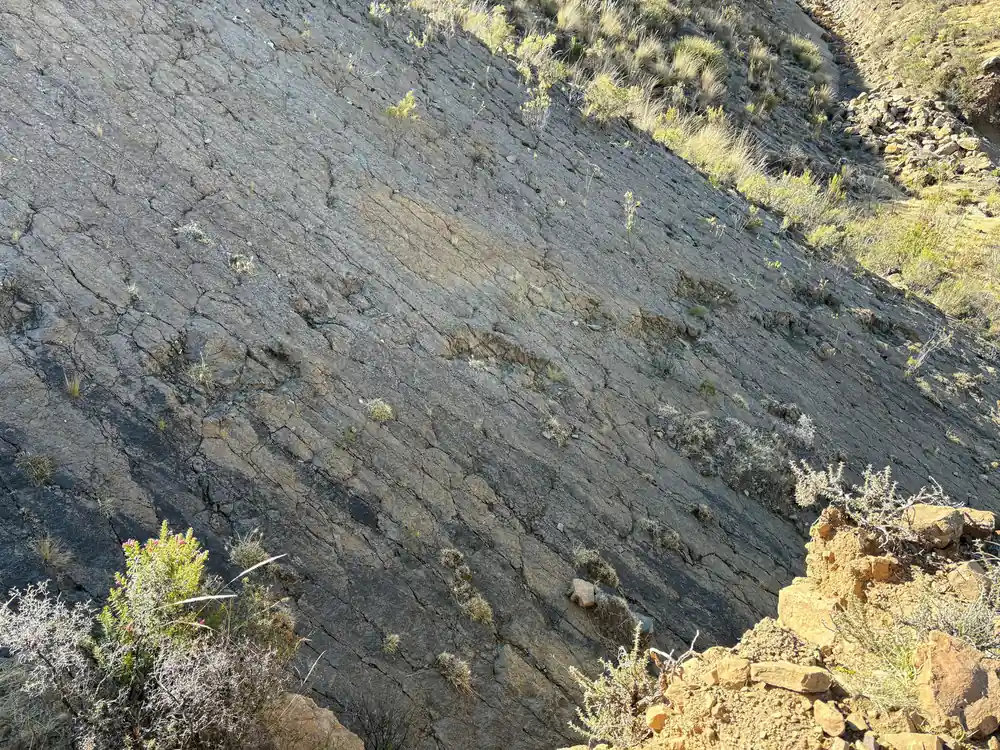
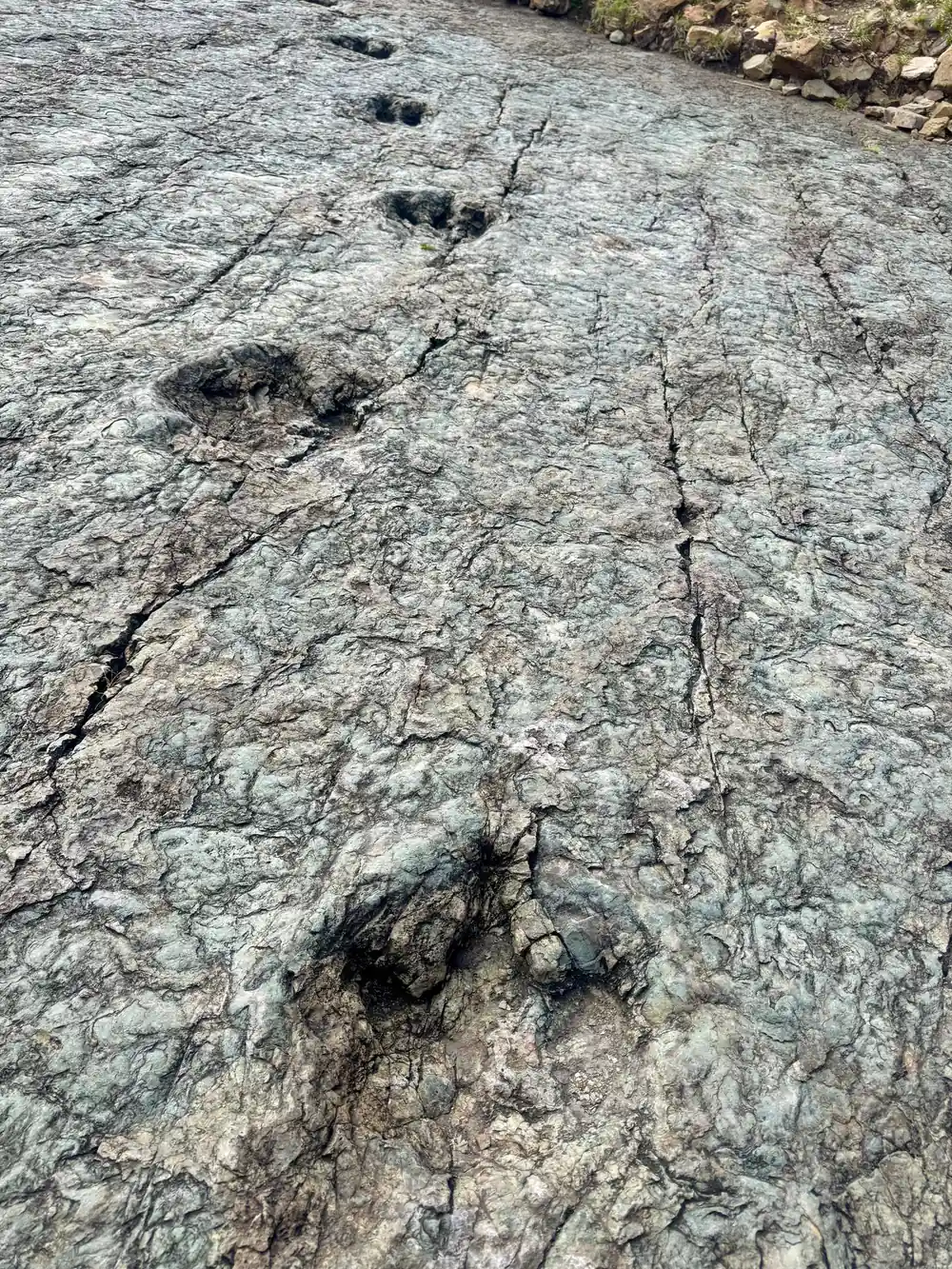
The prints are not on a flat floor, the way most people picture a trackway. They sit on bedding surfaces that have been tilted, so a line of steps that was once a stroll across a mudflat now climbs a slab at an angle. Walk alongside the surface and look along it rather than down at it, and the sequence resolves into feet, stride and direction. Children often get this faster than adults, because they crouch to the level of the rock without being told.
This is where a guide earns their fee. From the wrong angle a footprint looks like a pockmark, a patch of spalling, or a shadow. From the right angle, with the sun raking across the rock, you get toes, the push off the back of the foot, sometimes a whole row of them and the smear of a tail between.
Take your time at the layer and resist the urge to clear it with anything hard. A soft brush or your hand will lift loose grit, and if you move grit to take a photograph, put it back. The rock is often soft and flakes at the edges, so standing on one print to get a better view of another damages both.
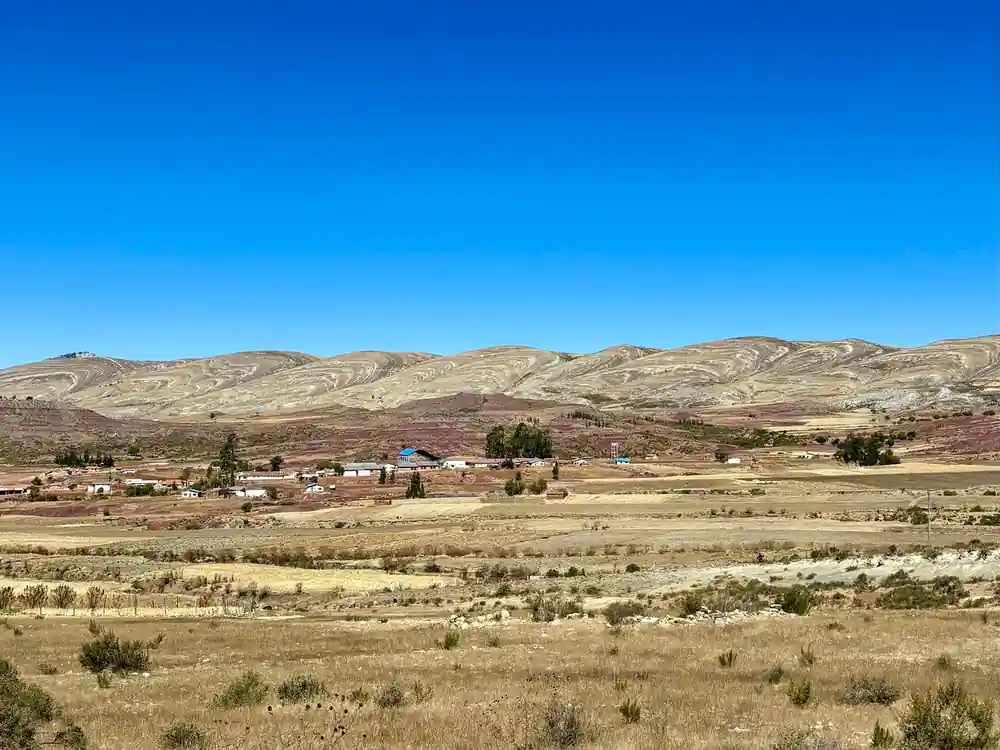
Tilted rock beds run across the wide floor of the Maragua basin.
What made the Maragua tracks
What you are looking at here are trace fossils, records of behaviour rather than of bone. No skeleton was dug out of these surfaces. Each print is a moment: a dinosaur putting weight onto soft ground, the sediment taking the shape, and then a long quiet stretch of burial while the world above changed completely.
Because the ground was soft, the detail can be startling. Toe impressions, the slight slide of a foot pushing off, sometimes a line of prints where an animal turned. Around them the rock shows ripples and cracks of the kind you see on a modern tidal flat, a reminder that this high, dry, sunburned country was once low and wet.
You do not need to know which dinosaur made them in order to enjoy them, and nobody can hand you a name you should trust from a single track. What helps is patience, a guide who has walked the layer many times, and an eye for the difference between a real print and a hole that merely looks like one.
Niñu Mayu and Cal Orcko compared
Sucre's better known track site is Cal Orcko, the wall of footprints at the cement works outside the city. It is a cliff face, usually viewed from a distance, and its scale is the point. Niñu Mayu is the opposite experience: prints at your feet, in the open air, in a valley you have walked into rather than a quarry you have been driven to.
Which you prefer probably depends on whether you like your geology at arm's length or under your nose. Cal Orcko fits neatly into a short visit from the city. Niñu Mayu sits on a long, hot walk in the Maragua basin, and the tracks are only one part of that day.
If you have time for both, do both. They were made in different settings and preserved in different ways, and seeing one makes the other easier to read when you get there. The drive out to Cal Orcko is short enough to combine with a city day, while Niñu Mayu is a full day in the hills, so the two slot into a trip in quite different ways.
from US$95
The 10-hour Maragua crater trek from Sucre, with pickup included, starts from US$95 and is booked from this site.[3]
What a day at the crater actually gives you
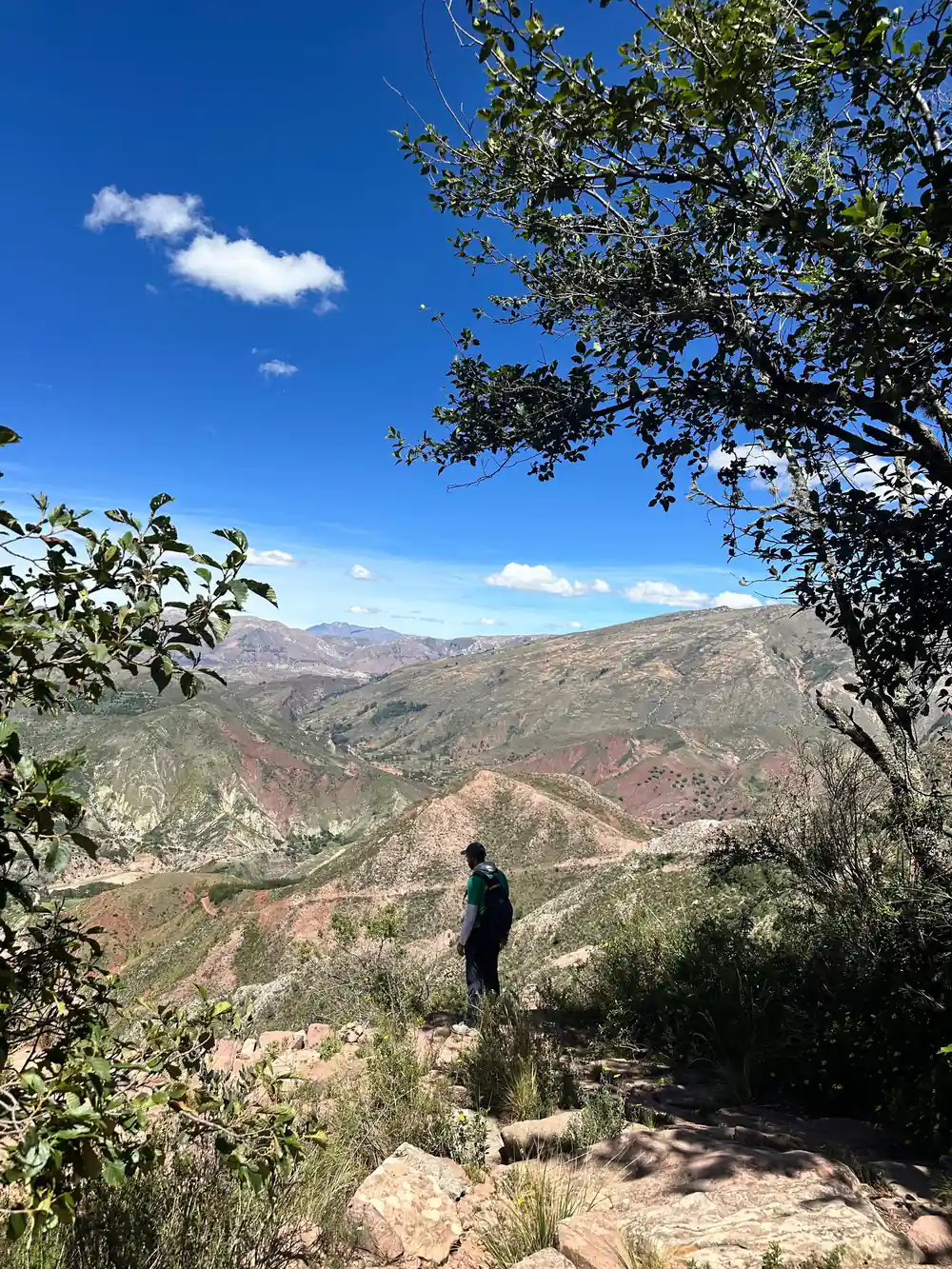
The Maragua crater trek booked from this site is a 10-hour day with pickup included.[3] It runs by jeep or SUV to Chataquila, continues on foot down the Camino del Inca to Chaunaca, then drives on to the Maragua Crater. The ride from Sucre to the Chataquila trailhead, where the walking starts, takes about 1.5 hours.[1]
That first stretch is a pre-Hispanic camino, also known as the Inca trail of Chataquila, and the hike follows it downhill for 6 km.[1] Downhill sounds gentle. On old stone, in strong sun, with a pack, it is a real walk, and by the bottom you will be glad the vehicle is waiting.
Maragua sits at 3,100 metres above sea level.[4] Sucre, where you start, is at around 2,810 metres.[6] Not far from the village is a set of waterfalls known as La Garganta del Diablo, the Devil's Throat.[2] The difference in height between town and trailhead is modest, but the sun and the walking are what usually catch people out.
Looking after the footprints
These tracks are not behind glass, and there is no barrier around most of them. That openness is also what makes the site fragile. Boots, tyres, a borrowed hammer, a wet hand on a soft surface: all of it leaves a mark, and a mark on a footprint is permanent. Signs ask the same thing, but the walking line is obvious once you look at where the ground has been worn.
Stay on the paths and on the bare rock where your guide walks. Do not step on one print to see another. Do not take casts, and do not chip at an edge to make a shape clearer. If you are unsure whether a surface is a track layer, treat it as though it is. If every visitor took one small flake home, there would soon be nothing left to show anyone.
Heritage here has long been tied to income for the people who live around it. ASUR initiated its Indigenous Art Revival Program in 1985 to revive traditional textiles and generate additional income for the indigenous Jalq'a and Tarabuco communities.[9] Buying from village weavers, hiring local guides and eating in Maragua keeps the money from the walk in the villages along the route.
Photographing the tracks
Low sun is everything. Early and late in the day, the shadow inside each print does the work and a whole trackway stands out from the rock. Flat midday light turns the same surface into an even, grainy texture, and you will wonder what you were looking at earlier. Shoot along the line of the tracks rather than straight down at a single print.
Take two frames: a wide one that shows the slab and the valley around it, and a closer one with the camera down at rock level so the prints are seen edge on. That low angle is what makes them read as steps rather than dimples. If your camera has a level, use it, because a slightly tilted horizon makes a tilted rock surface look even stranger than it is.
Dust blows around all day, so carry a cloth and change lenses as little as you can. Keep your own shadow out of the frame when the light is low, and never stand on the track layer to get a shot. The pictures worth keeping from here are the ones where you can see the whole line of prints climbing away up the rock and disappearing over the edge.
How this Maragua crater trek scores
Rating breakdown for the tour booked from this site, Sucre: 1-Day Trek in the Crater of Maragua and Inca Trails.[3]
Maragua crater tours: from-prices
Adult from-prices in US dollars from GetYourGuide listings[3][7][8][10]. Child rates are not stated in those listings.
When to book the Maragua walk
Planning the Maragua walk
Settle in Sucre first
Sucre sits at around 2,810 metres above sea level, so spend a day in town before a long day out.[6]
Pick your season
May to October is ideal for Sucre and the high-altitude trekking regions of the Bolivian Andes.[5]
Book the trek
The trek booked from this site runs 10 hours with pickup included.[3]
Pack for sun
Sucre's daytime highs sit between 20°C and 23°C all year, so bring sun protection and shoes with grip.[6]
Follow the old path
From Chataquila the route follows a pre-Hispanic camino downhill for 6 km before the crater.[1]
Reach the footprints
Around 100 dinosaur footprints can be found at Niñu Mayu, on the walk down from Maragua village.[1]
Book the Maragua crater trek from Sucre
from US$95Reserve now & pay later