If you read nothing else
- Sucre's historic centre is compact and busy, with the main sights a short walk from the central square. Take the usual city precautions and enjoy it on foot.
- Sucre holds the title of Bolivia's constitutional capital while the national government sits in La Paz. Ask a guide about it over coffee.
- The day trek from this site runs 10 hours with pickup included, a live guide in Spanish and English, and free cancellation up to 24 hours in advance.[1]
- Sucre sits at around 2,810 metres above sea level, with daytime highs between 20°C and 23°C year-round. Pack layers rather than one heavy coat.[2]
- May to October is the ideal window for Bolivia's high-altitude cities and trekking regions, with clear skies and mild conditions.[3]
- Top choice 1-Day Maragua Trek from US$95 Duration10 hours[1]Rating4.76 from 100 reviews[1]Guide languagesSpanish, English[1]Free cancellationUp to 24 hours in advance[1] Check availability
- 2-Day Inca Trails Trek from US$125 Duration2 days[4]Rating4.95 from 12 reviews[4]Guide languagesEnglish, Spanish[4]Free cancellationUp to 24 hours in advance[4] See this tour
- Sunrise Crater & Cave Art from US$106 Duration10 hours[5]Rating4.66 from 16 reviews[5]Guide languagesEnglish, Spanish[5]Free cancellationUp to 24 hours in advance[5] See this tour
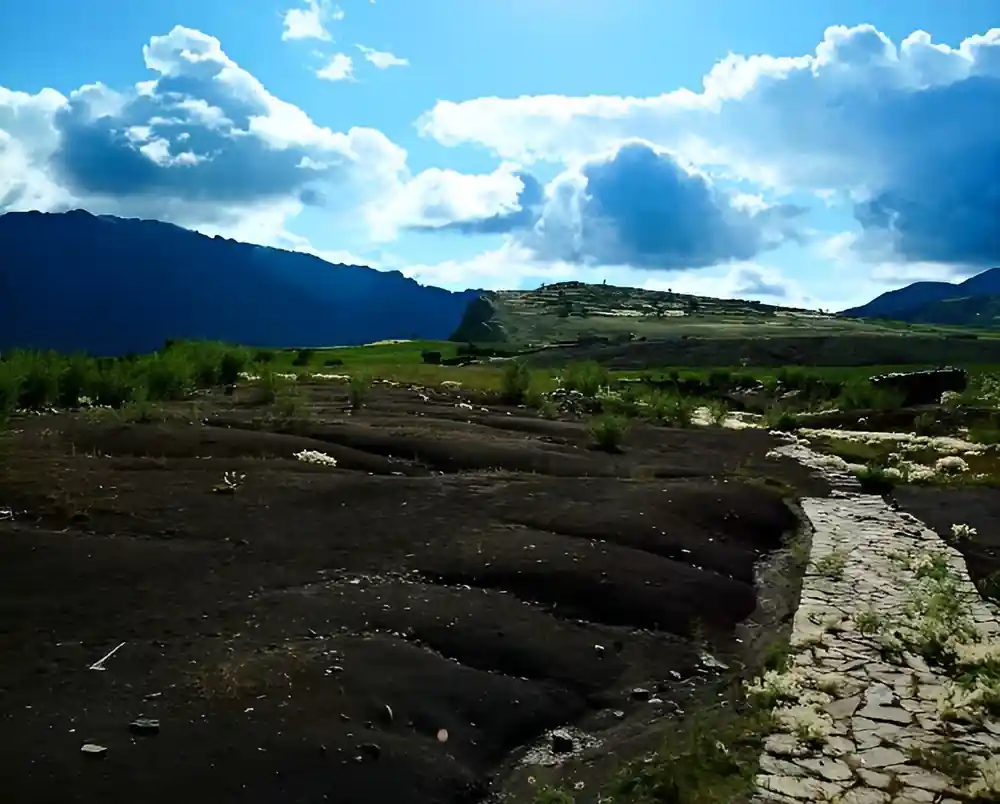
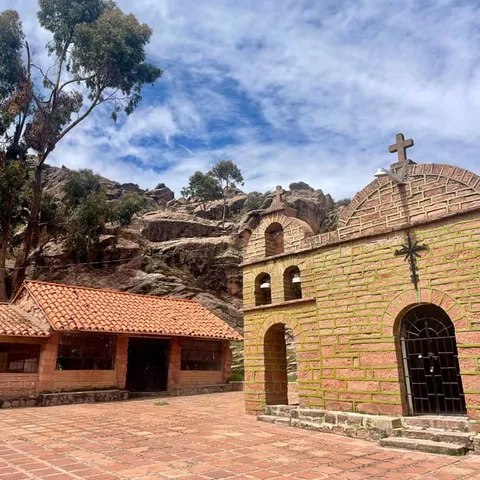
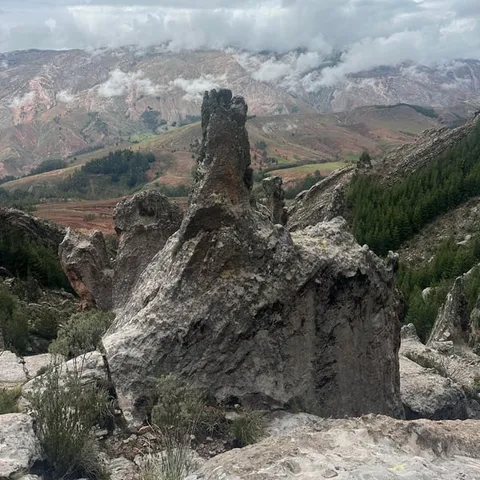
Sucre sits at around 2,810 metres above sea level in Bolivia 's southern highlands, and that altitude is the single most important fact about its weather.
Is Sucre the right base for the Maragua crater?
Planning and packing
- Book the crater day ahead and confirm your pickup details the evening before
- Bring sunscreen, sunglasses and a hat for the open sections of the trail
- Pack layers rather than one heavy coat, plus a light rain shell
- Carry small notes for markets, villages and drinks along the way
Is Sucre safe for travellers?
Sucre has a reputation among travellers as one of the easier Bolivian cities to walk around after dark. The historic centre is compact and busy, full of students and families, and the main sights sit within a comfortable radius of the central square. Normal city sense still applies: keep your phone in your pocket rather than in your hand, carry only what you need for the day, and split your cash between two places.
For evenings, take a taxi you called rather than one flagged in the street, and ask your hotel to write your address in Spanish for the driver. On buses and in markets, keep your daypack in front of you rather than on your back. Before a trek, leave your passport and spare cards locked at your accommodation and carry a photocopy instead.
None of this is dramatic, and it should not colour your trip. Sucre's real hazards are the ones nobody warns you about: uneven pavements, strong sun in the middle of the day, and the temptation to do too much on your first day. Walk slowly, drink water, and enjoy the fact that this is a city where an evening stroll back from dinner is a pleasure rather than a logistics exercise. If you are travelling alone, stick to the lit streets around the plaza and Recoleta after dark and you will be in good company.
When did Sucre become the capital of Bolivia?
Sucre is Bolivia's constitutional capital, while the seat of national government sits in La Paz, and the arrangement is still discussed cheerfully in both cities. The question tends to come up over coffee, in a museum room, or from a guide on the walk up towards the Recoleta viewpoint. It is one of the easiest conversations to start here, and people usually enjoy being asked.
For a visitor, the practical effect is that Sucre feels like a city of courts, archives and universities rather than a national power centre. The centre is studious and unhurried, and the colonial core is built for wandering rather than rushing. If the history appeals, a guided city walk covers the mansions, churches and small museums in an afternoon, and you can put the capital question to your guide directly.
Either way, the debate is a good reminder that Bolivia is not one story. The altiplano cities look and feel different from this soft, green valley, and the country's centres of power and culture have shifted over the centuries. Sucre wears its version of that history in stone, which is part of why so many travellers end up staying longer than they planned, and why a walk around the centre is worth more than a checklist of sights.
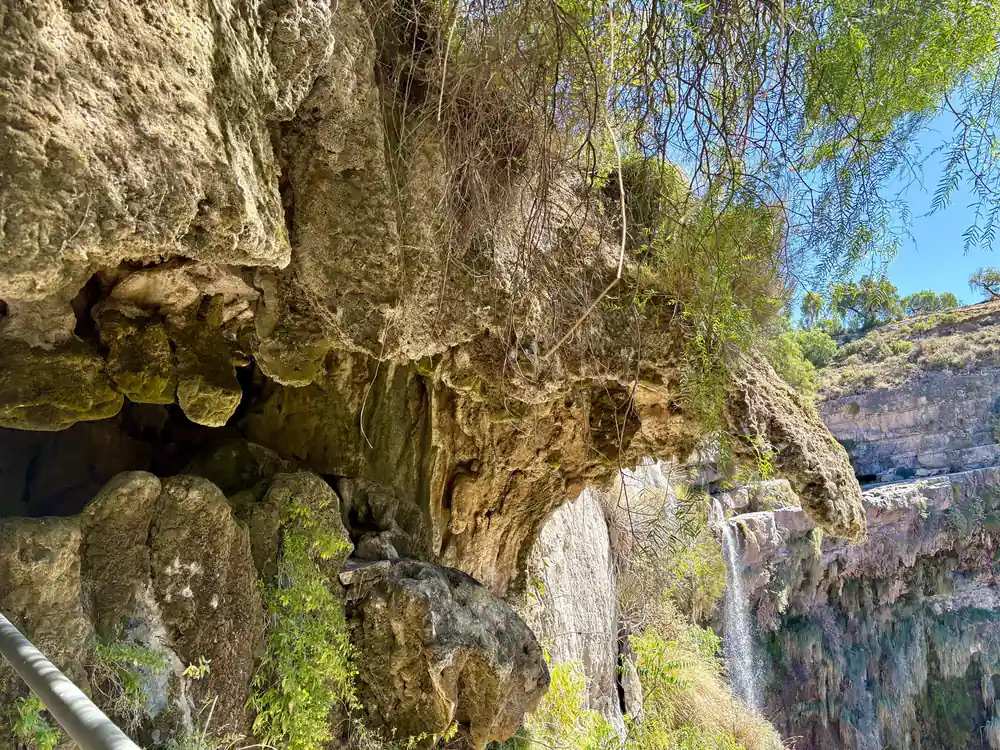
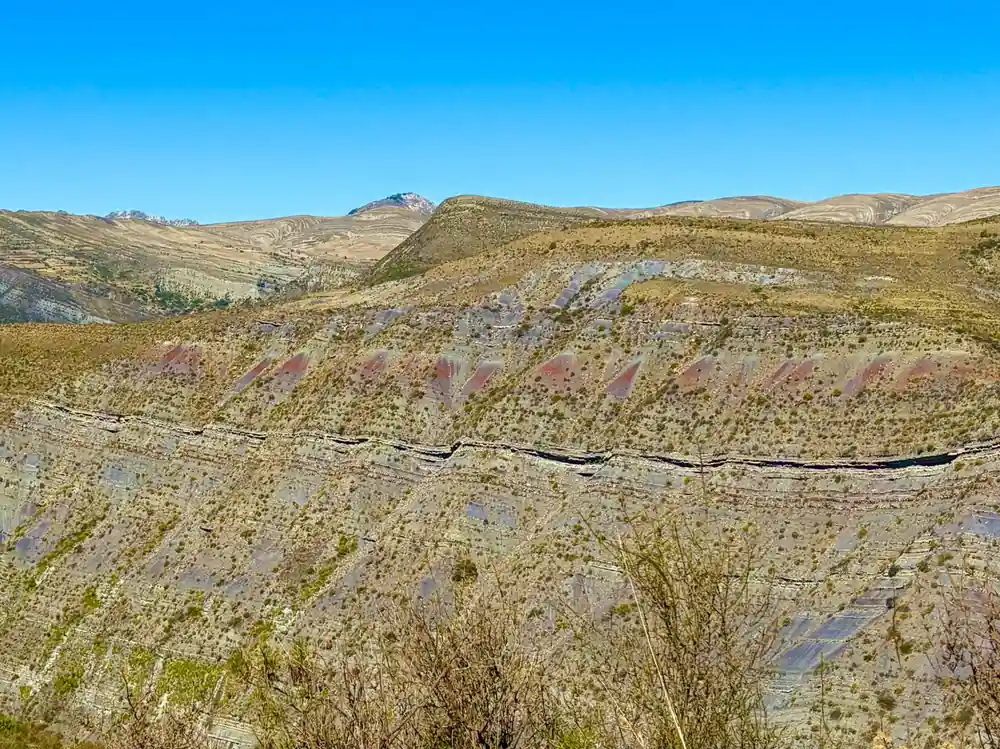
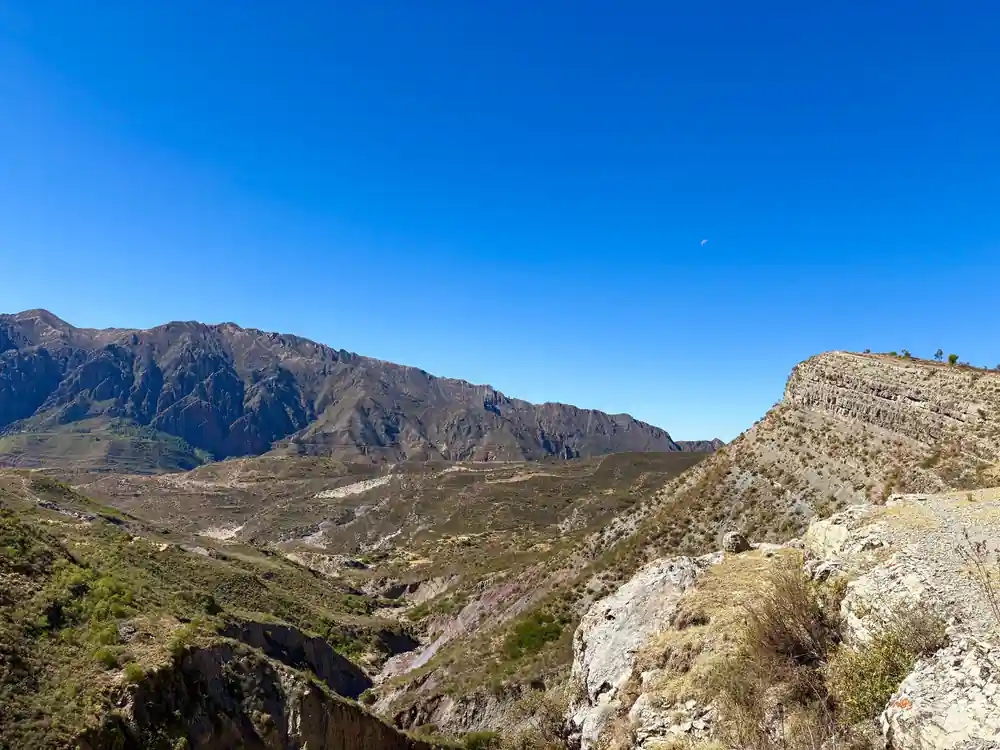
Layered rock and green terraces drop away where the crater opens below the trail
The white city: what Sucre looks like
Sucre is known as the white city, and the nickname holds up in the sunshine: whitewashed walls, low tiled roofs, arcaded streets and courtyards hidden behind heavy wooden doors. The best way to see it is on foot and early, before the traffic builds and while the light is still soft on the facades. Look up as well as ahead; the detail is in the balconies, the shutters and the church towers.
The Museo de Arte Indígena ASUR is the stop most trekkers remember. ASUR initiated its Indigenous Art Revival Program in 1985, aiming to revive traditional textiles and generate additional income for the Jalq'a and Tarabuco communities.[6] It is a good place to understand the weaving you will see in the villages around Sucre, and a good place to spend an afternoon out of the midday heat.
Sucre is small enough to cross on foot in an afternoon, and the streets change character quickly: busy commercial blocks near the markets, quiet residential lanes towards Recoleta, and long views over the valley from the top of the hill. Give yourself at least one unhurried morning here before you head for the crater, and leave room in your bag for textiles. The market streets are busy at lunchtime, and the smell of grilling meat and fresh bread is part of the experience.
Getting there, and on to the trailhead
Sucre is served by an airport and by long-distance buses from Bolivia's main cities, and both leave you within easy reach of the historic centre. Give yourself a buffer day either side of a long overnight bus if you can. The mountain roads are slow and winding, and arriving exhausted the night before a trek day is no fun at all. Book bus tickets ahead in high season, and keep a small bag with you rather than in the hold.
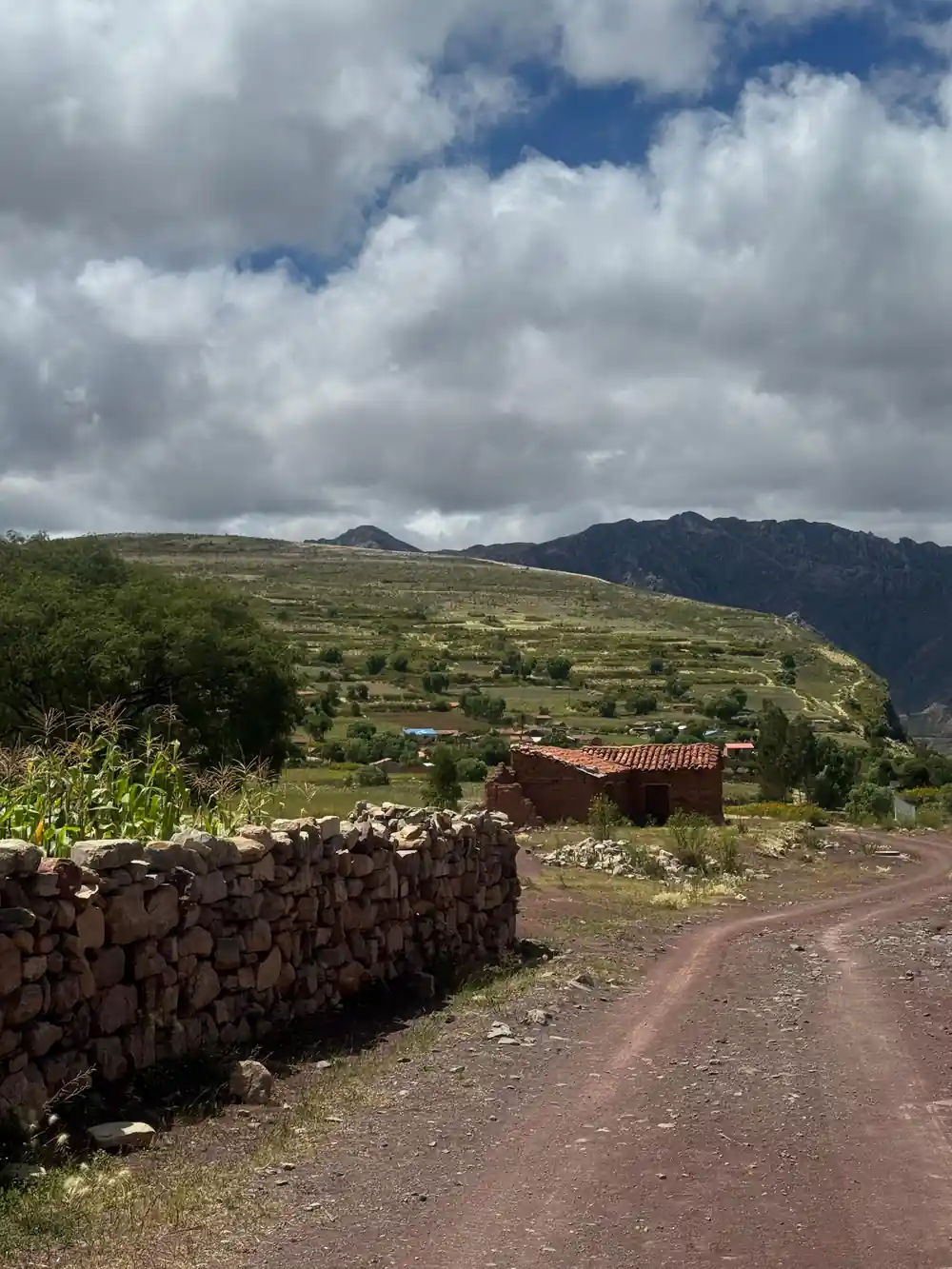
The crater trek starts at the Chataquila trailhead, and the ride from Sucre to Chataquila takes about 1.5 hours.[7] From there the route follows a pre-Hispanic camino, also known as the Inca trail of Chataquila, downhill for 6km to Chaunaca.[7] The day trek from this site runs that line with vehicle transfers: pickup, jeep or SUV to Chataquila, the Camino del Inca, Chaunaca, then a jeep on to the Maragua Crater and back.[1]
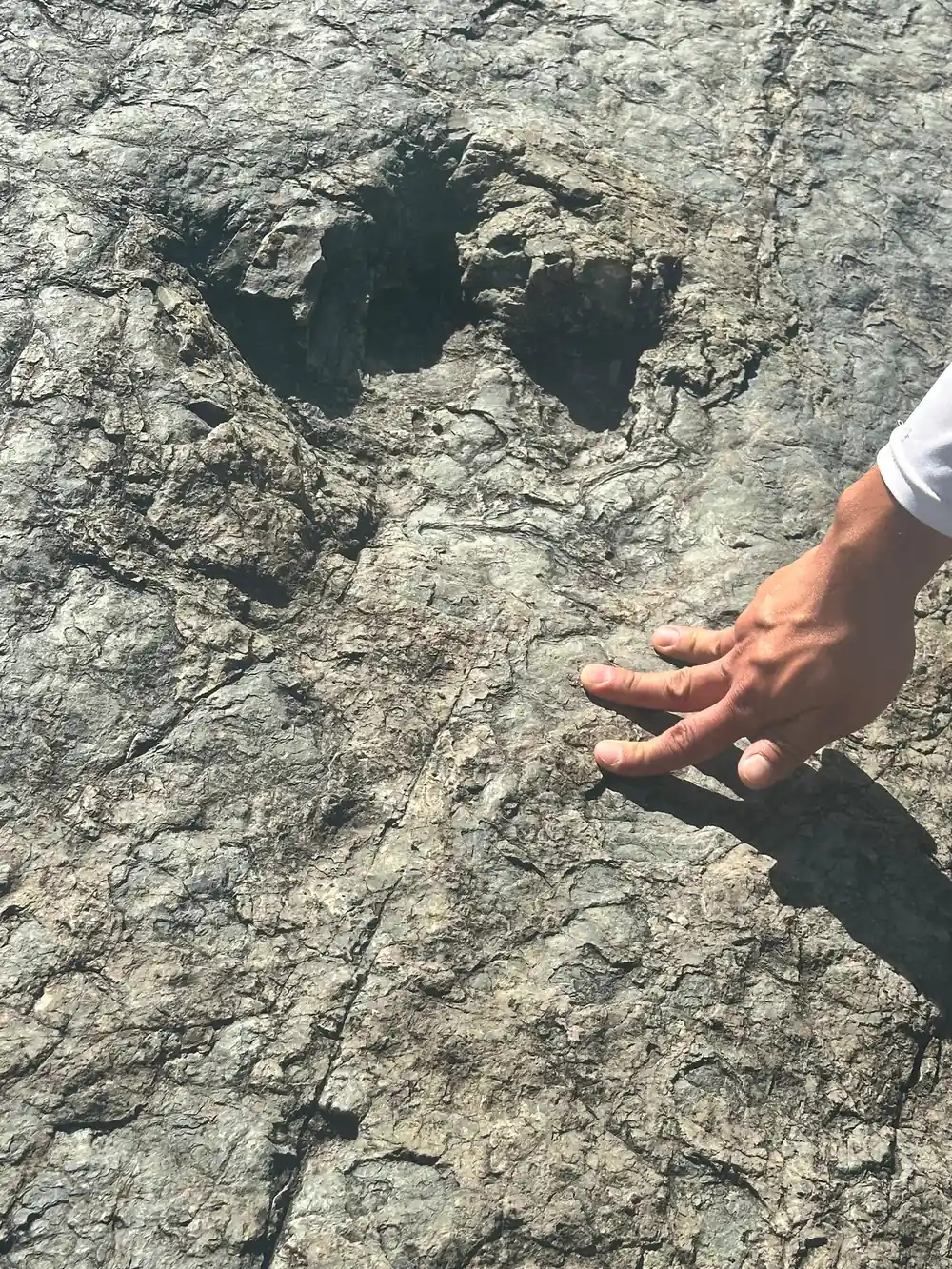
Past Maragua, the walk continues down to Niñu Mayu, where around 100 dinosaur footprints can be found.[7] Not far from the village of Maragua is a set of waterfalls known as La Garganta del Diablo, the Devil's Throat.[8] Maragua itself is listed at 3,100 metres above sea level on the trek itinerary.[9] The crater is not volcanic: it was formed by thousands of years of erosion.[8]
from US$95
A guided day out from Sucre with pickup included, a live guide in Spanish and English, and free cancellation up to 24 hours in advance.[1]
How long to stay in Sucre
Give Sucre a few nights if you also want a full day at the crater. The day trek runs 10 hours, with pickup included and a start time you confirm when you book.[1] That leaves clear days either side for the city, and one spare if you decide to sleep in instead.
If you are arriving straight from sea level, treat the first day as a settling day rather than a sightseeing marathon. Sucre sits at around 2,810 metres above sea level.[2] A gentle walk, an early night and plenty of water usually do the trick, and the trek will feel much better if you are not starting it with a headache.
A short stay is possible, but it leaves no slack. Buses get delayed, weather shifts, and the markets and museums fill an easy afternoon on their own. If your itinerary allows, stay longer than you think you need; Sucre is a comfortable place to have an unscheduled day, and the crater trek is far more enjoyable when it is not squeezed between an arrival and a departure.
What else there is to do around Sucre
Guided walks cover the colonial core, the markets and the Recoleta viewpoint, and they are an easy way to get your bearings on your first morning. The ASUR textile museum fits neatly into the same afternoon. Outside the city, the Monte Villca protected park makes a straightforward hiking day, and the Jalq'a weaving classes in Sucre are hands-on sessions in a small group.
With more time, Sucre is a common launch point for the Uyuni salt flats. There is a two-day express trip by bus from US$299[10] and a three-day tour with bus transfers from US$197[11]. Both involve long stretches of driving, so treat them as a separate trip rather than an afternoon out.
Back in the crater country, the walk down to Niñu Mayu, where around 100 dinosaur footprints can be found, is part of the longer Maragua routes.[7] Closer to town there is also rock climbing, a guided food tour and ancestral cooking classes, which is a sensible way to fill a rest day without actually resting. Pick one thing per day and let the city fill the gaps.
Living at altitude for a few days
Sucre sits at around 2,810 metres above sea level, and the city has what locals call eternal spring, with daytime highs between 20°C and 23°C year-round.[2] In practice that means mild, bright days and layers rather than one heavy coat. A hat, sunglasses and sunscreen earn their place in your day bag.
May to October is ideal for visiting Bolivia's high-altitude cities and trekking regions, with clear skies and mild conditions.[3] If your trip falls outside that window, keep a spare day in the plan and check the forecast before you commit to the crater. The trek mixes vehicle transfers and walking, so weather changes the feel of the day more than the route.
Altitudes creep up on the trek. Maragua is listed at 3,100 metres above sea level on the itinerary.[9] Pace yourself on the trail, eat little and often, and drink more water than you would at home. The day trek has a live guide who speaks Spanish and English, so ask about the pace before you set off.[1]
How the Maragua-area tours are rated
GetYourGuide ratings for the Maragua-area listings:[1][4][5]
Maragua tour prices from Sucre
From-prices in US dollars on GetYourGuide:[1][4][5][12]
When to go and what to expect
Read before booking
Pick your month
May to October is ideal for the high-altitude cities and trekking regions of the Bolivian Andes.[3]
Allow a settling day
Sucre sits at around 2,810 metres above sea level. Plan a gentle first day before the crater trek.[2]
Book the crater trek
The day trek runs 10 hours, includes pickup, and offers free cancellation up to 24 hours in advance.[1]
Pack for a long day
Pack layers, water, a hat and sunscreen. Sucre's daytime highs sit between 20°C and 23°C year-round.[2]
Confirm your pickup
Pickup is included; the exact details are confirmed when you check availability for your date.[1]
Walk the Inca trail into the Maragua crater
from US$95Reserve now & pay later