If you read nothing else
- Sucre sits at around 2,810 metres and its daytime highs stay between 20°C and 23°C all year.[1]
- May to October is the window listed as ideal for Sucre and the high-altitude trekking regions of the Bolivian Andes.[2]
- Maragua, on the crater trek, is listed at 3,100 metres, above Sucre's 2,810 metres.[1][3]
- The one-day trek in the crater of Maragua and the Inca trails takes 10 hours, with pickup included.[4]
- The walk follows the Inca trail of Chataquila downhill for 6 km of old stone and packed dirt.[5]
- Top choice Crater of Maragua Day Trek from US$95 Duration10 hours[4]Rating4.76 from 100 reviews[4]GuideSpanish, English[4]CancellationUp to 24 hours ahead[4] Check availability
- Two-Day Maragua Trek from US$125 Duration2 days[6]Rating4.95 from 12 reviews[6]GuideEnglish, Spanish[6]CancellationUp to 24 hours ahead[6] See this tour
- Sunrise and Cave Paintings from US$106 Duration10 hours[7]Rating4.66 from 16 reviews[7]GuideEnglish, Spanish[7]CancellationUp to 24 hours ahead[7] See this tour
Sucre sits at around 2,810 metres above sea level in Bolivia's southern highlands, and that altitude is the single most important fact about its weather.
The season matters less than the layers you bring
Read before booking
On the day
A climate with no summer and no winter
Sucre sits at around 2,810 metres above sea level in Bolivia's southern highlands, and the city enjoys what locals sometimes call eternal spring: daytime highs hover between 20°C and 23°C for the entire year.[1] That single range tells you most of what you need to know before you pack. There is no summer to dress for and no winter to survive. What there is instead is altitude, thin clear air, strong sun, and a wide gap between the warm middle of the day and the cool hours on either side of it.
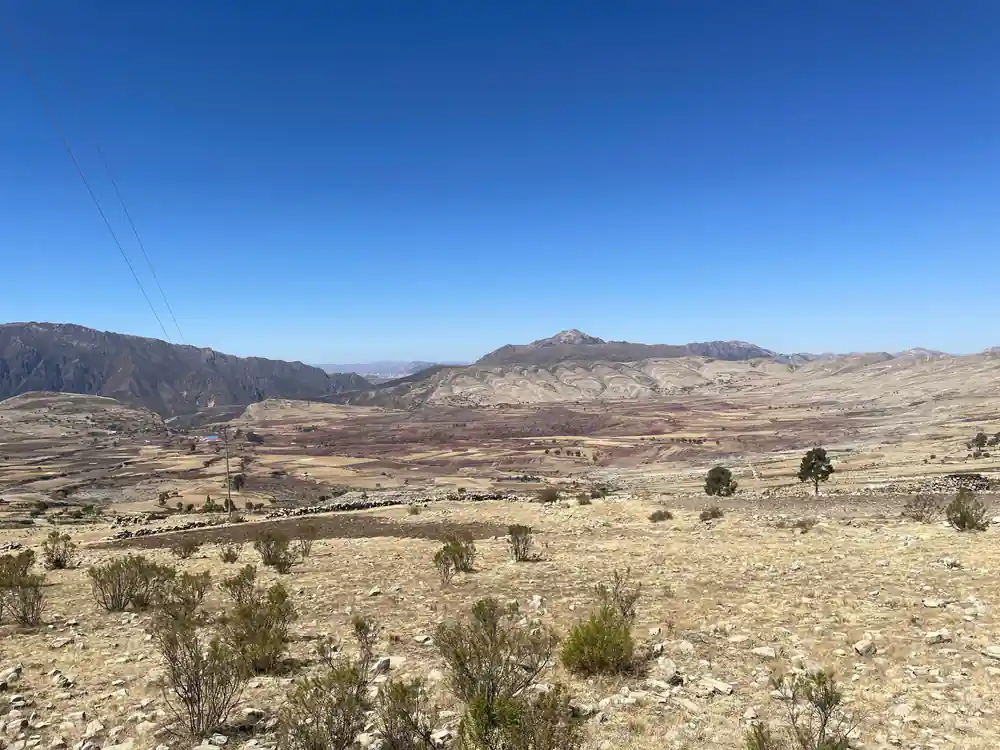
The trek takes you higher than the city. Maragua, the village in the crater on the trek itinerary, is listed at 3,100 metres above sea level.[3] Sucre, where the day begins, sits around 2,810 metres.[1] So a Maragua day runs from a mild city morning up to open high ground, and then down into a bowl of terraced fields and red rock that feels far more exposed than the streets you left. None of that calls for mountaineering gear. It does reward a warm fleece, a windproof layer, a brimmed hat and shoes with a decent sole.
The daily range is the range that matters
Ask people who have spent a week in the Bolivian highlands what surprised them and it is rarely the midday temperature. It is the swing. A Sucre morning can feel cold enough for a jacket and gloves, then by late morning you are walking in a shirt with your sleeves pushed up, and by evening the jacket is back on. The listed daytime highs of 20°C to 23°C are exactly that: daytime highs.[1] They describe the bright middle of the day, not the cold edges of it.
The practical answer is layers rather than one heavy coat. A base layer, a light fleece, a windproof shell and a brimmed hat will handle almost every hour of a Maragua day, and a spare pair of socks in your pack is a small luxury if the trail is damp. Keep the warm layer with you instead of leaving it in the vehicle. The route loses height steadily on the way down, and a shaded valley floor can feel very different from the sunny rim you left an hour earlier.
One more piece of kit earns its place: a small daypack. You will want water, sunscreen, a hat you can take off, a camera and the layer you shed at midday, and you will want free hands on old stone steps. Everything else can stay in the vehicle, which waits with the driver while you walk.
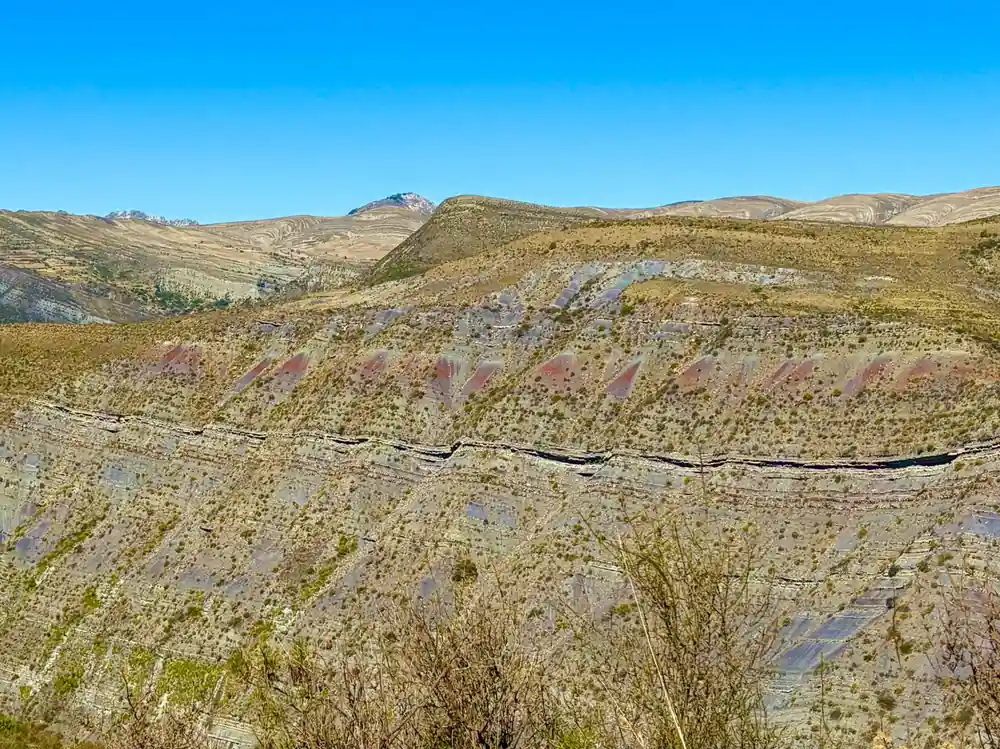
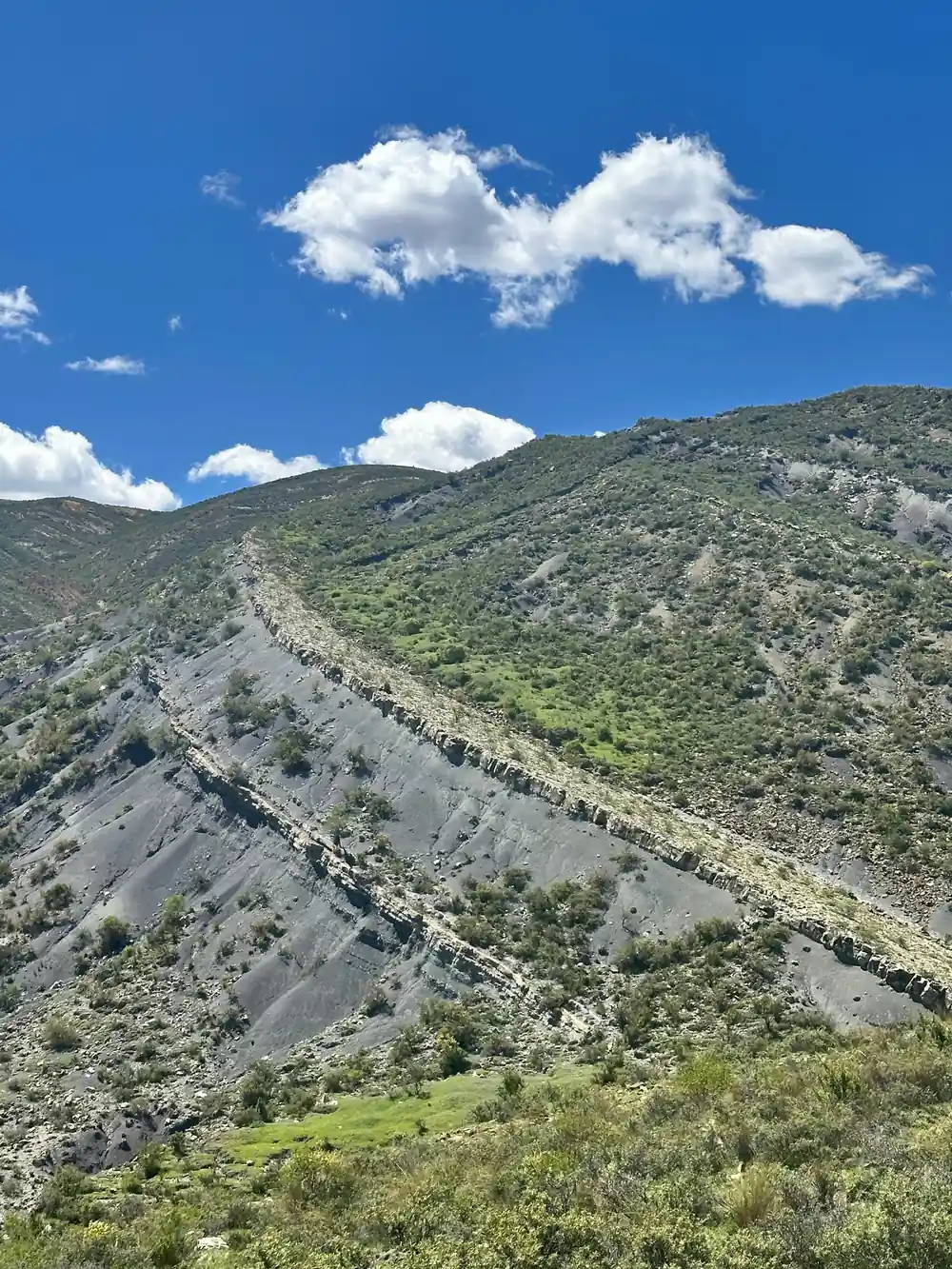
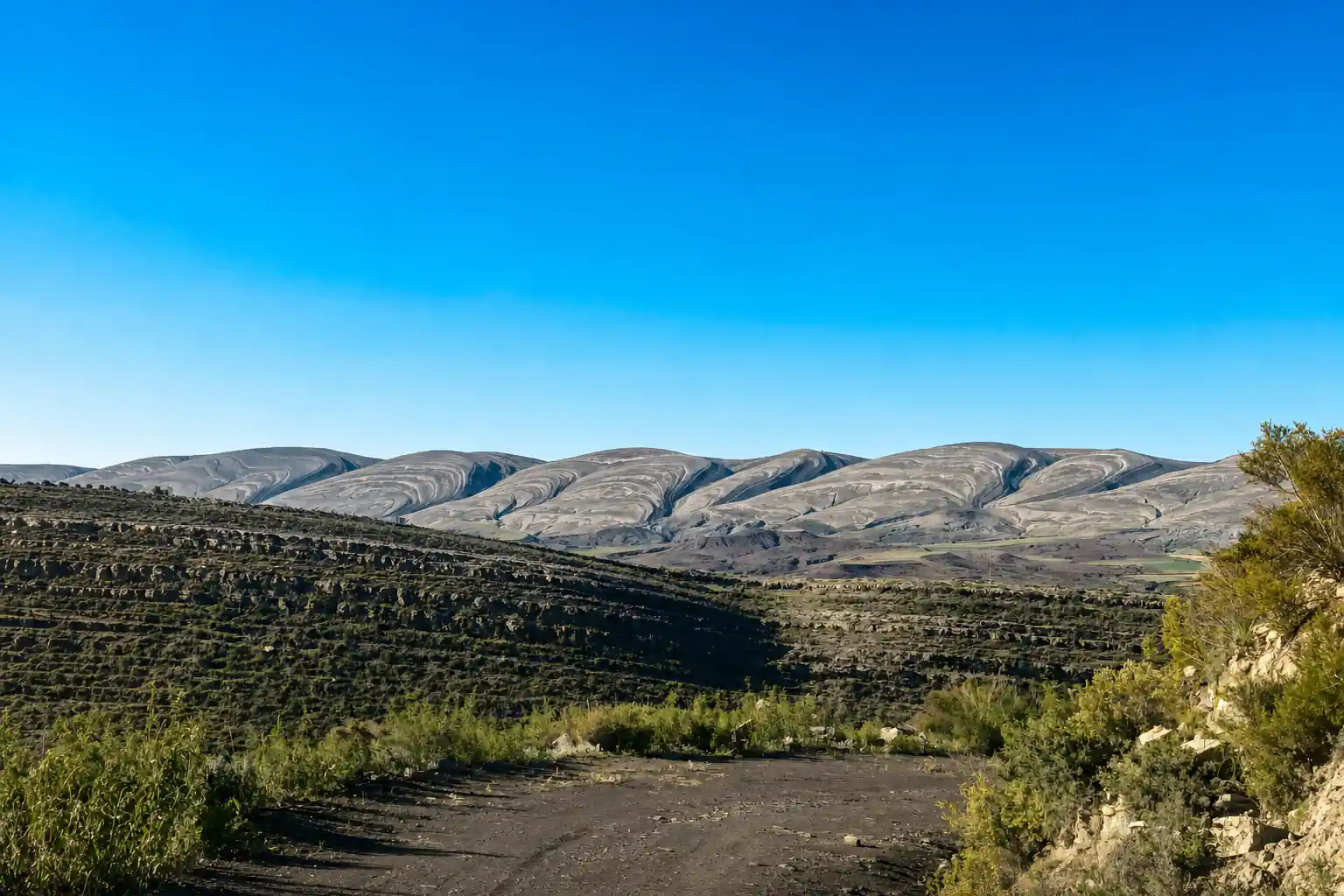
Layered ridges receding above the crater floor on the descent from Chataquila.
The wetter months, and what they change
The usual planning advice for Bolivia's high-altitude cities and trekking regions points to May to October, when clear skies and mild conditions are typical.[2] Outside that window the Andes turn greener, the cloud sits lower, and afternoons can close in quickly. That is not a reason to write off a trip. It is a reason to leave slack in your itinerary, to keep a dry bag for your phone and camera, and to treat any mountain forecast as a rough guide rather than a promise.
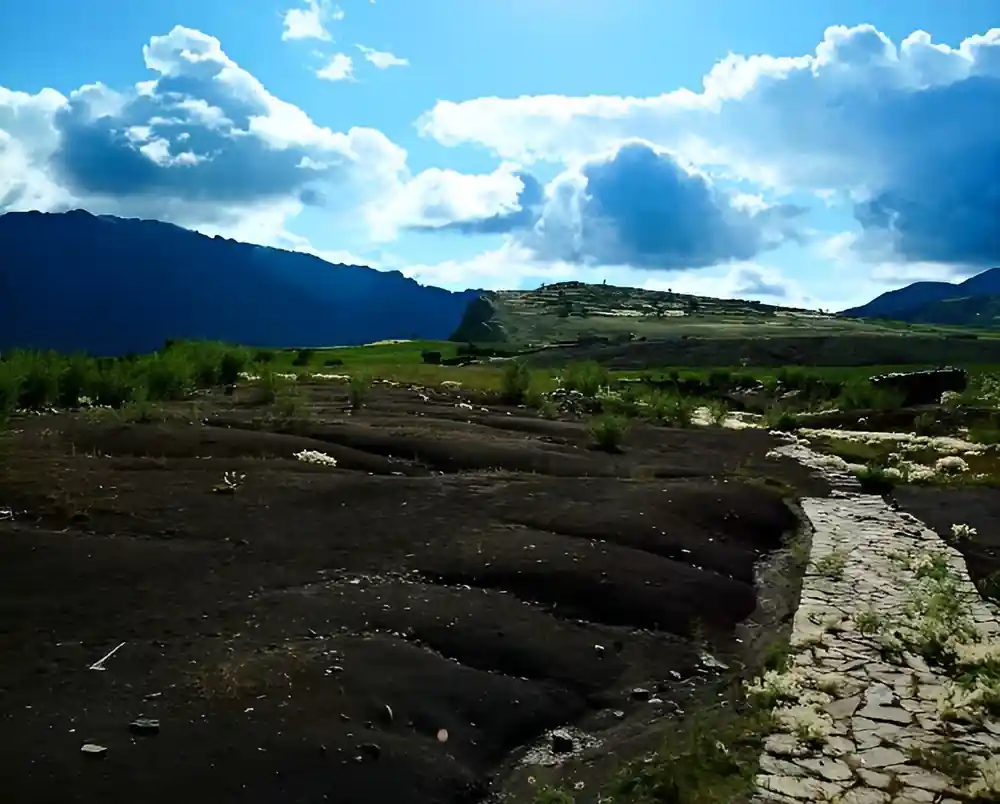
For the Maragua walk the practical difference is the surface under your boots. The route drops from the Chataquila trailhead along a pre-Hispanic camino also known as the Inca trail of Chataquila, following it downhill for 6 km.[5] Old stone and packed dirt is a pleasure in dry weather and slow, careful work when it is slick. Shoes with real grip, shorter steps and hands free for balance count for more here than covering the ground quickly.
The dry season: May to October
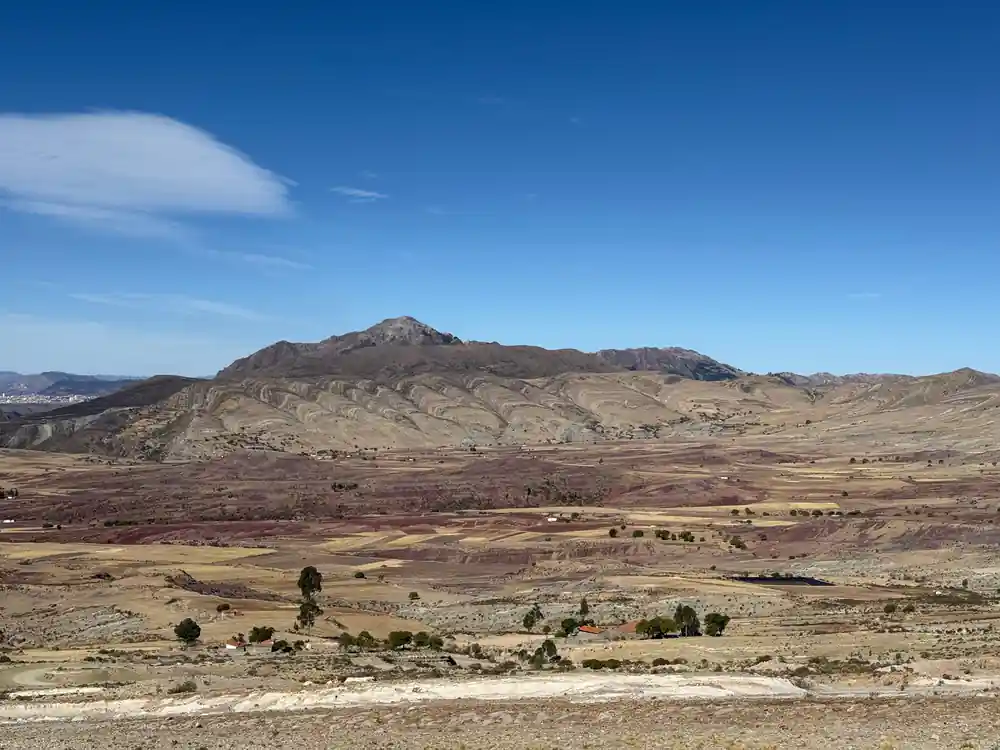
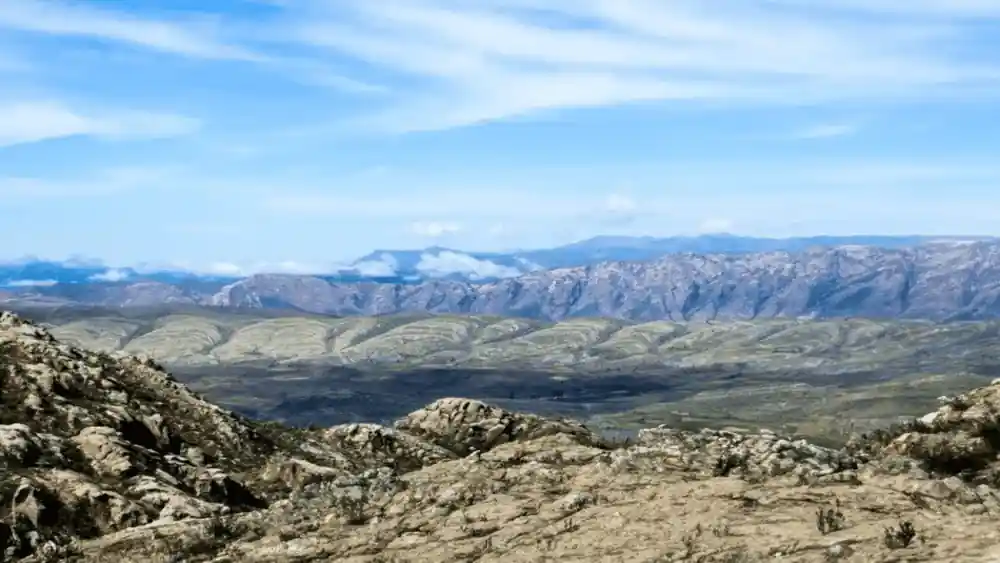
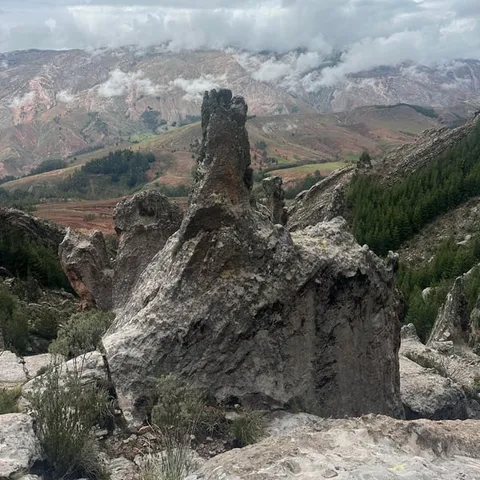
May to October is the stretch listed as ideal for Sucre and for the high-altitude trekking regions of the Bolivian Andes, with clear skies and mild conditions.[2] For a crater walk, clear skies are most of the point. The Maragua basin is a landscape of tilted rock beds, terraced fields and layered ridges, and it was formed by thousands of years of erosion rather than by a volcano.[8] Long views are what let you read the shape of it.
Those months also sit in the southern winter, which in the Bolivian highlands is the dry, bright half of the year. Do not expect the season to change the temperature much: Sucre's daytime highs stay inside the same 20°C to 23°C band all year.[1] What the dry months give you is visibility, firm ground and a much better chance that the day you planned is the day you get.
Nothing about the crater closes for the season, and the day trek from Sucre runs with pickup included whenever the listing has availability.[4] If your dates land outside the dry months, go anyway, with grippier shoes and lower expectations of the view. Cloud sitting on the ridges is its own kind of scenery, and the fields below it are green.
from US$95
The tour booked from this site is the one-day trek in the crater of Maragua and the Inca trails, with a live guide.[4]
What rain does to this particular trail
The one-day trek that this site books is built around vehicles and one long walk: pickup in Sucre, a jeep or SUV to Chataquila, the Camino del Inca down to Chaunaca, a second vehicle leg to the Maragua Crater, and the drive back.[4] Almost all of the walking sits in the middle of that, on the descent. The drive from Sucre out to the Chataquila trailhead takes about 1.5 hours,[5] which gives you a good stretch of road to watch the sky and decide what to leave behind in the vehicle.
Wet weather changes the walk in two ways. The first is footing: the Inca trail of Chataquila runs downhill for 6 km of packed dirt and stone,[5] and a damp surface asks for shorter steps and a little patience. The second is water in the landscape. Not far from the village of Maragua there is a set of waterfalls known as La Garganta del Diablo, the Devil's Throat.[8] They are worth asking your guide about, especially if there has been rain in the days before you walk.
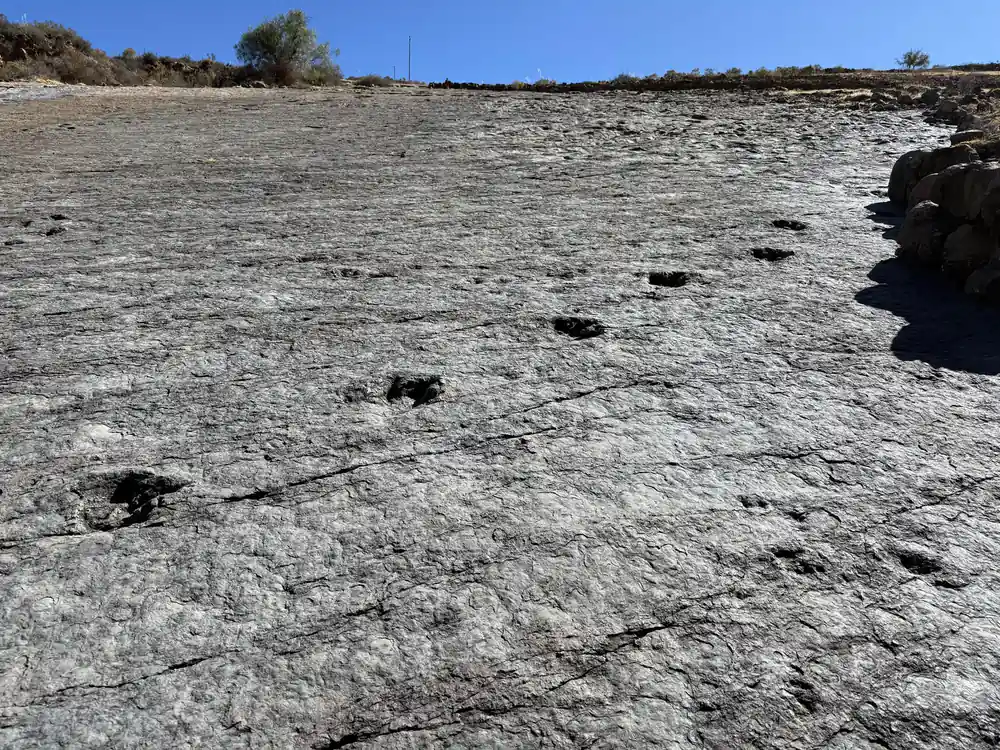
If your trip runs longer, the walk from Maragua continues down to Niñu Mayu, where around 100 dinosaur footprints can be found in the rock.[5] That stretch is not among the day trek's stops, but it belongs to the same crater landscape and is worth knowing about if you have extra time in Sucre.
The sun, in every season
At 2,810 metres in Sucre,[1] and higher on the trek, the sun behaves differently from the one you know at sea level. There is less atmosphere above you to soften it, shade is patchy on the open stretches, and a cool breeze can hide how quickly you are burning. Long sleeves, a brimmed hat, sunglasses and sunscreen reapplied through the day are basic equipment here. The same goes for water: drink more than you think you need.
Sun is also what makes the crater worth photographing. The tilted rock beds, the red and ochre slopes and the terraces of the highland fields all read best in low, angled light, and the hours after sunrise and before sunset give you colour that flat noon never does. An early start is kind in every sense: cooler walking, softer light and more of the day left when you get back to Sucre.
Two habits make the biggest difference. Start the day with sunscreen and reapply it at lunch, including on the back of your neck and the tops of your ears. And drink steadily rather than in one go, because at this altitude thirst arrives later than dehydration does.
Which month to come
If you want one answer, take May to October, the window listed as ideal for Sucre and for trekking regions in the Bolivian Andes, with clear skies and mild conditions.[2] Within that window, timing matters less than acclimatisation. Sucre's altitude of around 2,810 metres is enough to make a first day feel slow,[1] and Maragua, up on the crater trek, is listed at 3,100 metres.[3] Arrive a day or two before you plan to walk, and keep the first afternoon quiet.
Whenever you come, the day trek in the crater of Maragua and the Inca trails is the tour booked from this site: 10 hours, pickup included, a live guide in Spanish and English, reserve now and pay later, and free cancellation up to 24 hours in advance for a full refund.[4] Check availability for the starting time and the pickup details when you book, then let the weather pick which of your Sucre days you spend in the crater.
Traveller ratings for Maragua crater tours
Maragua crater tours: adult from-prices
Adult from-prices in US dollars for these listings:[4],[6],[7],[9]. These listings show no child rate.
When to book and when to walk
Plan a Maragua crater day
Pick your month
May to October is the listed ideal window for Sucre and the trekking regions of the Bolivian Andes.[2]
Book the day trek
The one-day trek in the crater of Maragua and the Inca trails runs 10 hours and starts from US$95.[4]
Arrive early in Sucre
Sucre sits at around 2,810 metres, and Maragua on the trek is listed at 3,100 metres.[1][3]
Pack in layers
A warm top, a light shell, a hat and sunglasses cover most of what a highland day asks for.
Check the start time
Pickup is included; the listing asks you to check availability for details and starting times.[4]
Walk the Maragua crater on a day the weather suits you
from US$95Reserve now & pay later