If you read nothing else
- A 10-hour tour from Sucre with the Chataquila trailhead, the old Inca road down to Chaunaca and the Maragua Crater itself.[1]
- The Inca trail near Maragua is a pre-Hispanic camino, also called the Inca trail of Chataquila, walked downhill for 6km.[2]
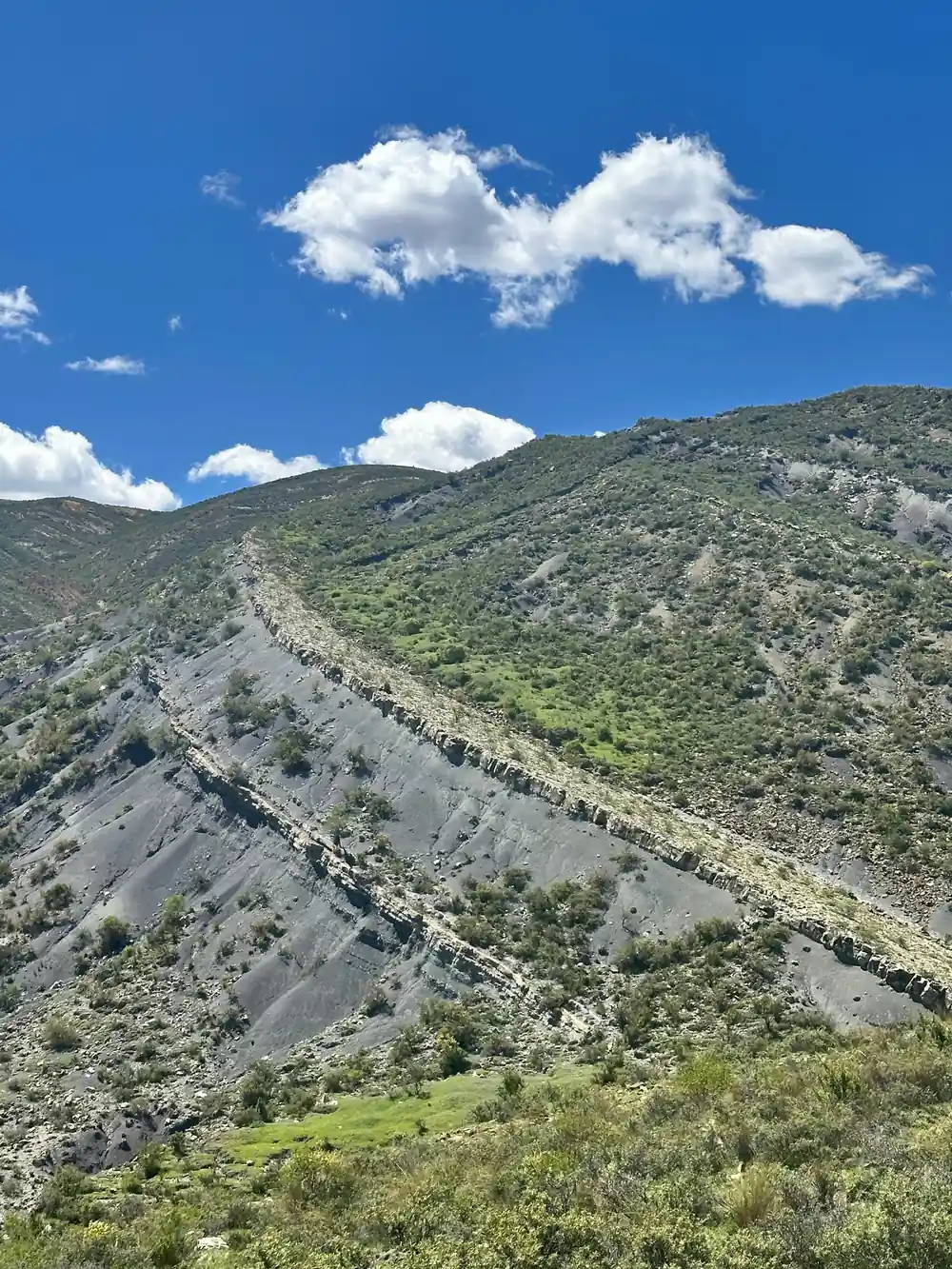
- The Maragua Crater is not volcanic; it was formed by thousands of years of erosion.[3] Look for the tilted bands of rock on the valley walls.
- From US$95 per person for 10 hours, with a live guide in Spanish and English and free cancellation up to 24 hours in advance.[1]
- May to October is the ideal window for Sucre and the trekking regions of the Bolivian Andes.[4]
- Top choice Maragua and Inca Trails from US$95 Duration10 hours[1]GuideSpanish, English[1]CancellationCancel up to 24 hours in advance[1]Ratingrated 4.76 from 100 reviews[1] Check availability
- Sunrise and cave paintings from US$106 Duration10 hours[5]GuideEnglish, Spanish[5]CancellationCancel up to 24 hours in advance[5]Ratingrated 4.66 from 16 reviews[5] See this tour
- Crater and footprints day from US$159 Duration8 hours[6]GuideEnglish, Spanish[6]CancellationCancel up to 24 hours in advance[6]RatingNo reviews yet[6] See this tour
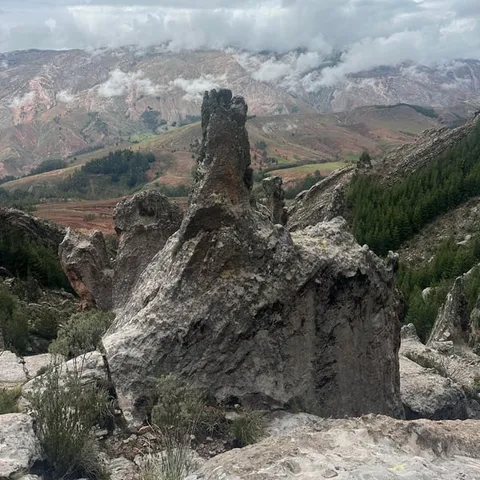
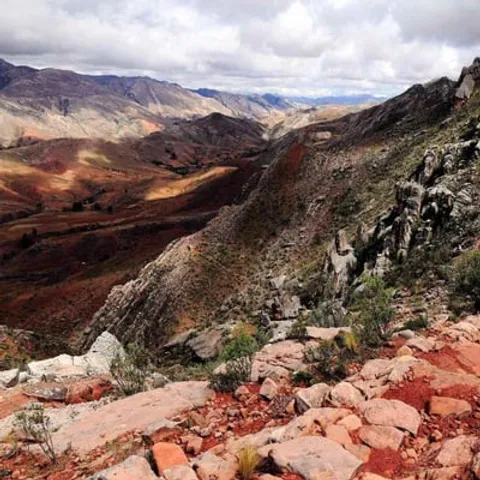
The Andes (La Paz, Sucre, Potosí) : May to October is ideal for visiting Bolivia’s high-altitude cities and trekking regions, with clear skies and mild conditions.
Is the Maragua crater day trip worth a day of your trip?
Read before booking
On the day
The morning: Sucre to the Chataquila trailhead
The Maragua crater day trip starts with a pickup in Sucre, and a jeep or SUV carries you out of the city and up into the hills. The tour runs for 10 hours, and the listing shows starting times when you check availability. Pickup is included, with the details on the listing.[1] The drive to Chataquila, the trailhead where the walking begins, takes about 1.5 hours.[2]
Sucre sits at around 2,810 metres above sea level.[7] You are already high, then, before the vehicle even starts climbing. Keep a warm layer within reach in the car rather than at the bottom of your bag: the road gains height quickly, and the breeze at the top is a different thing from the warmth of the city. The last stretch is the kind of mountain road where the view keeps opening and closing as you round each bend, with terraced slopes and small fields appearing and disappearing below.
At the top there is a small chapel and a wide view back down the valley, with the road you have just driven winding away beneath you. This is where guides give their last instructions, walkers tighten their laces and everyone works out how many layers they are actually going to keep on. Use the stop to drink water and eat something small. From here the route goes down rather than up.
The descent on the Inca trail of Chataquila
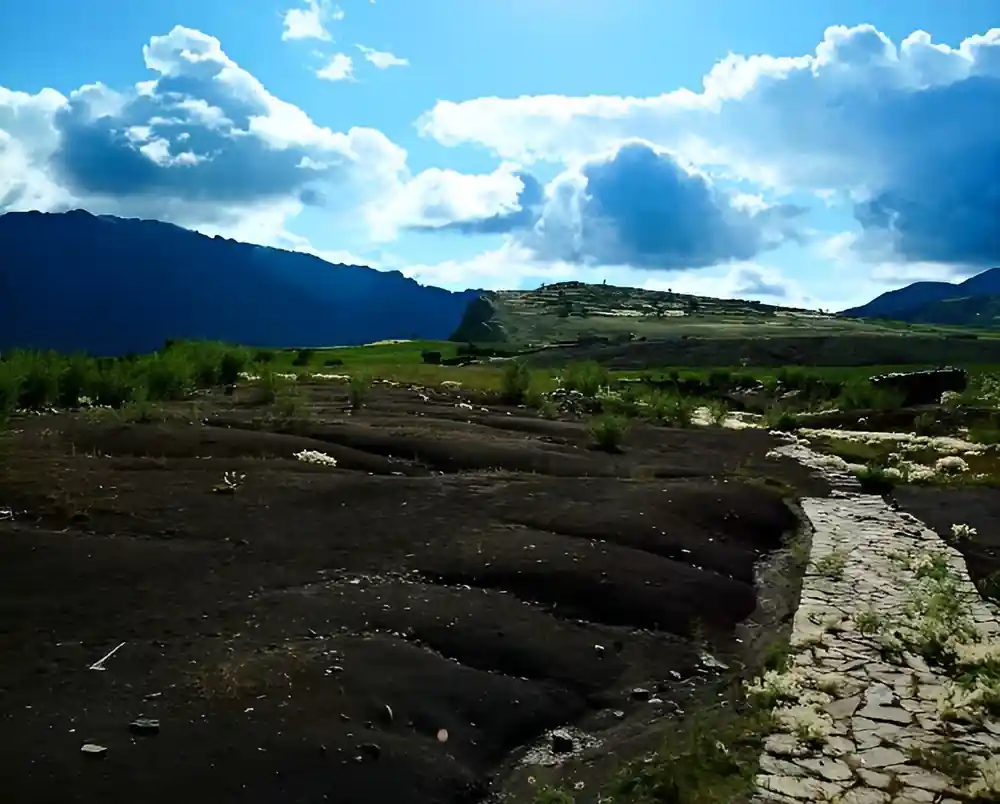
The hike begins just behind the chapel and follows a pre-Hispanic camino, also known as the Inca trail of Chataquila, downhill for 6km.[2] It is an old road rather than a modern path: broad stone steps in some stretches, loose rubble and packed earth in others, with the valley floor slowly rising to meet you. The walking is more about rhythm and footing than about fitness; the gradient is taking you down, not up.
Walk short-stepped on the loose sections and let poles take some of the load if you have them. Knees complain more on a long descent than on a climb, and the ground is uneven enough that looking around too much is a poor idea. Your guide knows where the path narrows, where the stone is polished smooth by feet and where water crosses the trail, so stay within sight on the steeper parts and stop whenever the view deserves it.
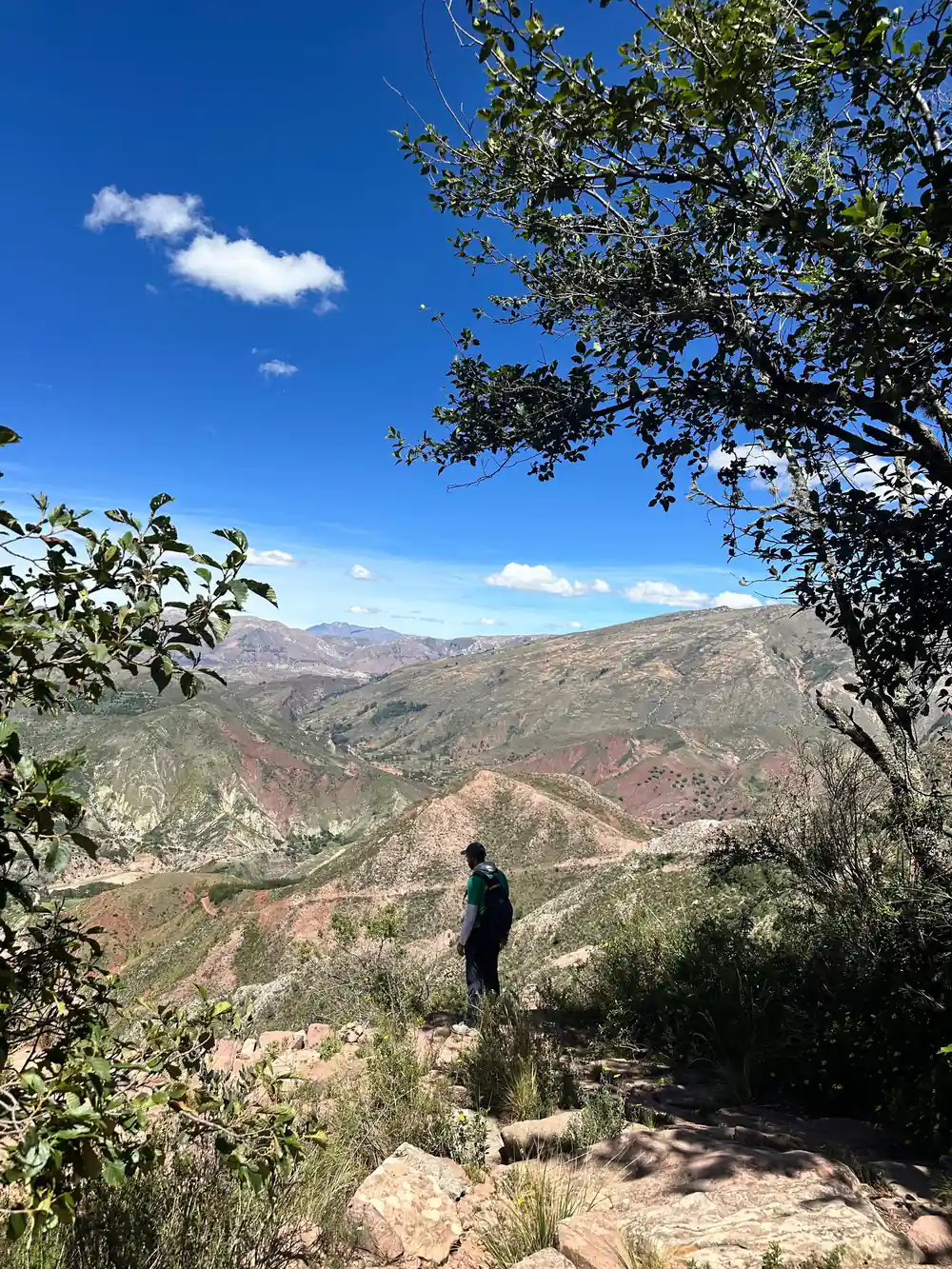
About halfway down the landscape changes character. The bare ridge gives way to scrub, then to fields and smallholdings, and the first roofs of Chaunaca appear below you. This is the section where the trail, the valley and the far ridges line up in one long view. Keep half an eye on the sky; weather moves quickly in these valleys, and a bright morning can close in fast.
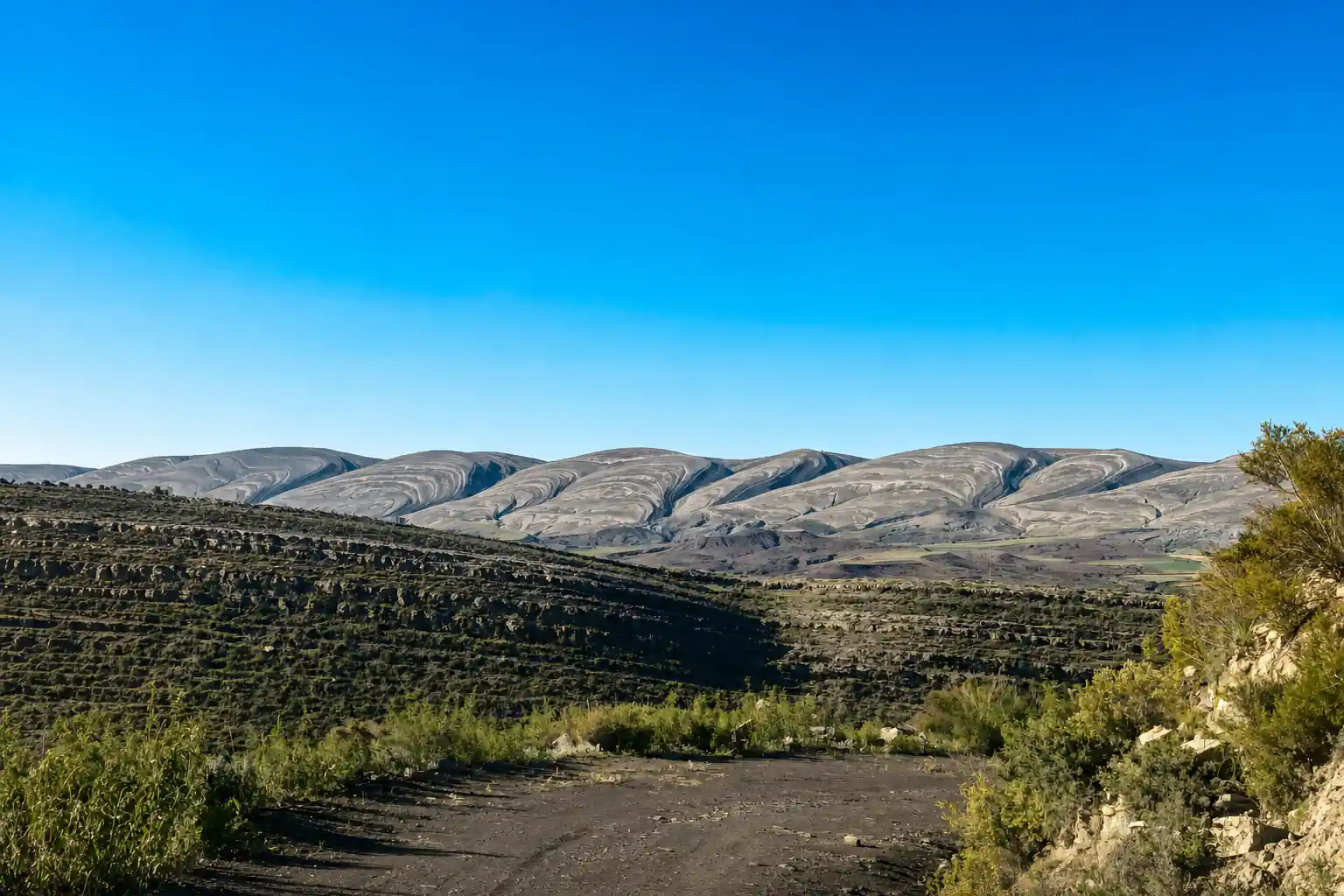
Tilted rock beds run across the wide floor of the Maragua Crater.
Into the crater: Chaunaca and the road to Maragua
The listed stops run from the pickup location by jeep or SUV to Chataquila, then along the Camino del Inca, on to Chaunaca, and finally into the Maragua Crater, again by jeep or SUV.[1] Walking and driving alternate through the day. If you want to leave a layer behind, ask your guide where the vehicle waits between sections.
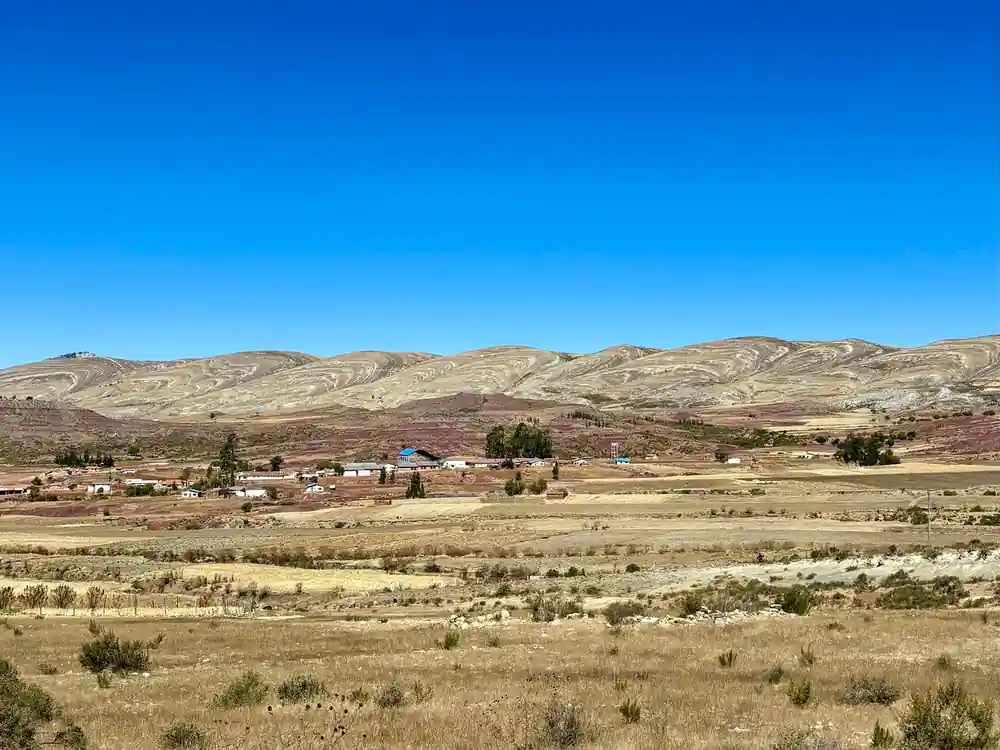
The Maragua Crater is not volcanic. It was formed by thousands of years of erosion.[3] From the rim the walls read as banded, tilted rock, pale grey and ochre in long stripes, with gullies cutting down towards the flat ground. Inside the bowl there are fields, smallholdings and a scatter of houses, and the flat floor makes the surrounding walls look even taller than they are.
Not far from the village of Maragua there is a set of waterfalls known as La Garganta del Diablo, the Devil's Throat.[3] Routes differ between operators and not every day trip goes that way, so if the waterfalls are on your list, ask about them before you book. The same goes for the dinosaur footprints further down the valley.
The afternoon: Maragua village and the dinosaur footprints
Maragua, the village inside the crater, is listed at 3,100 metres above sea level, higher than Sucre at around 2,810 metres.[7][8] It is a small place of adobe houses, a white church and terraced fields, and the pace is slower than anything in the city. This is a natural spot for a break, a stretch and whatever food you have brought with you.
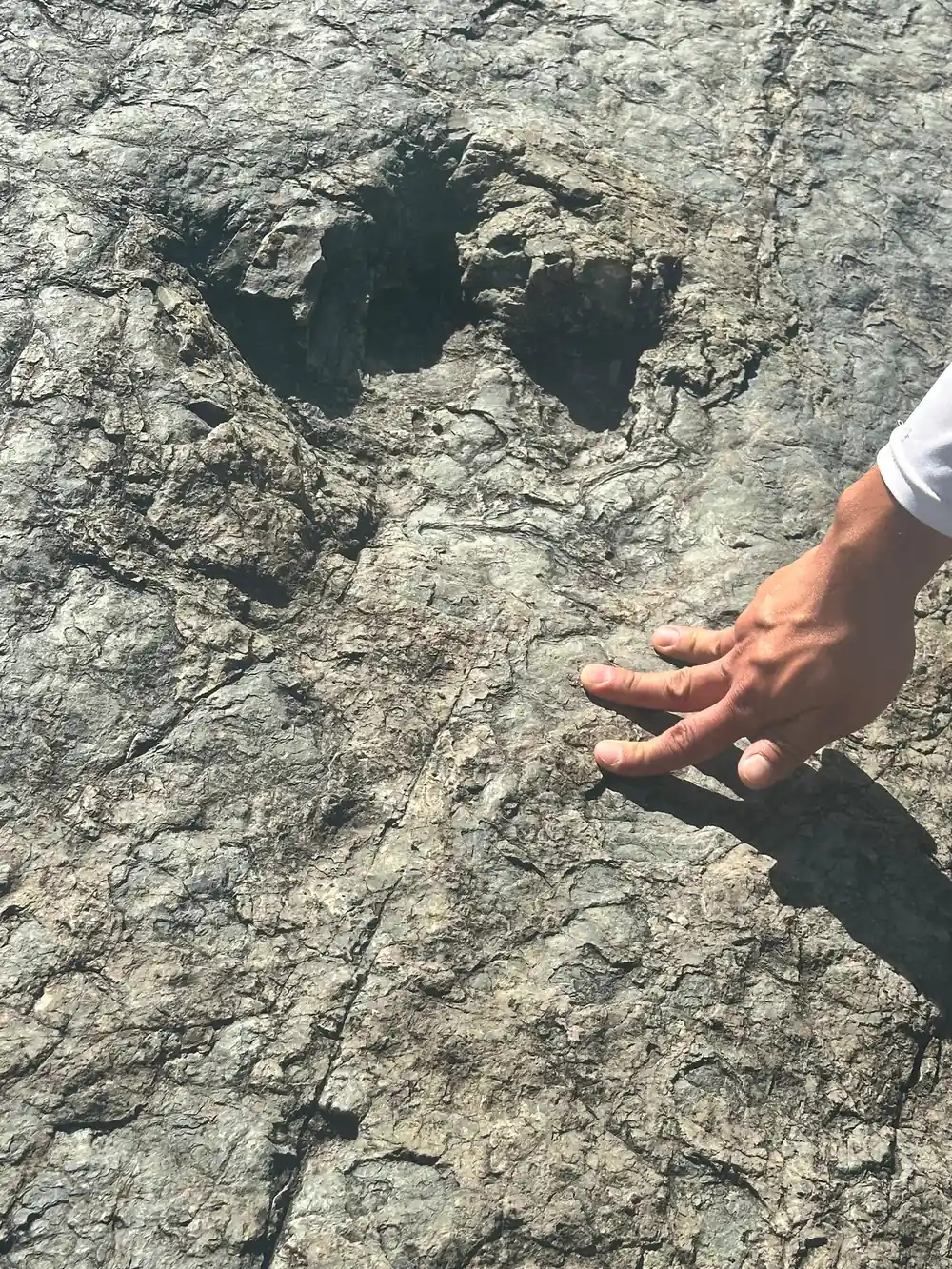
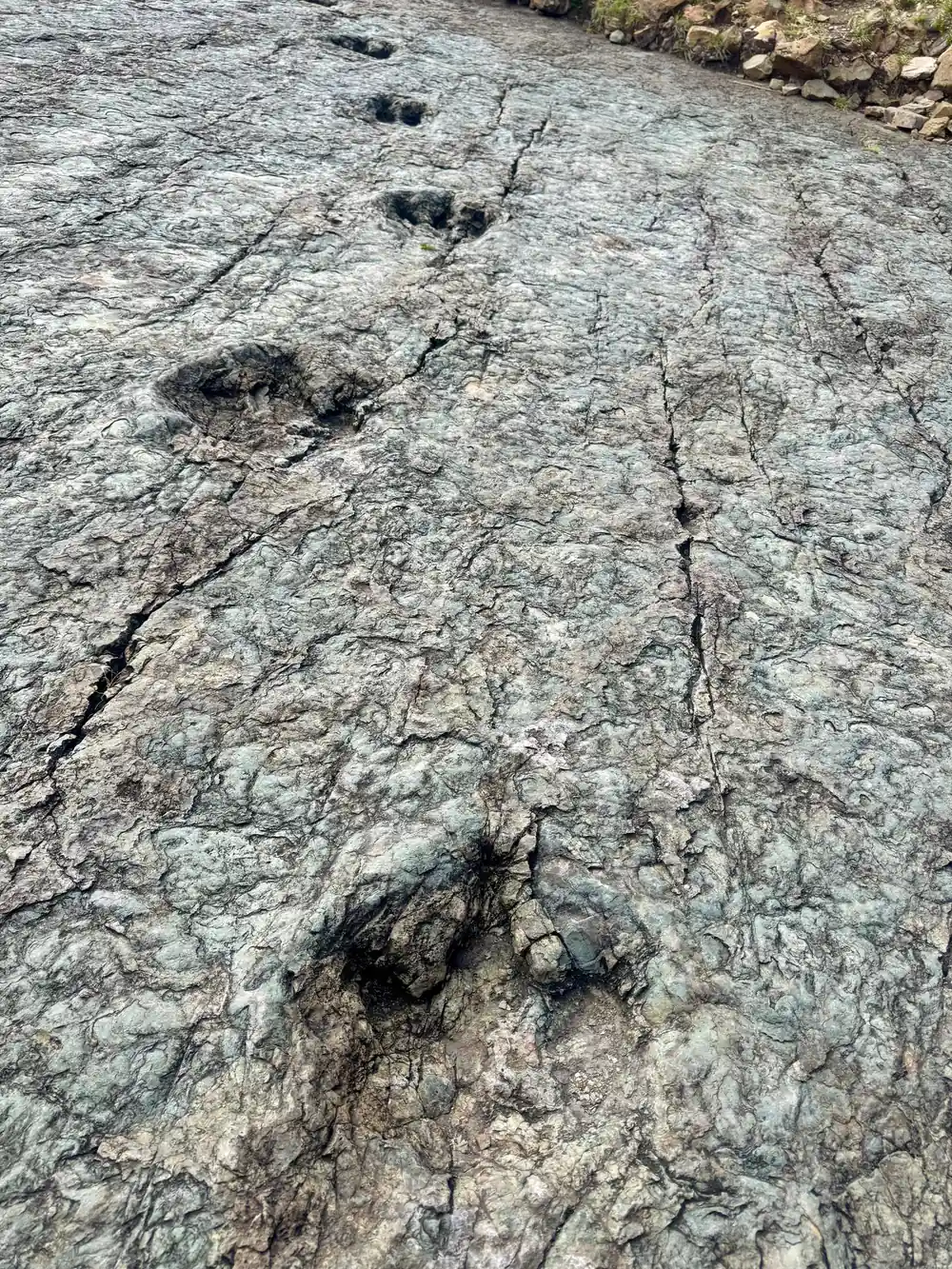
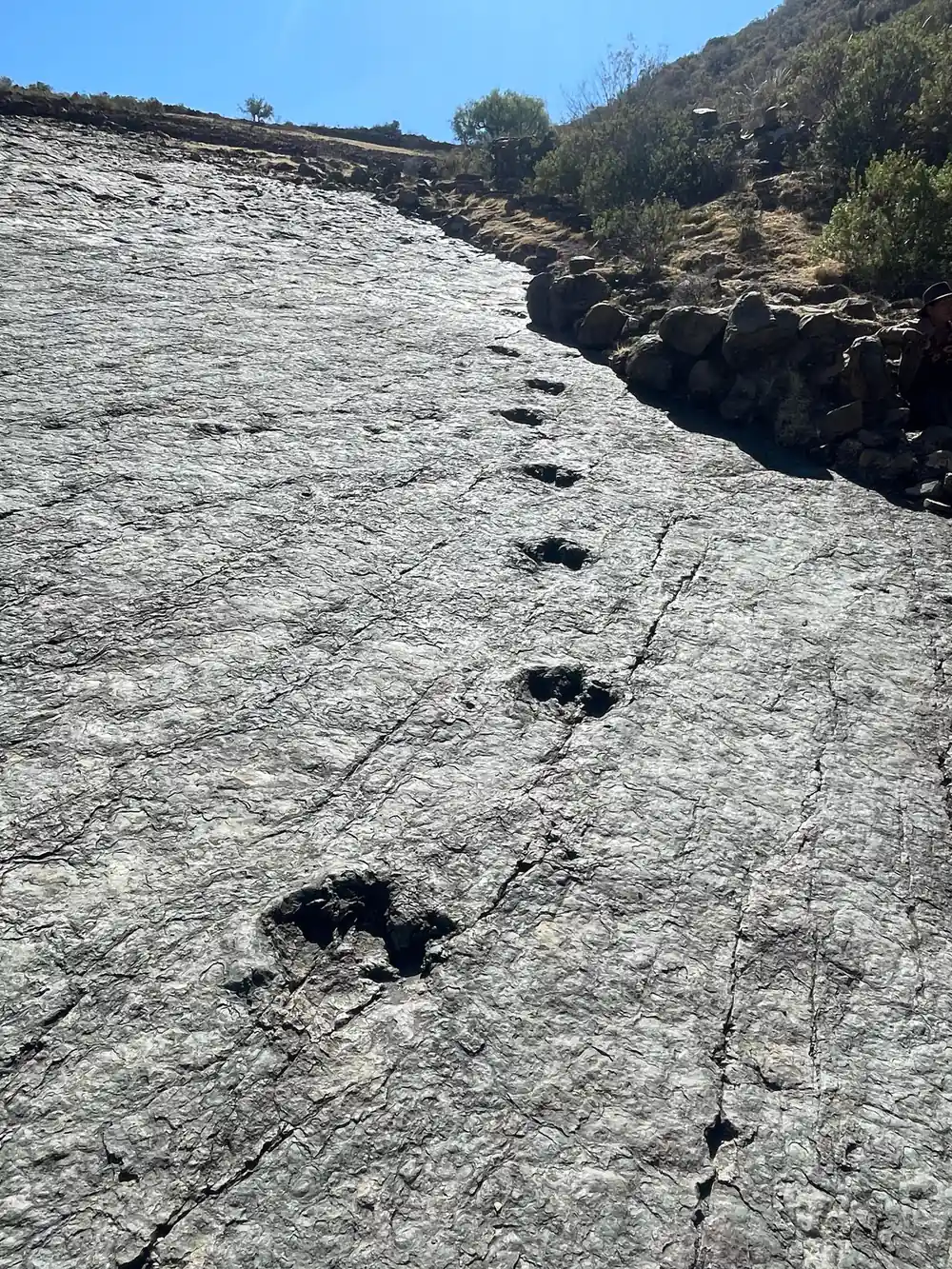
From Maragua the walk continues down to Niñu Mayu, where around 100 dinosaur footprints can be found.[2] They lie in pale rock, three-toed and clear, and they make an odd contrast with the fields and the quiet. Some day trips list Niñu Mayu as a stop and others finish in the crater, so compare itineraries if the footprints are the part you care about.
The rock itself is worth a look. The beds are tilted at steep angles and run across the valley like stripes, and the colours shift from grey to ochre to rusty red as you move. Ask your guide to point out the layers and the way some of them hold water while others stay bare; local guides read this landscape very well.
from US$95
The 1-Day Trek in the Crater of Maragua and Inca Trails starts at this price per person for a 10-hour day from Sucre.[1]
What the tour includes and what it does not
The tour booked here is the 1-Day Trek in the Crater of Maragua and Inca Trails, from US$95, rated 4.76 from 100 reviews.[1] It runs for 10 hours with a live guide in Spanish and English, and pickup is included, with the details on the listing.[1] You can reserve now and pay later, and cancel up to 24 hours in advance for a full refund.[1]
Scores on that listing break down as Guide 4.8, Transportation 4.8 and Value for money 4.4, with value the lowest of the three.[1] Compare the Maragua tour options before you book if group size, start time or price matters to you: the same crater appears in one-day, two-day and private itineraries. A tour Maragua Sucre operators run as a single day usually keeps the walking in the middle of it, with the vehicle handling the long stretches.
Inclusions are set out on the listing, and they differ between the operators running this route, so check what the price covers and what you pay separately before you commit. Carry cash in small notes for village snacks and drinks. Confirm your pickup point and time the day before you go, and keep the operator's contact details on your phone.
How to fit the Maragua crater day trip into a Sucre visit
Sucre has what locals call eternal spring, with daytime highs between 20°C and 23°C year-round at around 2,810 metres above sea level.[7] May to October is ideal for the city and for the trekking regions of the Bolivian Andes.[4] Build the crater day into the middle of your stay rather than the day after you arrive, and keep the day before it light.
The city is worth a couple of days on its own. ASUR began its Indigenous Art Revival Program in 1985 to revive traditional textiles and generate income for the Jalq'a and Tarabuco communities.[9] Pair a museum morning with one of the short walking tours of the centre, then use the crater as your big day out. A few nights in Sucre gives you room to acclimatise, see the city and still spend a full day in the hills.
If you have more time, the crater also works as part of a longer trek, and there is a two-day version of the same route.[10] For a tight itinerary, the single day is the practical choice: you sleep in a comfortable bed in Sucre and still walk the Inca trail, cross Chaunaca and stand in the crater.
What to bring for a day at altitude
Think layers rather than one heavy jacket. A warm morning in Sucre can turn into a cold, windy ridge by the time you step out of the vehicle, and the crater floor can be hot again by early afternoon. Sun cream, a hat and sunglasses are not optional extras at this height, and you will want more water than feels necessary.
Wear shoes you have already broken in, with grip for loose stone, and take a light rain shell even on a clear morning. Pack snacks, a little cash, a charged phone and a small day bag you can carry comfortably. Trekking poles help on the long descent, and a buff or thin gloves make a difference on the exposed sections.
Altitude is the part people underestimate. Sucre sits at around 2,810 metres above sea level and Maragua is listed at 3,100 metres, so the day takes you a little higher than the city you slept in.[7][8] Give yourself a day or two in Sucre before the trip, eat lightly on the morning of the walk, keep drinking water and tell your guide if a headache builds. The descent is easier on the lungs than a climb, but the height is still there.
From-prices for Maragua crater tours
Every value is a from-price on a GetYourGuide listing:[1][5][6][10]
What a Maragua crater day costs
From-prices per person on GetYourGuide listings:[1][5][6][10]
When to book the Maragua crater day trip
How the day runs
Pickup in Sucre
A jeep or SUV collects you in the city; check availability for the details and the start time.[1]
Drive to Chataquila
The road up to the trailhead takes about 1.5 hours from Sucre.[2]
Walk the Inca trail down
From Chataquila you follow the old camino downhill, a pre-Hispanic road also called the Inca trail of Chataquila.[2]
Cross Chaunaca
The route drops to Chaunaca, where the vehicle meets the group again for the run into the crater.[1]
Into the Maragua Crater
The day ends in the Maragua Crater, with the village of Maragua at 3,100 metres above sea level.[1][8]
Walk the 6km Inca trail down into the Maragua Crater
from US$95Reserve now & pay later