If you read nothing else
- Buses and shared taxis run from Sucre towards Chaunaca; ask to be dropped at Chataquila, where the trail begins about 1.5 hours from the city.[1]
- From the chapel the old Inca trail drops 6km to Chaunaca on stone paving, then the route continues across the crater floor to Maragua village.[1]
- Sucre sits at around 2,810 m and Maragua is listed at 3,100 m. Give yourself a day or two to acclimatise before walking.[2][3]
- May to October is ideal for Sucre and the trekking regions of the Bolivian Andes, with clear skies and mild daytime conditions.[4]
- A guided day trek from Sucre covers the Inca trail and the crater in 10 hours, with pickup listed and free cancellation up to 24 hours ahead.[5]
- Top choice Crater trek and Inca trail from US$95 Duration10 hours[5]Rating4.76 from 100 reviews[5]GuideSpanish, English[5]CancellationFree, 24 hours ahead[5] Check availability
- Two days in the Inca trails from US$125 Duration2 days[6]Rating4.95 from 12 reviews[6]GuideEnglish, Spanish[6]CancellationFree, 24 hours ahead[6] See this tour
- Sunrise and cave paintings from US$106 Duration10 hours[7]Rating4.66 from 16 reviews[7]GuideEnglish, Spanish[7]CancellationFree, 24 hours ahead[7] See this tour
The museum is an integral part of the Indigenous Art Revival Program, initiated by ASUR in 1985. From its beginning, the program mainly aimed at reviving the traditional textiles and generate additional income for the indigenous communities of the Jalq’a and Tarabuco cultures.
Independent or guided: choosing your Maragua day
Planning and packing
- Aim for May to October, the ideal window for Sucre and the Bolivian Andes trekking regions.[4]
- Allow about 1.5 hours from Sucre to the Chataquila trailhead before you start walking.[1]
- Sun cream, a hat and a windproof layer: the crater floor is warm, the rim is breezy.
- Carry small notes for village food and drinks, and keep a little cash aside for the ride home.
On the trail
- Maragua is listed at 3,100 metres, higher than Sucre, so walk slowly and drink often.[3]
- The Inca trail from Chataquila runs downhill for 6km to Chaunaca; footing matters more than distance.[1]
- Around 100 dinosaur footprints lie near Niñu Mayu for anyone with energy left at the end of the day.[1]
- Arrange your return in daylight and tell someone in Sucre which route you are walking.
What the Maragua Crater actually is
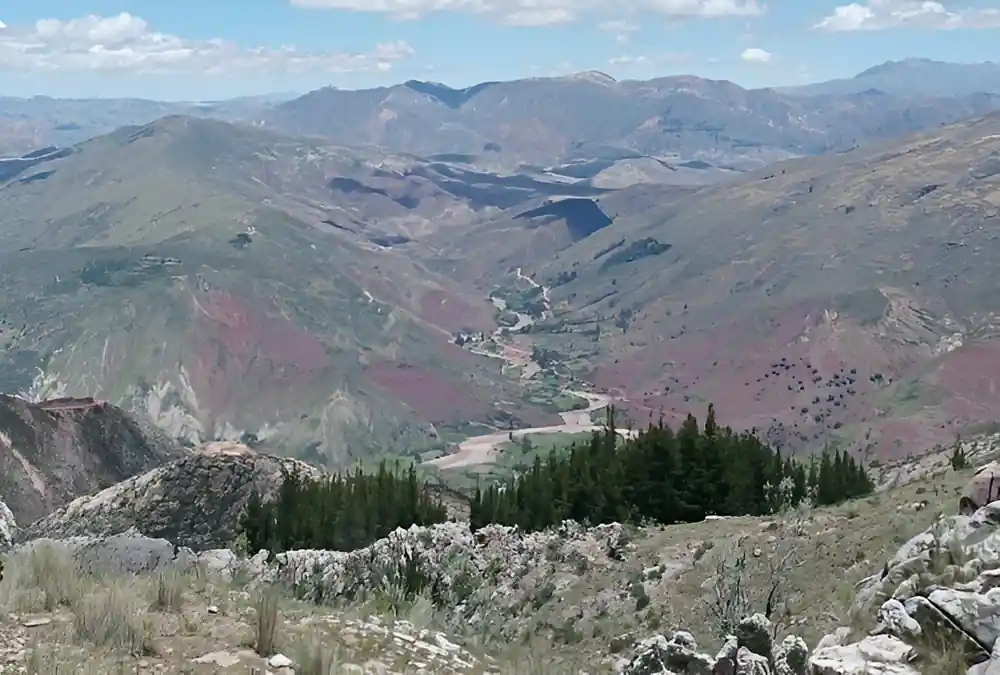
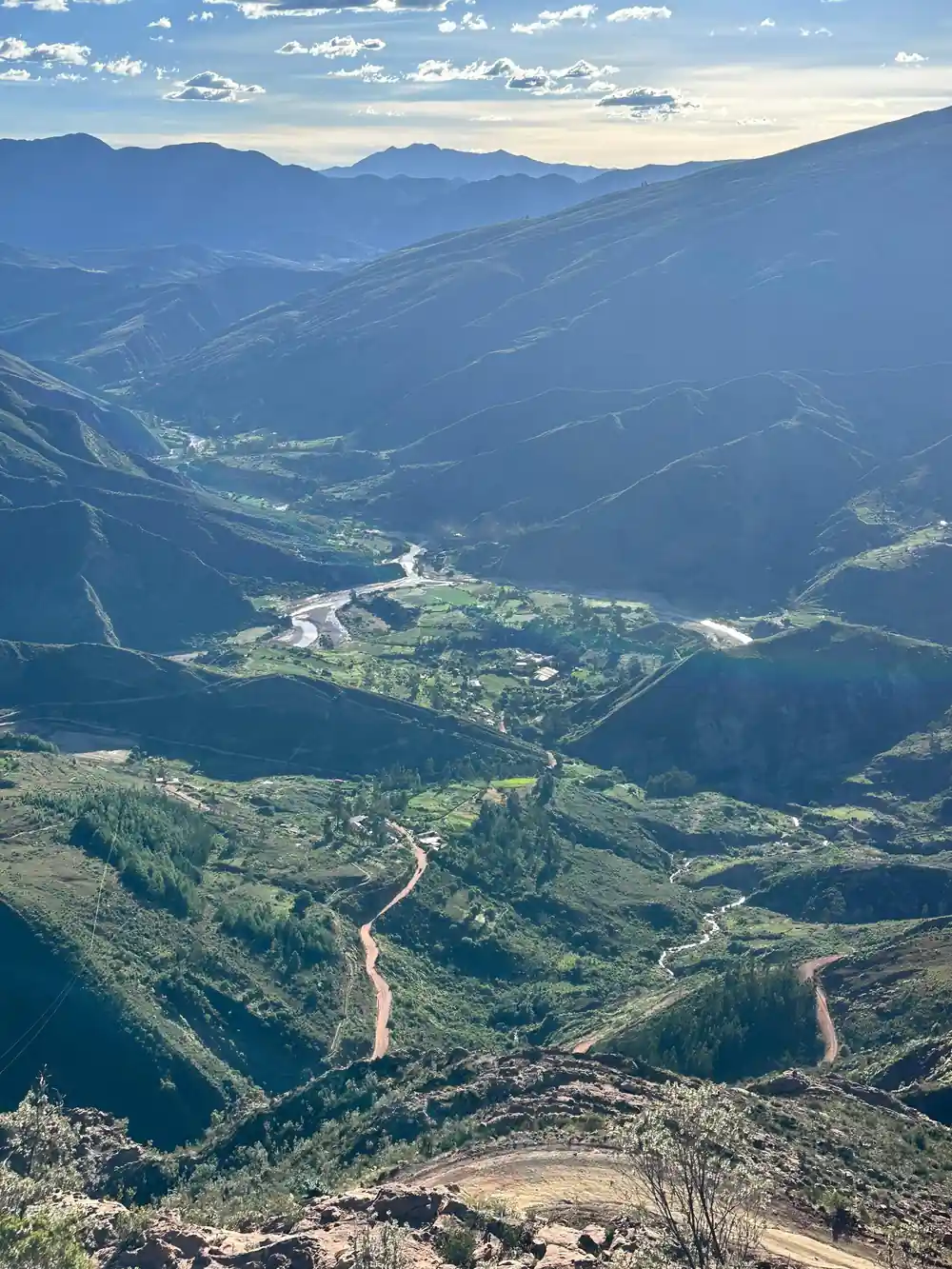
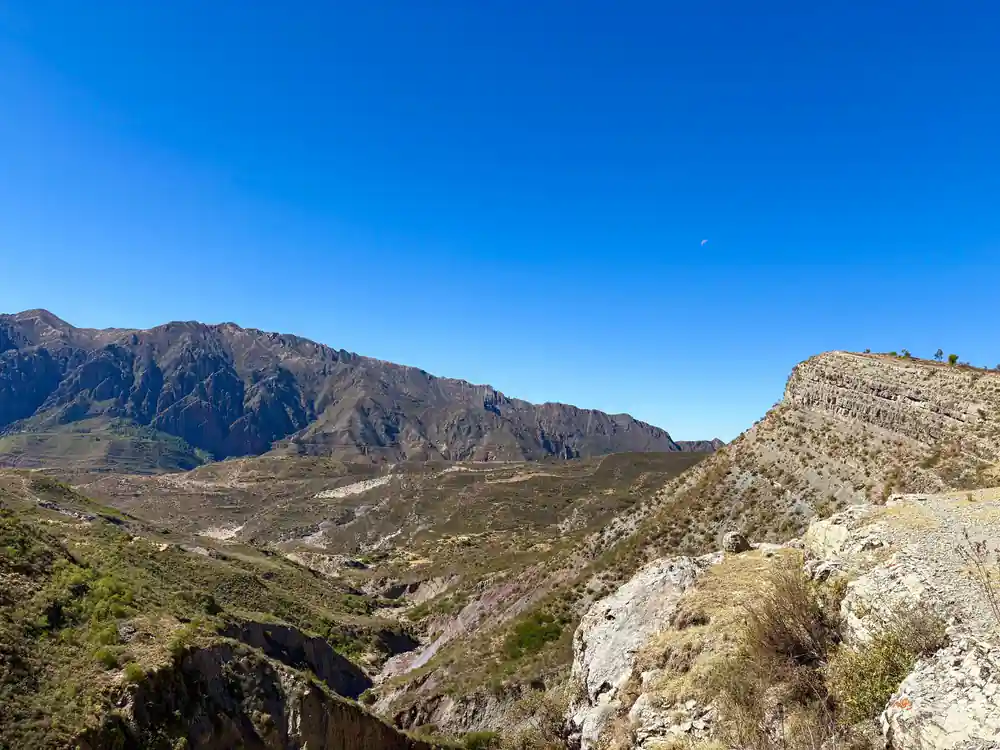
The bowl of pale, banded rock south of Sucre is a strange and beautiful landscape, and it is not what most people expect. The Maragua Crater is not volcanic and was formed by thousands of years of erosion.[8] What remains today is a wide depression ringed by layered ridges, with a patchwork of fields on the floor and red ochre slopes above them.
Maragua, the village on the crater floor, is listed at 3,100 metres above sea level on the Maragua Crater trek.[3] That is higher than Sucre, but the walking is mostly downhill if you start at the rim above Chataquila and work your way in. Many independent travellers do it as a long day, and some stay the night in the village and walk out the next morning.
Distances on the crater floor look short because there is little to compare them with, and the walking is slower than it looks on a map. Add river crossings, farm gates and a hot climb on the way out, and a route that looked like half a day turns into a full one. Start early and keep the option of a night in a village guesthouse open.
Getting to Chataquila by public transport
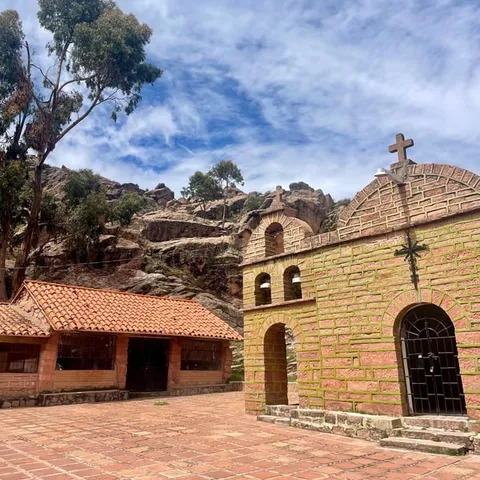
The classic independent start is Chataquila, a small chapel and viewpoint on the road that climbs out of the Sucre valley. The ride from Sucre to the Chataquila trailhead, the starting point of the Maragua Crater hike, takes about 1.5 hours.[1] Buses and shared taxis heading for Chaunaca or the villages beyond pass along the same road, and you ask to be let out at the chapel.
There is no formal stop or sign, so tell the driver clearly where you are going and sit where you can watch the left side of the road on the climb. Doing the Maragua Crater by public transport is cheap and flexible, but it needs an early start and a firm plan for the way home, and a shared taxi hired in Sucre suits small groups who would rather fix a pickup time. Keep small notes for the fare and download an offline map before you leave.
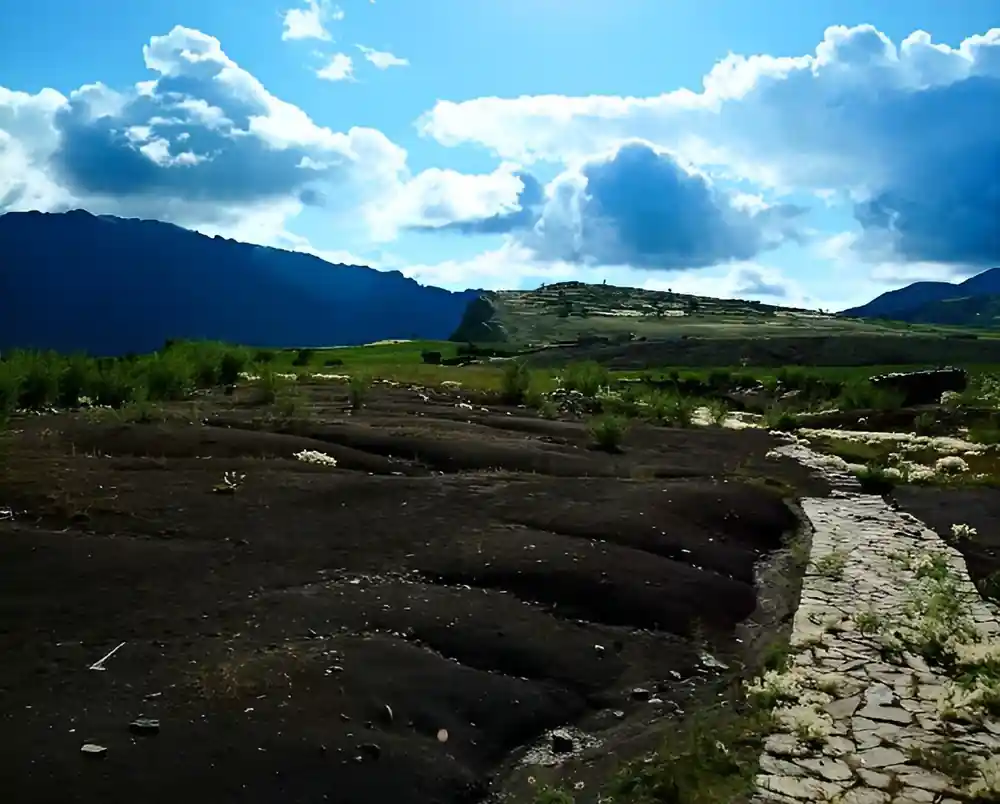
Old paving on the Inca trail above the crater floor, heading down towards Chaunaca.
The Inca trail from Chataquila down to Chaunaca
Behind the chapel the path sets off and drops over the edge of the valley. The Inca trail near Maragua is a pre-Hispanic camino also known as the Inca trail of Chataquila, which the hike follows downhill for 6km.[1] It is paved with flat stones in long stretches, wide enough for two people, and it swings around the contours with open views back up to the ridge you started from.
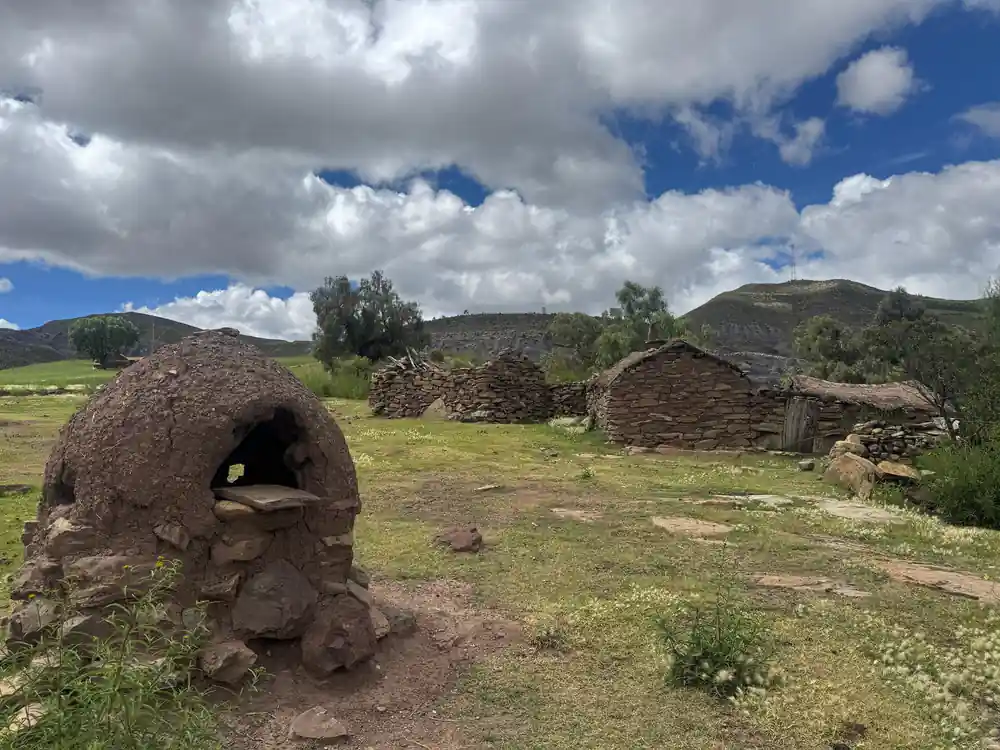
At the bottom you reach Chaunaca, a scatter of adobe houses, maize plots and a small church, and from there the route turns towards the crater. Water is scarce along the trail, shade comes in patches and the sun is strong at this height, so carry more than you think you need and start early enough to walk the last hour in good light.
Two things catch people out here: the drop in temperature when the sun goes behind the ridge, and the way a knee starts complaining on a long downhill. Poles help, and so does a steady pace rather than a fast start. If you are unsure about your fitness or your acclimatisation, the descent from Chataquila is the gentlest way into the crater.
Maragua village and the crater floor
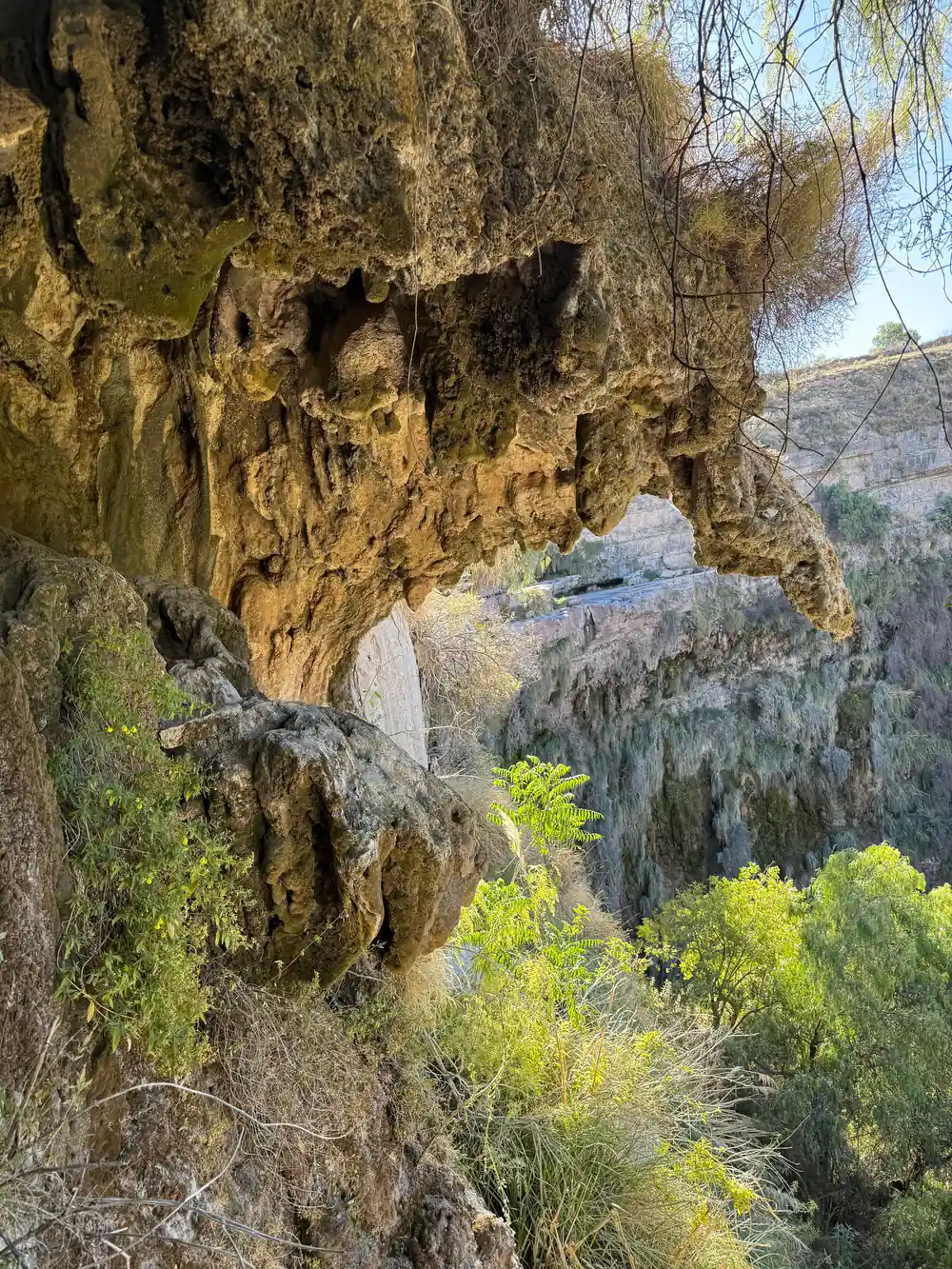
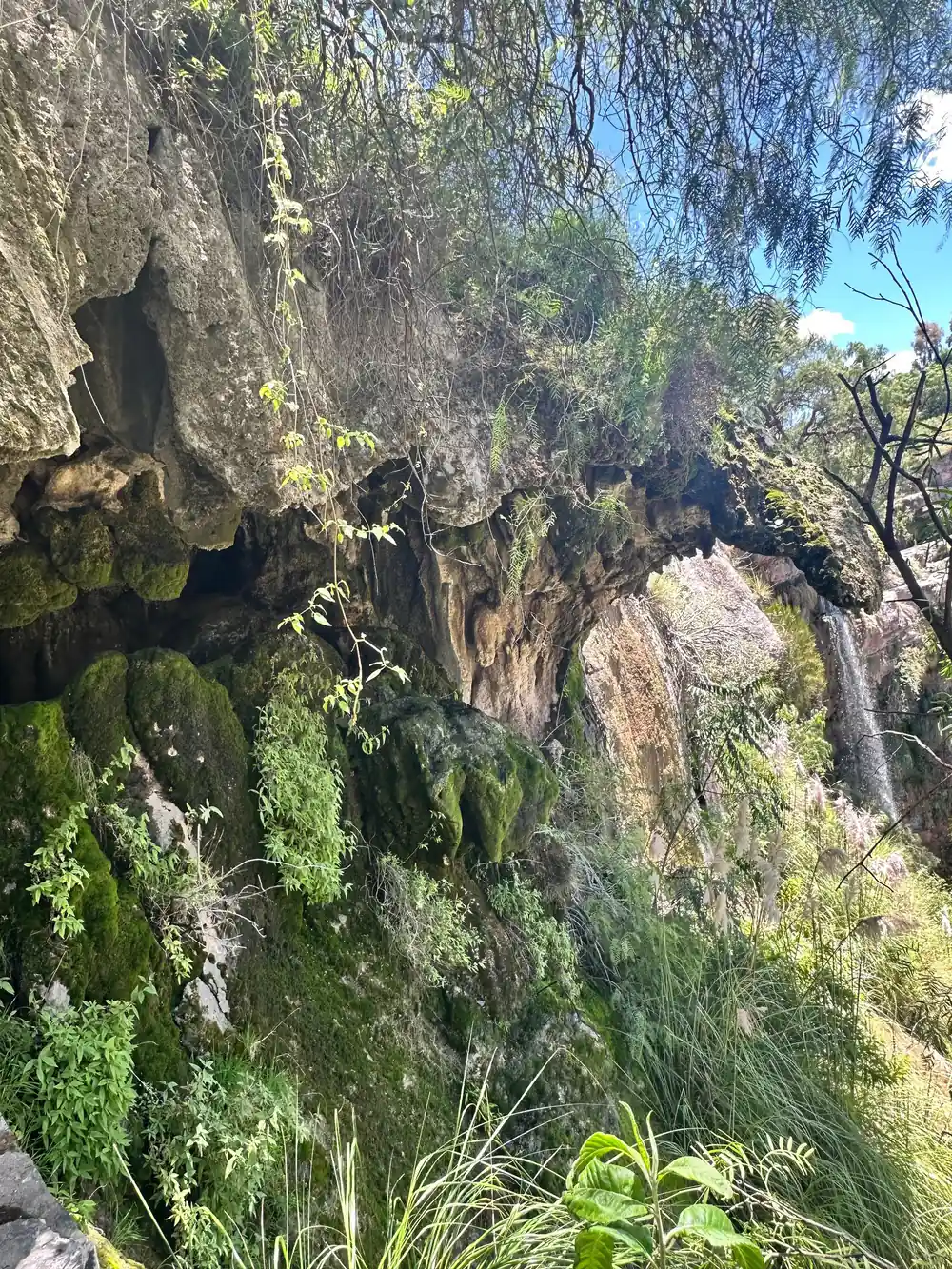
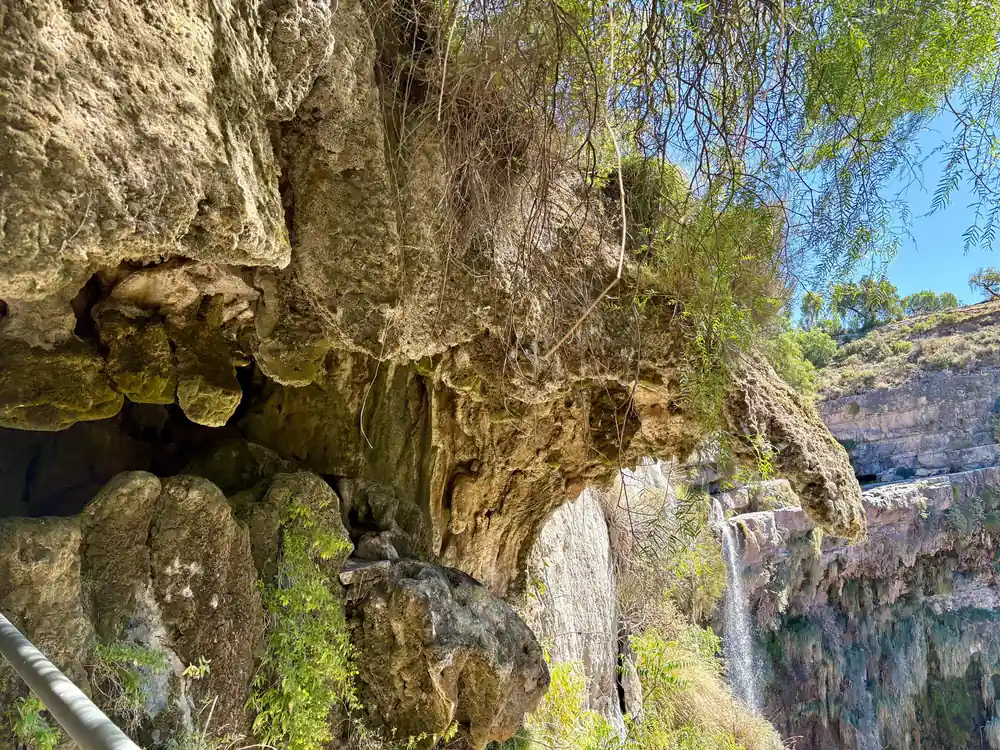
Maragua is a farming village on the floor of the crater, with a church, a school and a few simple places to eat and sleep. Just outside it, La Garganta del Diablo (The Devil's Throat) is a set of waterfalls located not far from the village of Maragua in Bolivia.[8] After the dry, dusty descent the sound of water comes as a surprise.
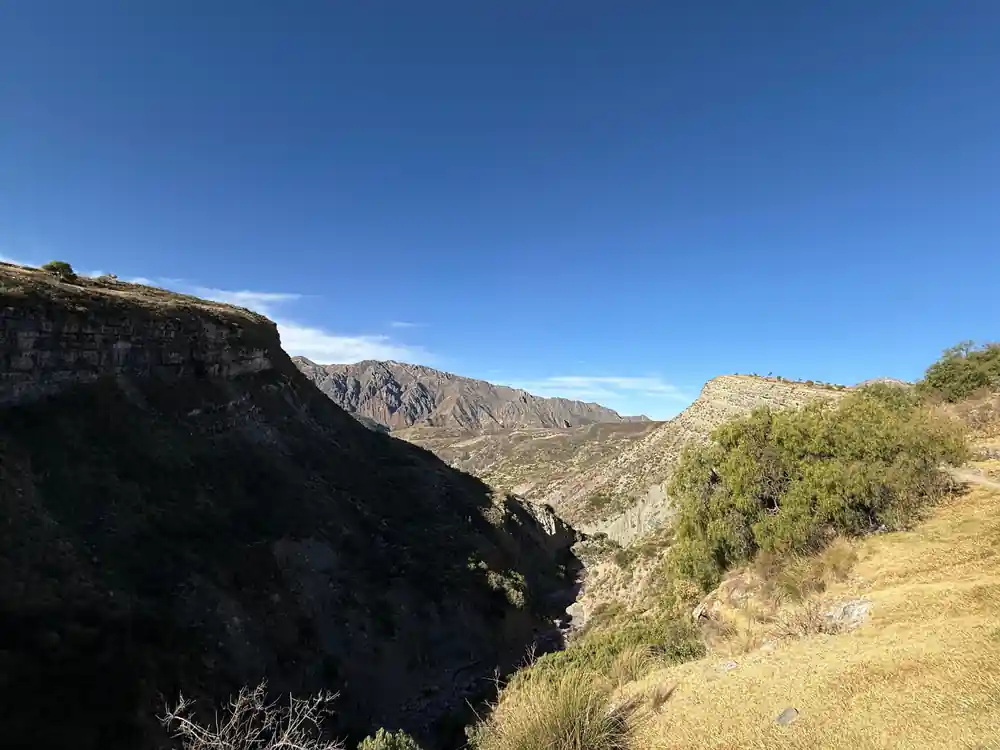
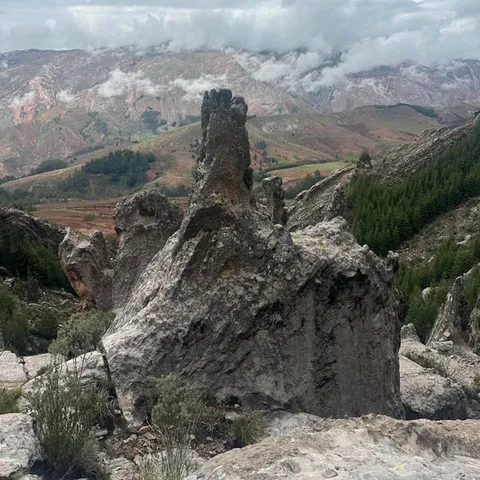
The crater itself is made of soft, layered rock in shades of grey, ochre and red, cut into terraces and gullies by water over a very long time. Fields of maize and broad beans are worked right across the floor, and the ridges step back one behind the other towards the horizon. Walk quietly and you pass farmers, dogs and donkeys, and the village is the obvious place to refill and eat.
from US$95
A guided day from Sucre linking the Inca trail with the crater floor, 10 hours, pickup included.[5]
Dinosaur footprints at Niñu Mayu
If you have the legs and the daylight, the walk out of Maragua climbs the western wall of the crater and drops to the river. From Maragua, the walk continues down to Niñu Mayu, where around 100 dinosaur footprints can be found.[1] The tracks cross a pale slab of rock beside the path, and they are easy to miss if you do not know what you are looking for.
Adding them turns the day into a longer one, so decide in the village rather than at the last minute, and take the heat seriously on the climb back up the crater wall. Many people see the footprints on guided excursions. On your own, ask in Maragua for directions and give yourself a clear turnaround time.
When to go and how to handle the altitude
Sucre sits at around 2,810 metres above sea level and has a climate of 'eternal spring' with daytime highs between 20°C and 23°C year-round.[2] Up in the crater it feels cooler and windier, especially early and late in the day. May to October is ideal for visiting Sucre and other high-altitude cities and trekking regions in the Bolivian Andes.[4]
Give yourself a day or two in Sucre before the walk, drink more water than feels necessary, eat properly the night before and keep the first hour gentle. A wide hat, long sleeves, sun cream and a light rain shell cover most conditions on the trail, and worn-in shoes with grip are worth more than new boots. If a headache builds on the descent, slow down, drink and take the hillside at an even pace.
Rain can change a day quickly in the Andes, and the old paving of the Inca trail holds water and turns slick. Watch the sky, carry a plastic bag for your phone and camera, and be ready to shorten the route rather than push on to the footprints if the cloud is building.
When a guided day makes more sense
The day trek booked from this site links the Inca trail above Chataquila with the crater floor. Sucre: 1-Day Trek in the Crater of Maragua and Inca Trails lists a duration of 10 hours, pickup included, a live tour guide in Spanish and English, and free cancellation up to 24 hours in advance for a full refund.[5] It is a simple way to see the trail, the village and the crater in one day without arranging transport in either direction.
Other listings cover the same ground in different ways: sunrise departures with cave paintings, two-day treks that sleep in the villages, and private trips that take in the dinosaur footprints. If your time in Sucre is short, or you are travelling alone and would rather not wait for a bus at the end of a long day, the organised version earns its place. If you have a spare day and like the idea of breakfast in a village kitchen, go alone and take your time.
Either way the shape of the day is the same: a viewpoint above the valley, a long descent on old stone, a village on the crater floor and a return in the evening light. The difference is who drives, who navigates and who waits for the bus at the end.
Day trips that reach the crater: from-prices
US dollar from-prices of tour listings that include the Maragua Crater and the Inca trails, as published on GetYourGuide:[5][6][7][9]
What a guided crater day costs, in US dollars
From-prices of tour listings:[5][6][7][9]
When to walk the crater
Going independently
Reach Chataquila early
Buses and shared taxis from Sucre pass the trailhead about 1.5 hours from the city, so leave early and allow for a slow climb out.[1]
Walk the old Inca trail down
From behind the chapel the camino drops 6km to Chaunaca on flat stone paving, with long views over the valley most of the way.[1]
Cross the crater to Maragua
Continue across farmland to Maragua, listed at 3,100 metres, with food, water and simple beds if you decide to stay.[3]
Add the dinosaur footprints
From Maragua the walk climbs the crater wall and drops to Niñu Mayu, where around 100 footprints sit in pale rock.[1]
Plan the trip home
Fix a pickup point and time, or ask in the village which bus passes in the afternoon, and keep enough daylight for the ride back to Sucre.
Walk the crater with a guide who knows the trail
from US$95Reserve now & pay later