1-Day Trek in the Crater of Maragua and Inca Trails

Sucre

Maragua Crater: A Day Trek From Sucre Into an Eroded Dome

Two hours down a pre-Columbian road, a bowl of rock standing on end, dinosaur tracks in a vertical wall, and the community that farms the floor of it.

100% secure

10 hDoor to door from Sucre
2 hOn the Inca road
2,810 mSucre; the trek starts higher
JalqaWhose land this is

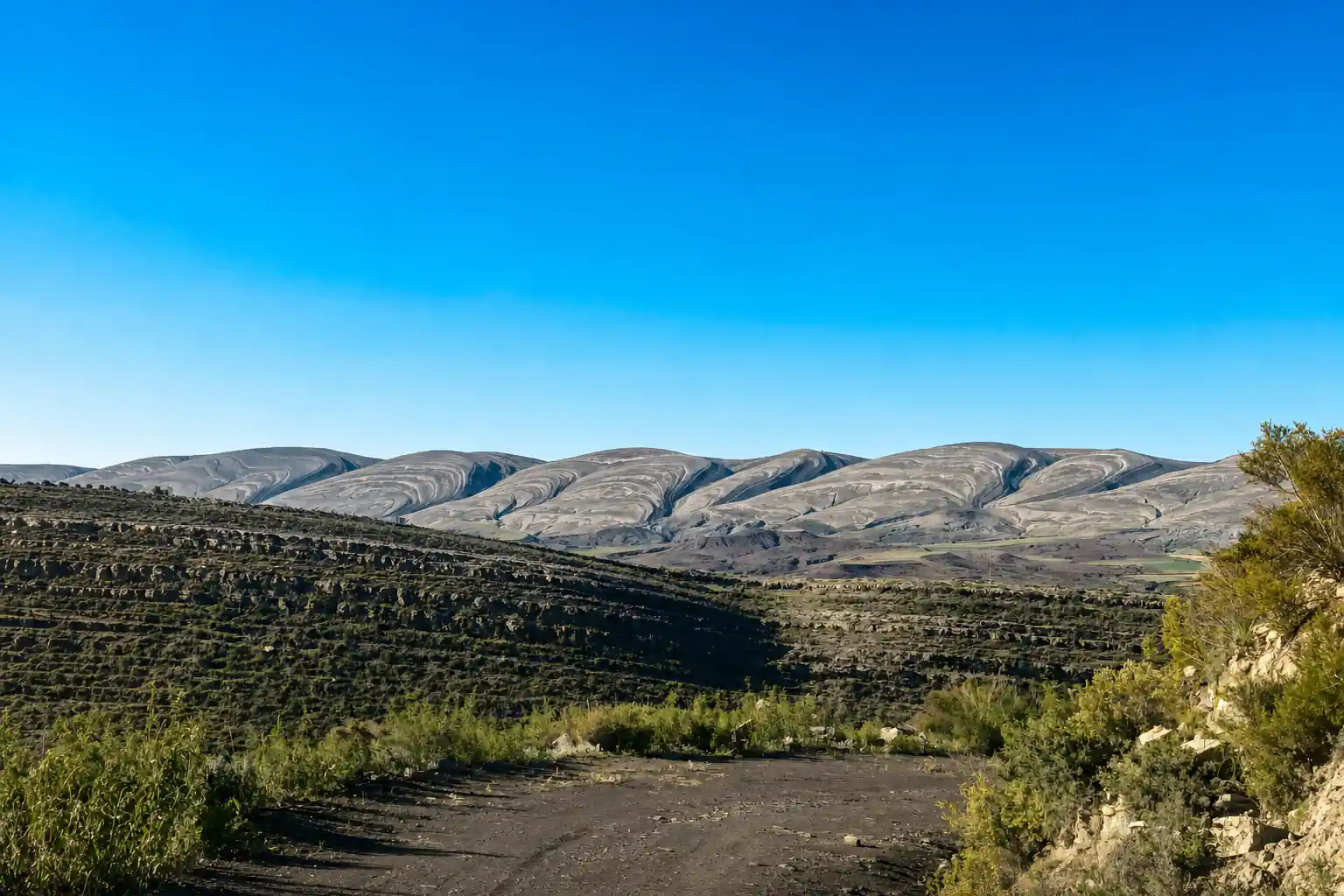
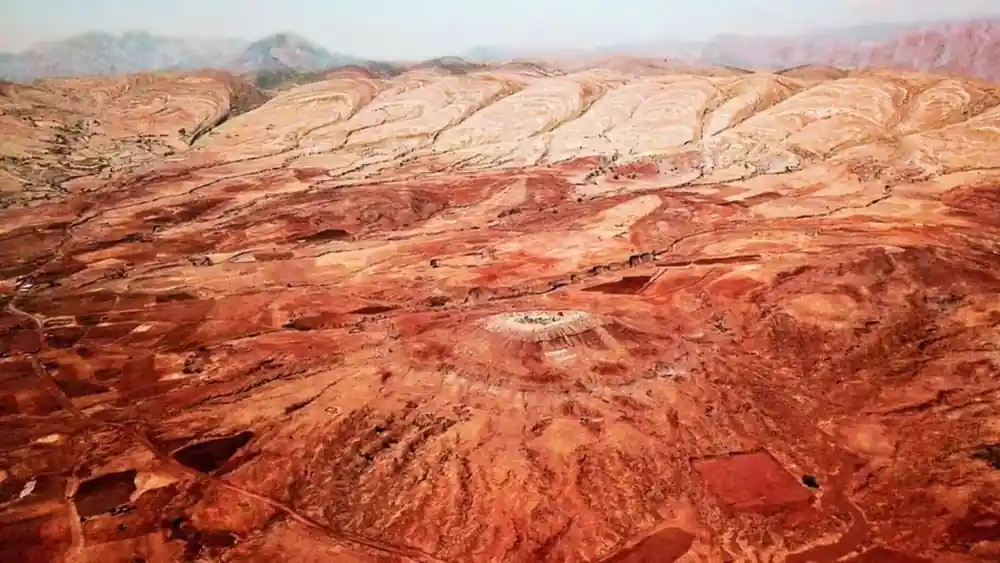
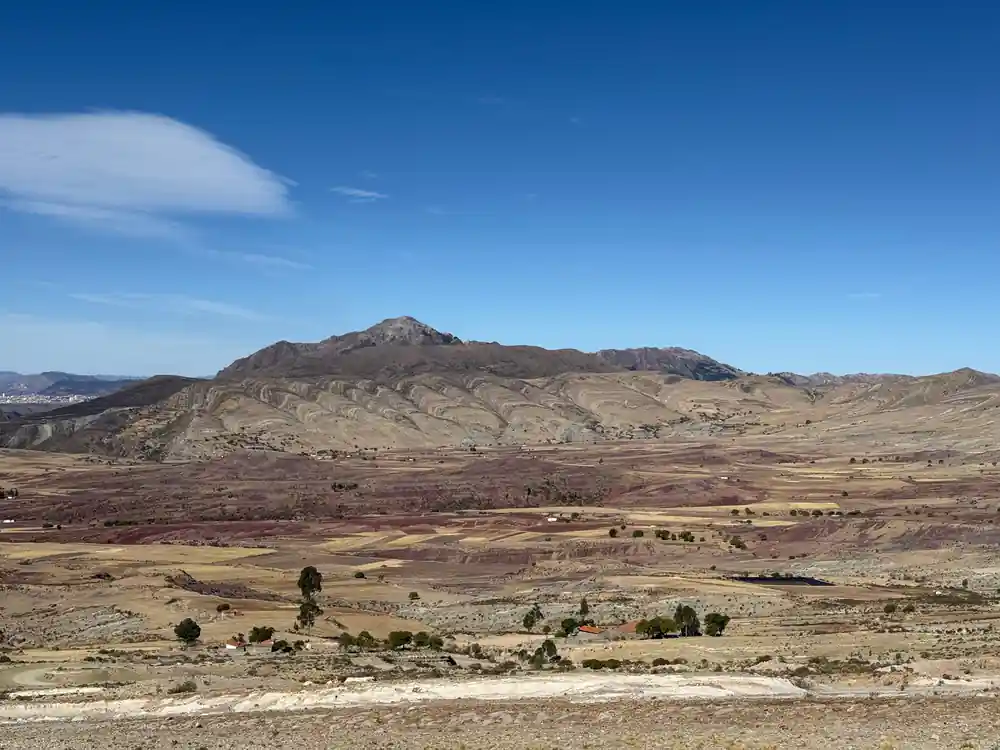
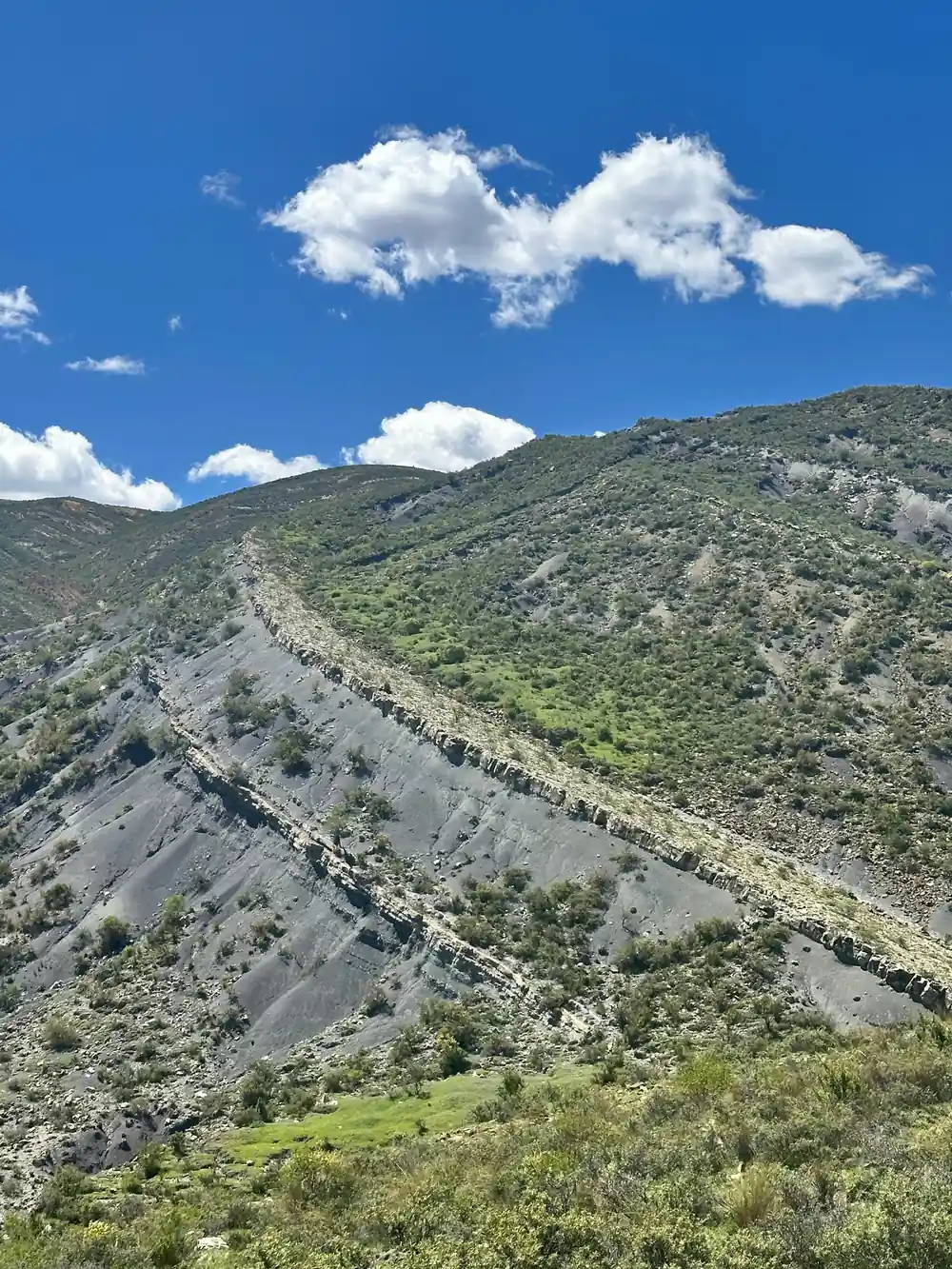
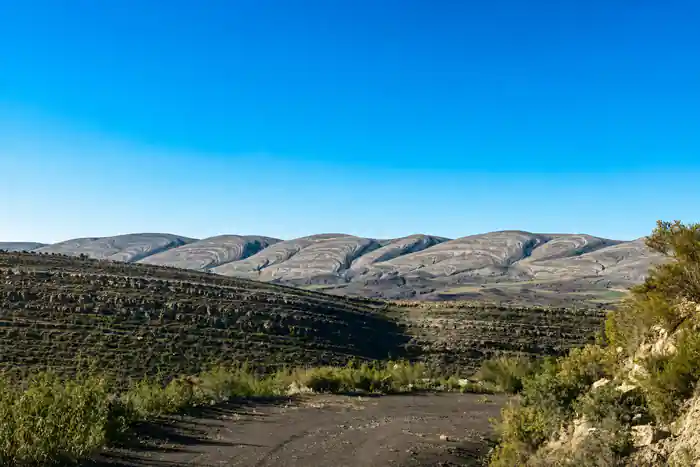
It is called a crater and nothing hit it. What you walk into is a dome of rock that has been worn out from the middle, leaving the harder layers standing in rings around a soft floor, with dinosaur footprints tilted upright on the way in.

Reviews

What people say

Gallery

What it looks like

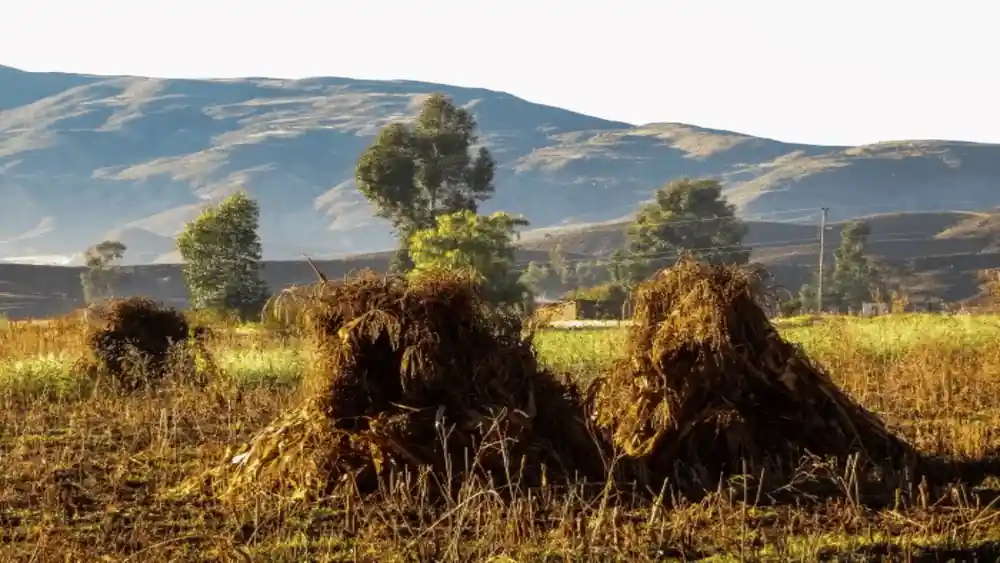
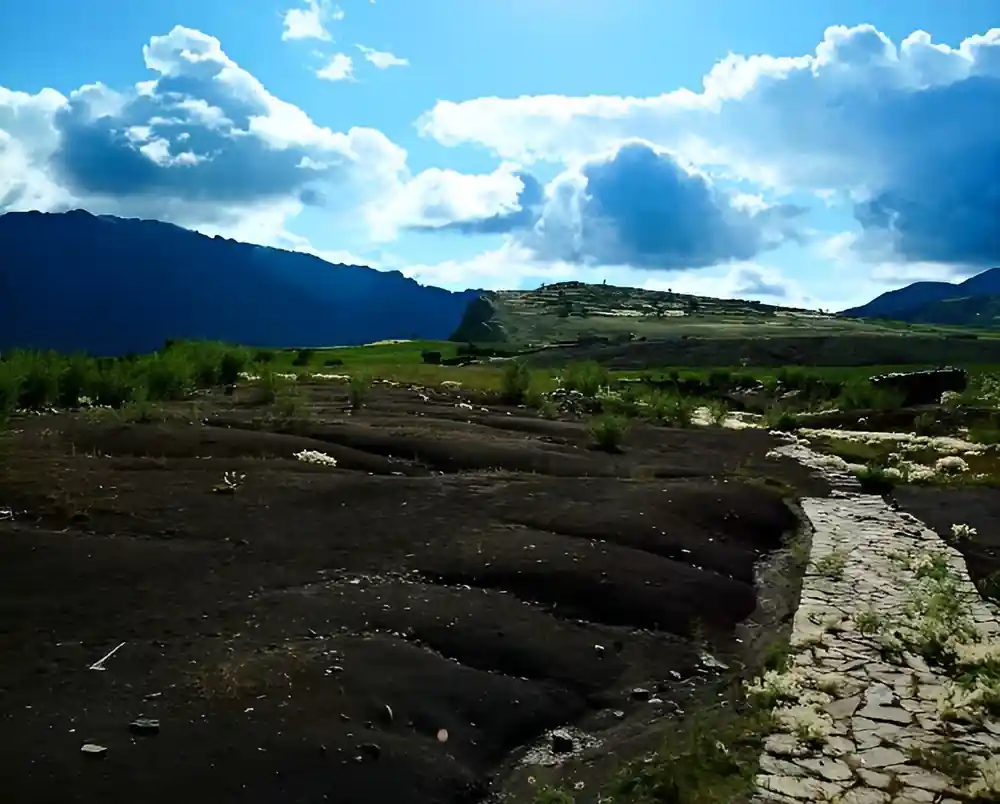
Harvested crop stacked in a highland field with hills behind
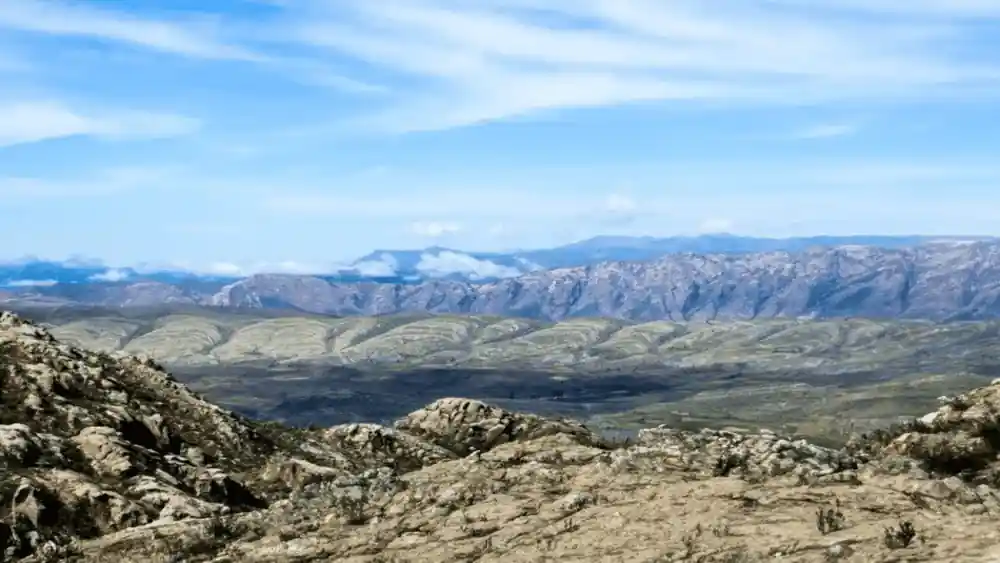
Layered ridges receding to a distant range from a rocky foreground
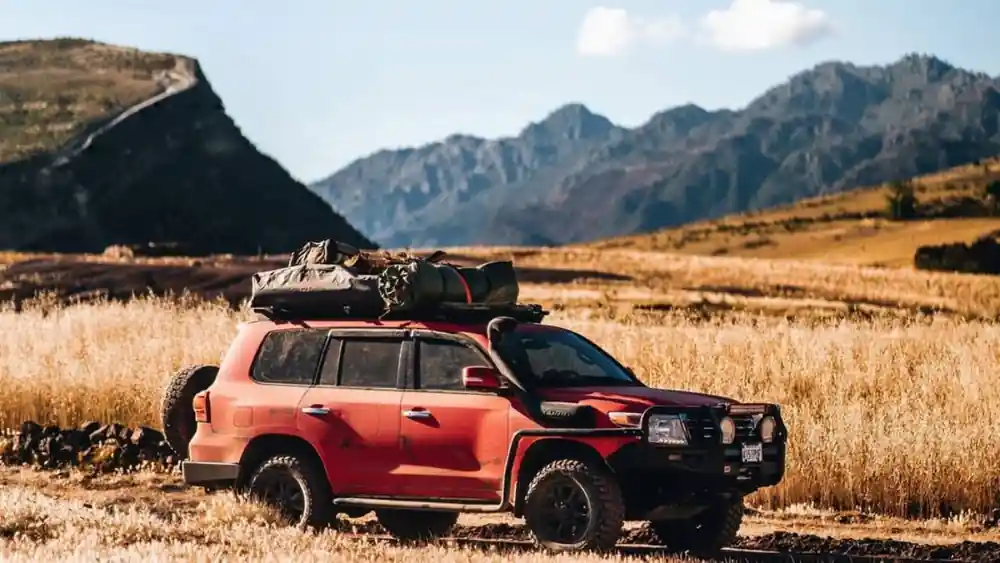
A loaded four-wheel-drive parked on a track beside highland fields
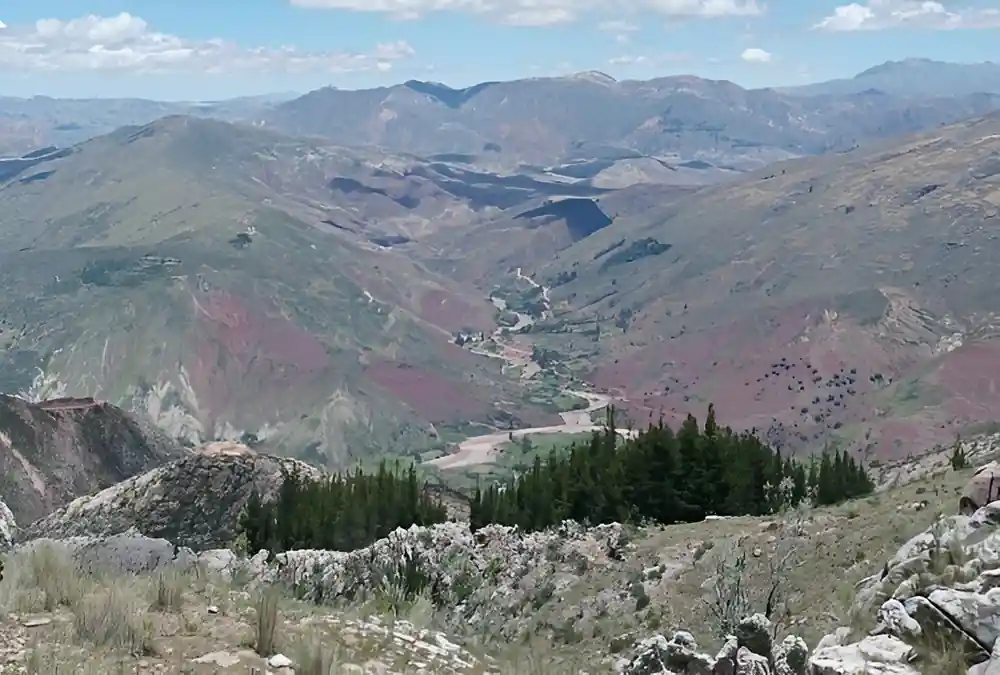
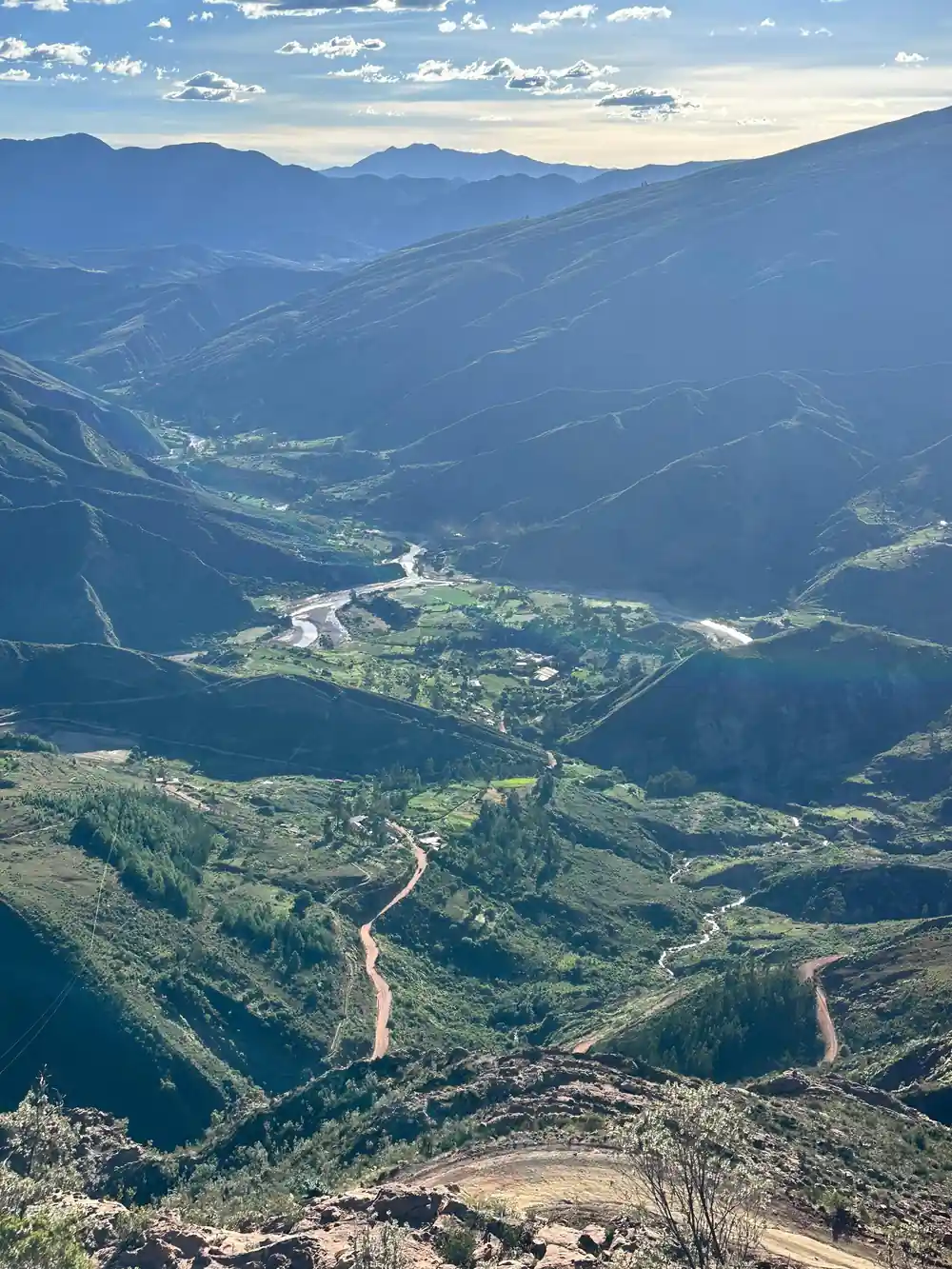
A deep valley with a river and a road winding along the floor
Green terraces and dark rock in the valley below the crater rim
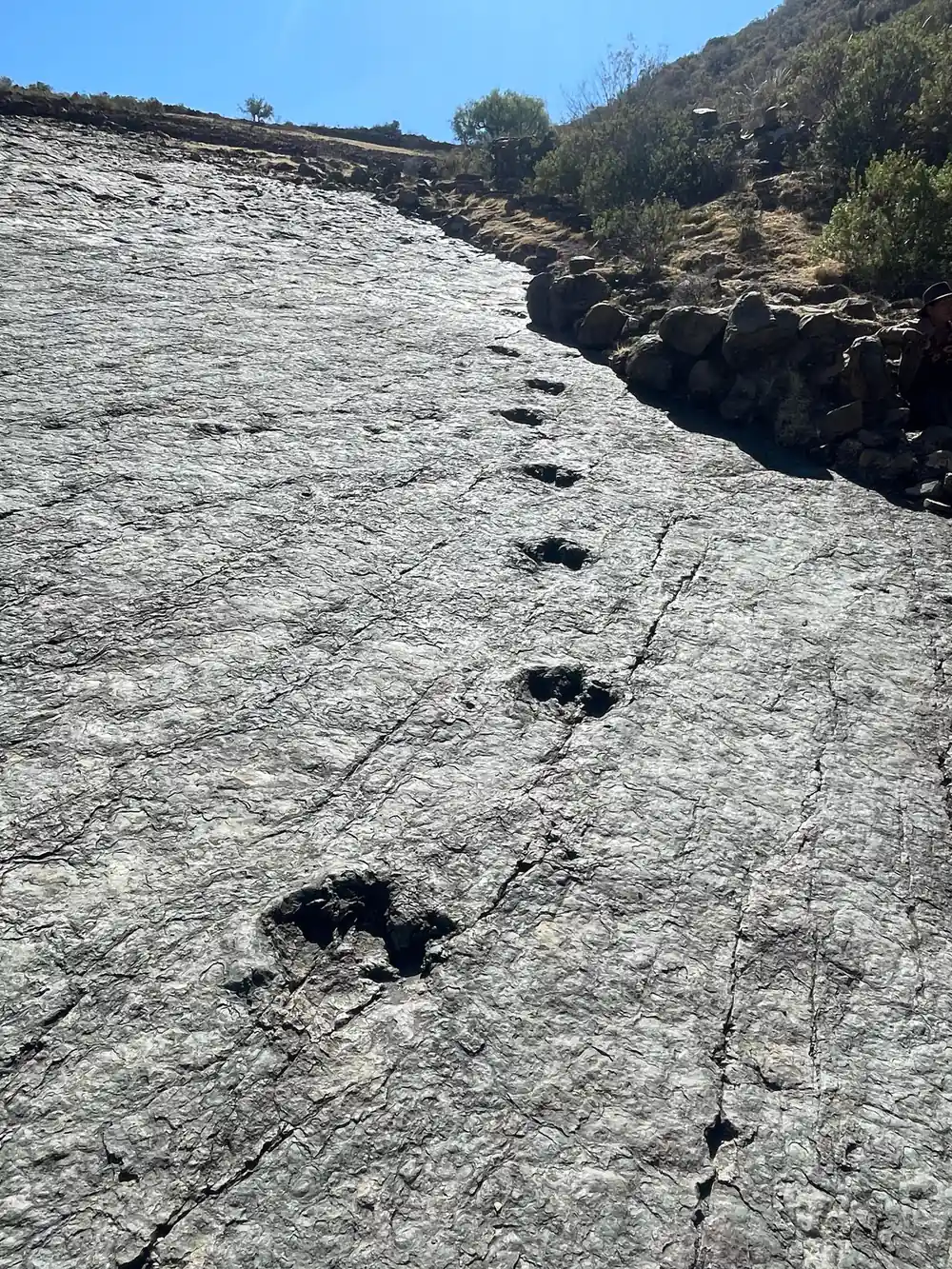
A line of dinosaur footprints running up a pale sloping rock slab
A visitor with arms raised in front of the red and ochre bands of the crater
A group of visitors and a local family beside an adobe house
Aerial view of the red upturned strata curving across the crater
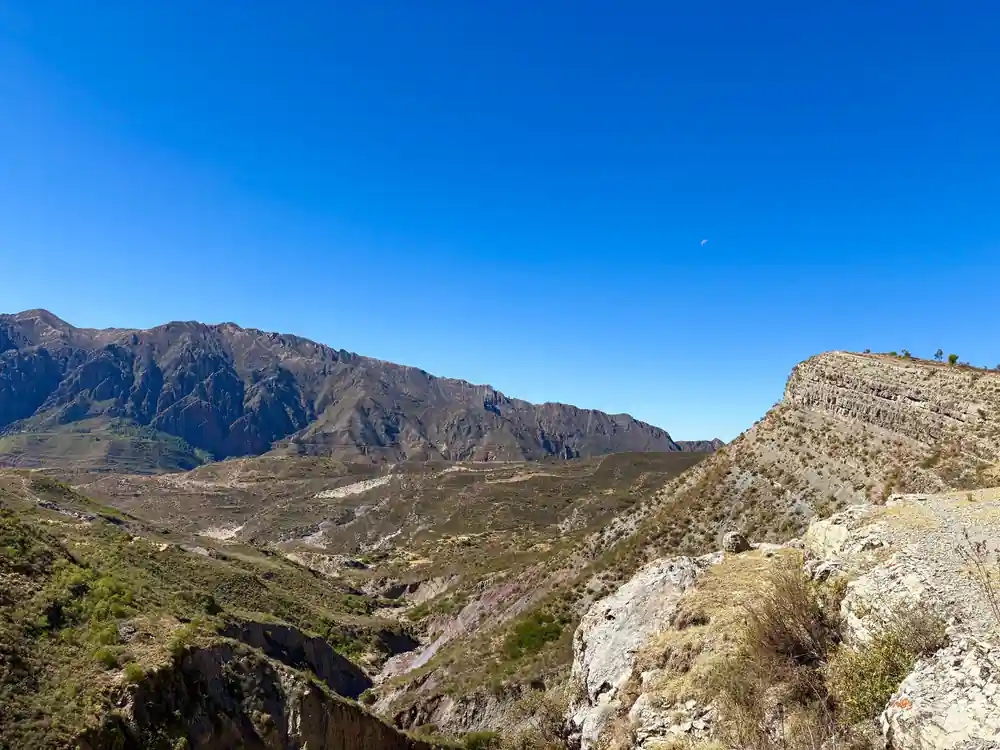
The crater floor and rim seen from high on the approach road
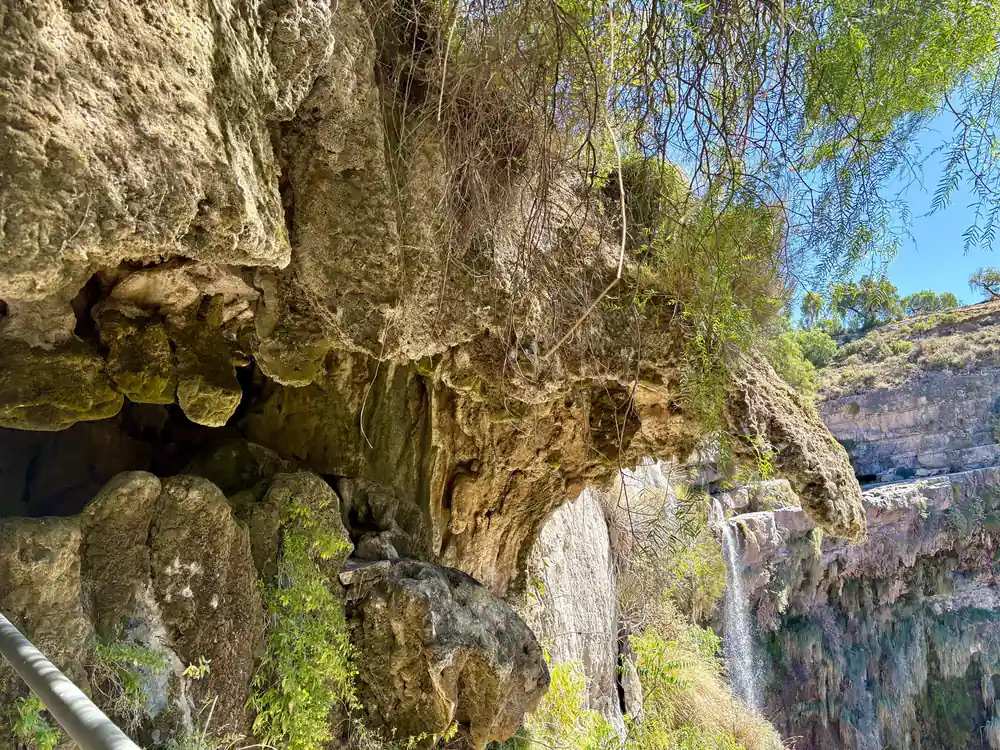
A rock overhang with hanging vegetation above a stream
A narrow gorge cut deep into pale rock with hills beyond
Dinosaur footprints scattered across a steeply tilted rock surface
A ridge of tilted strata running diagonally down a green hillside
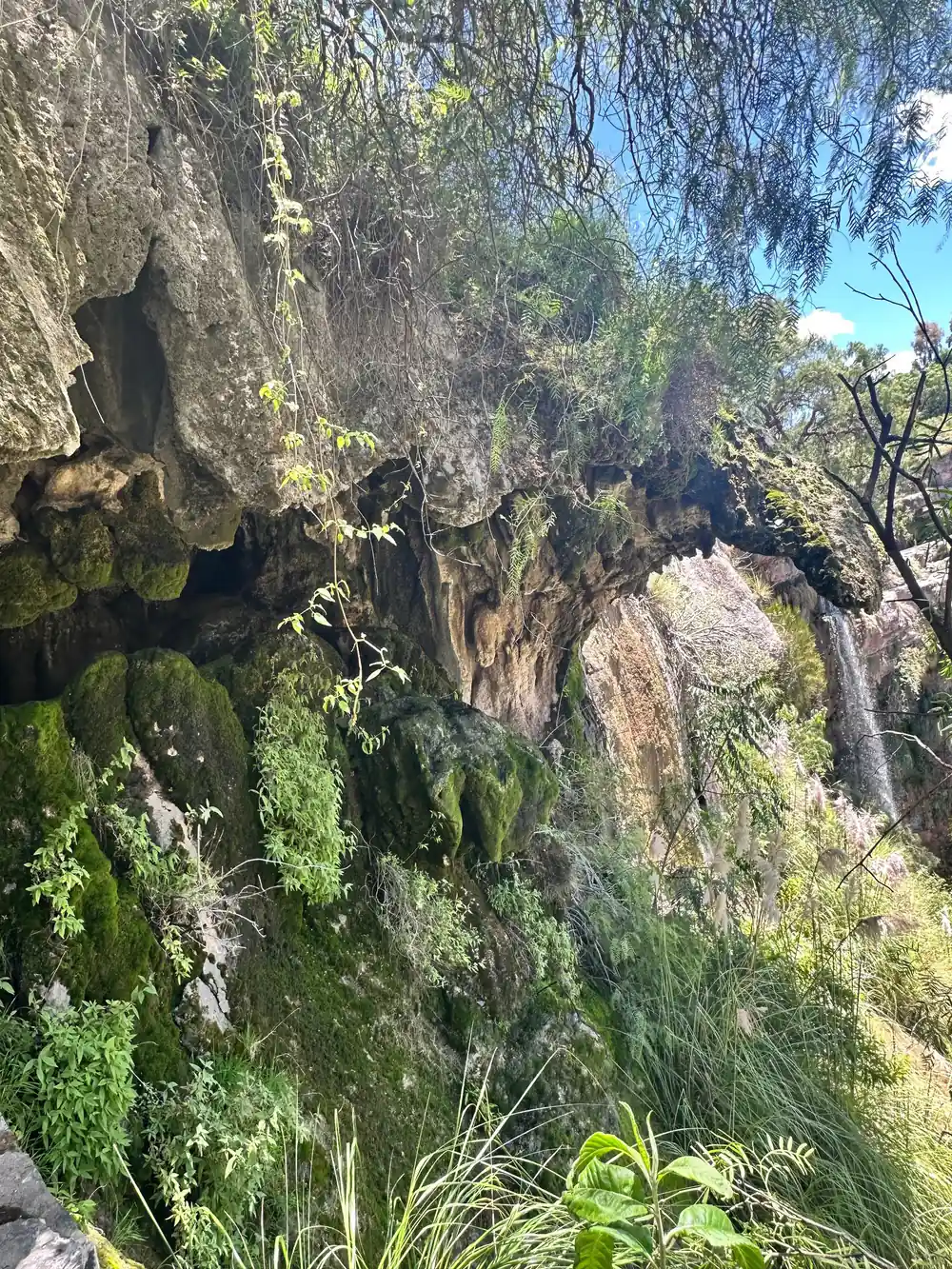
Water falling over a mossy overhang into a rocky gorge
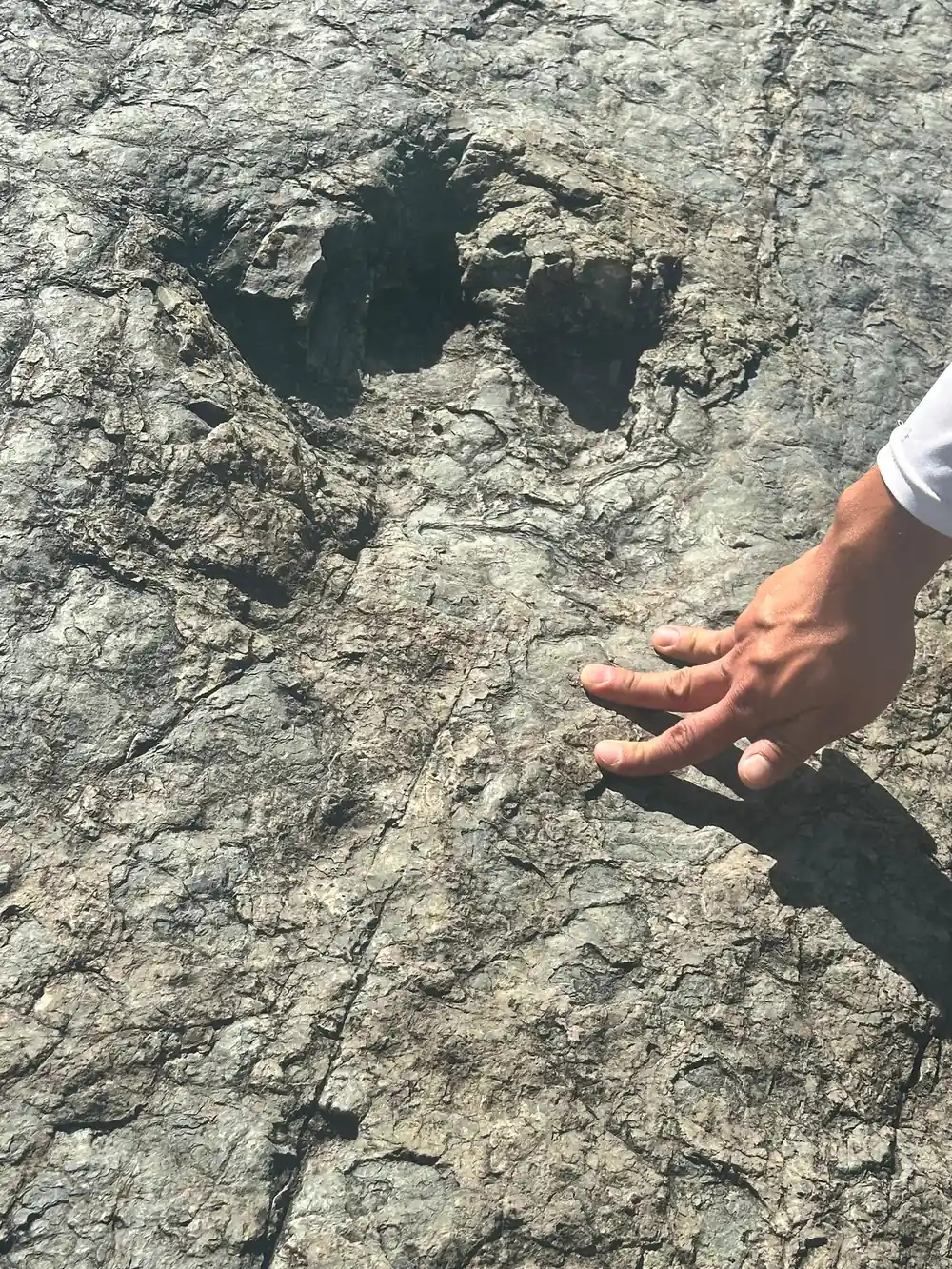
A hand beside a large three-toed footprint in grey rock
A road winding along a green valley floor seen from far above
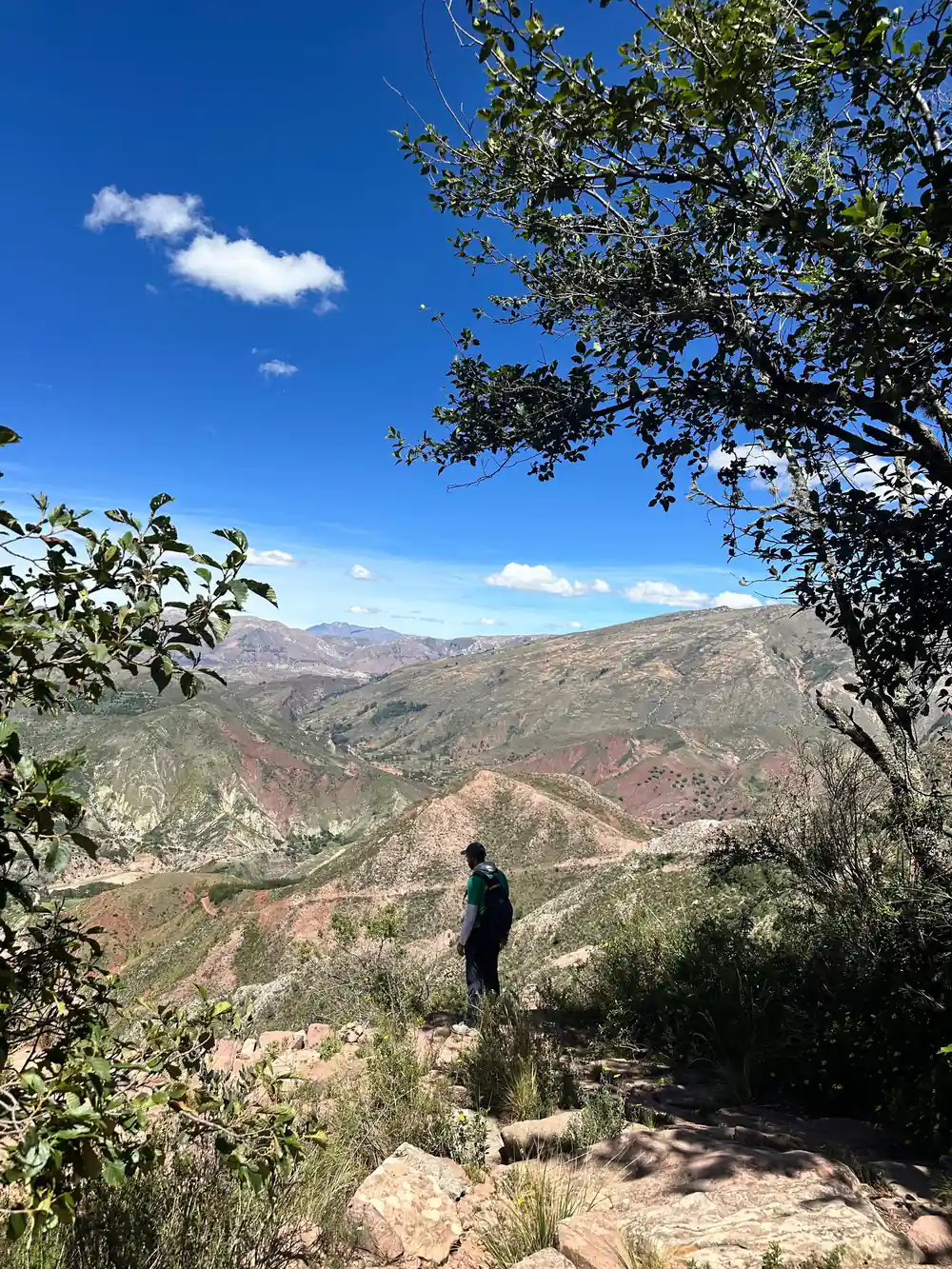
A walker on a trail with layered hills and trees beyond
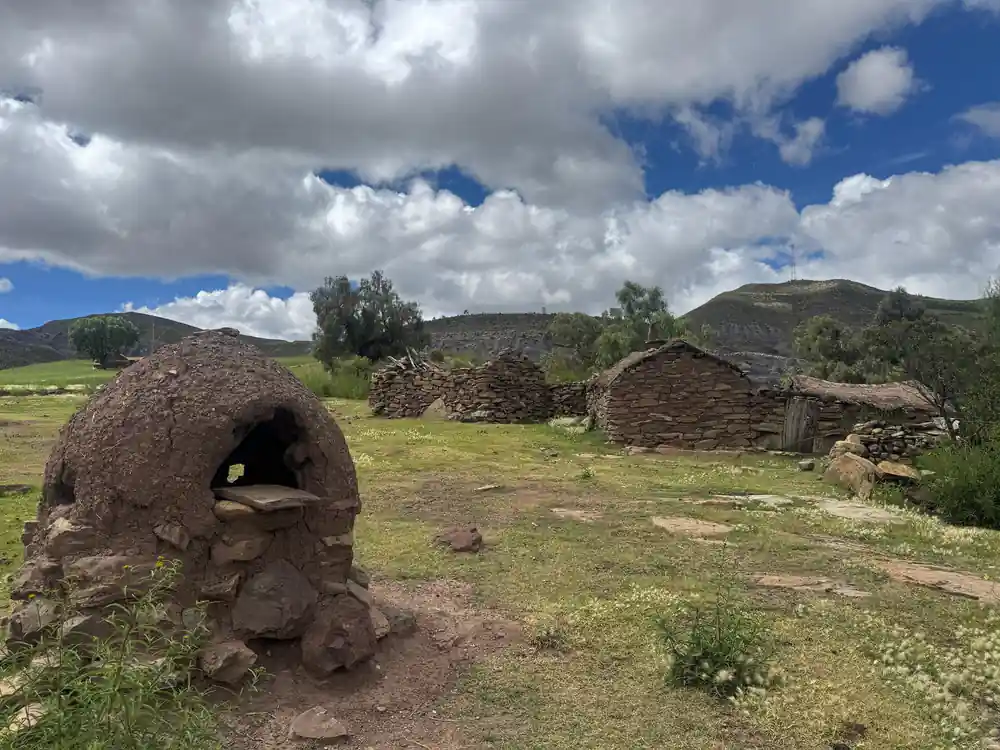
A stone oven and adobe buildings under a cloudy sky
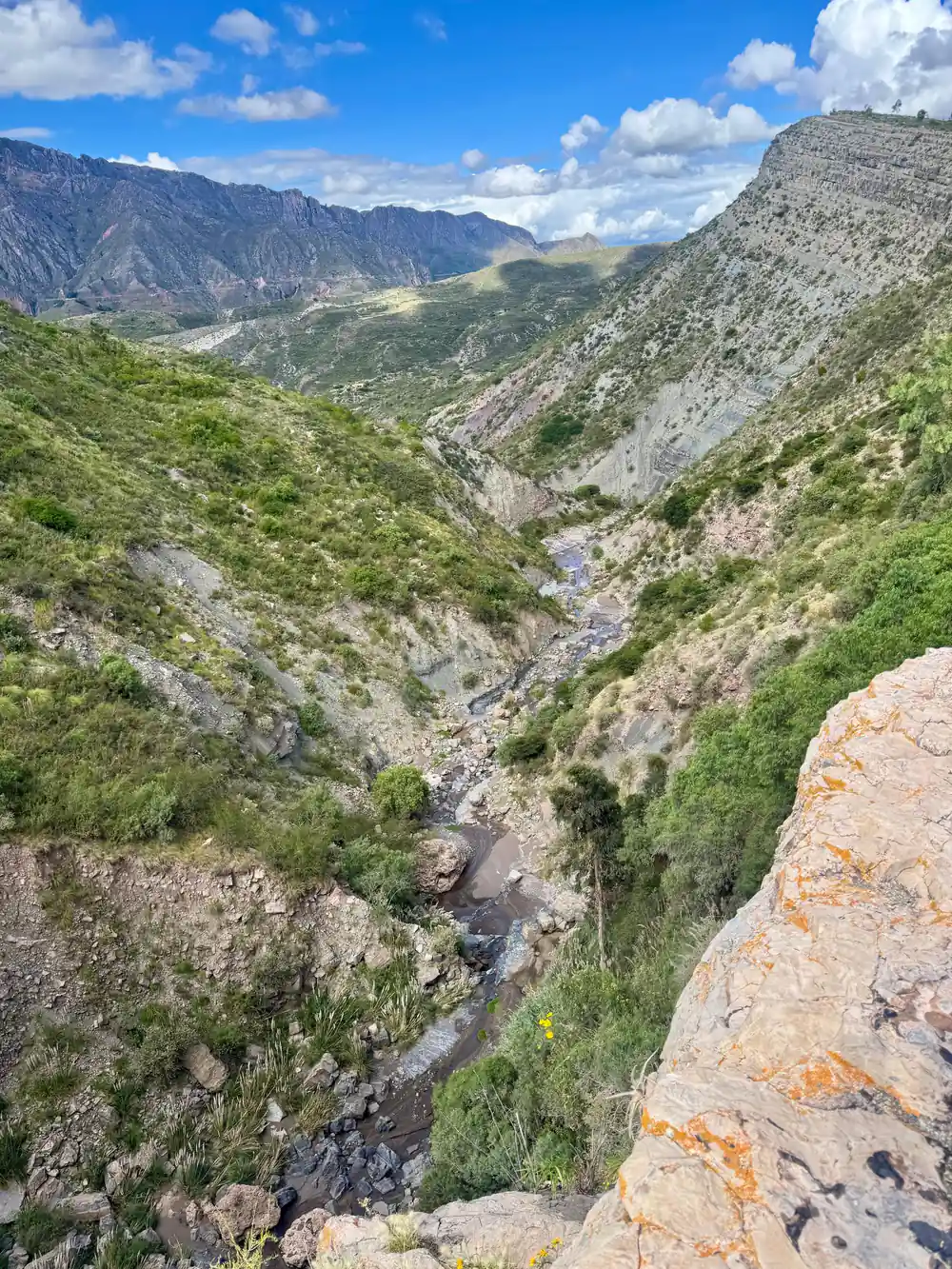
A steep gorge with orange rock and a stream at the bottom
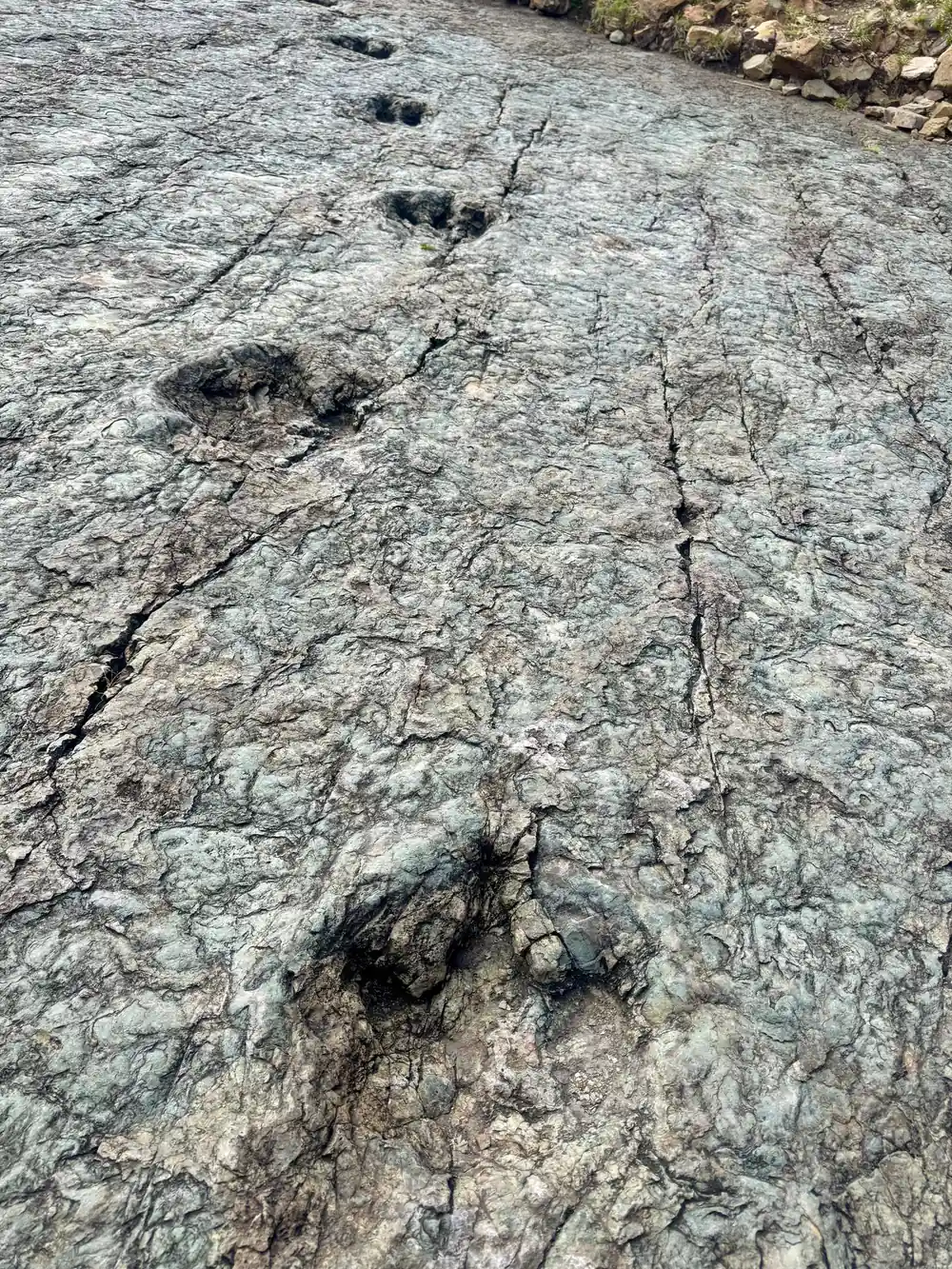
Two dark footprints in a cracked pale rock surface
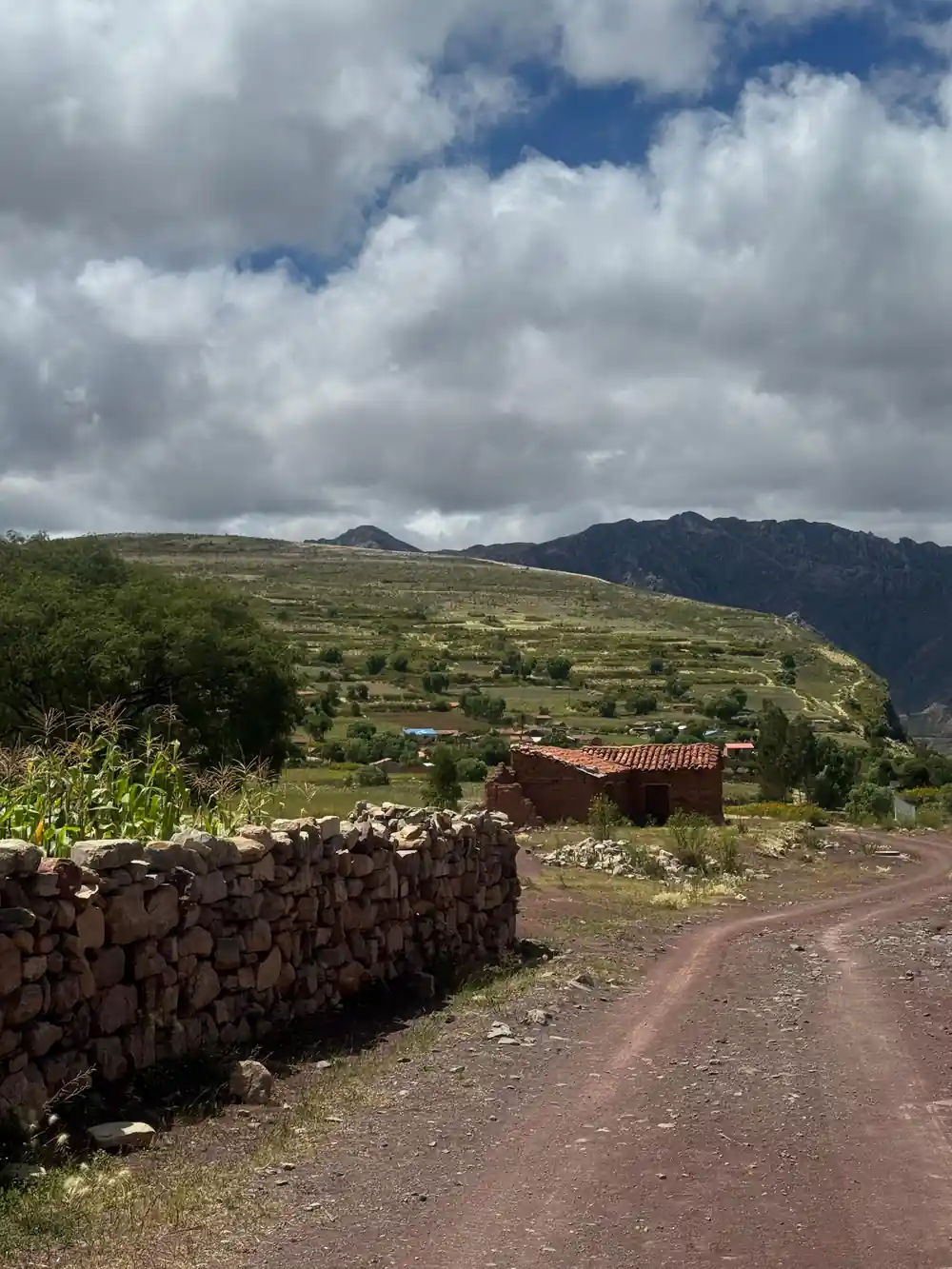
A dirt road running past a stone wall and a tiled roof in a village
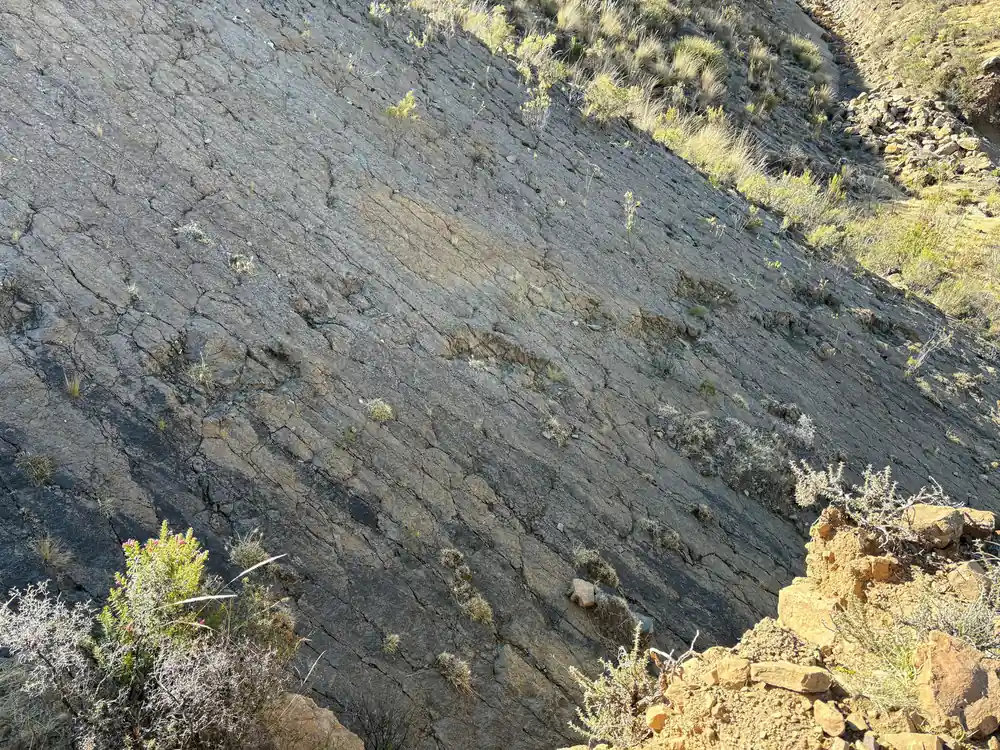
Steeply tilted beds of dark rock exposed on a hillside
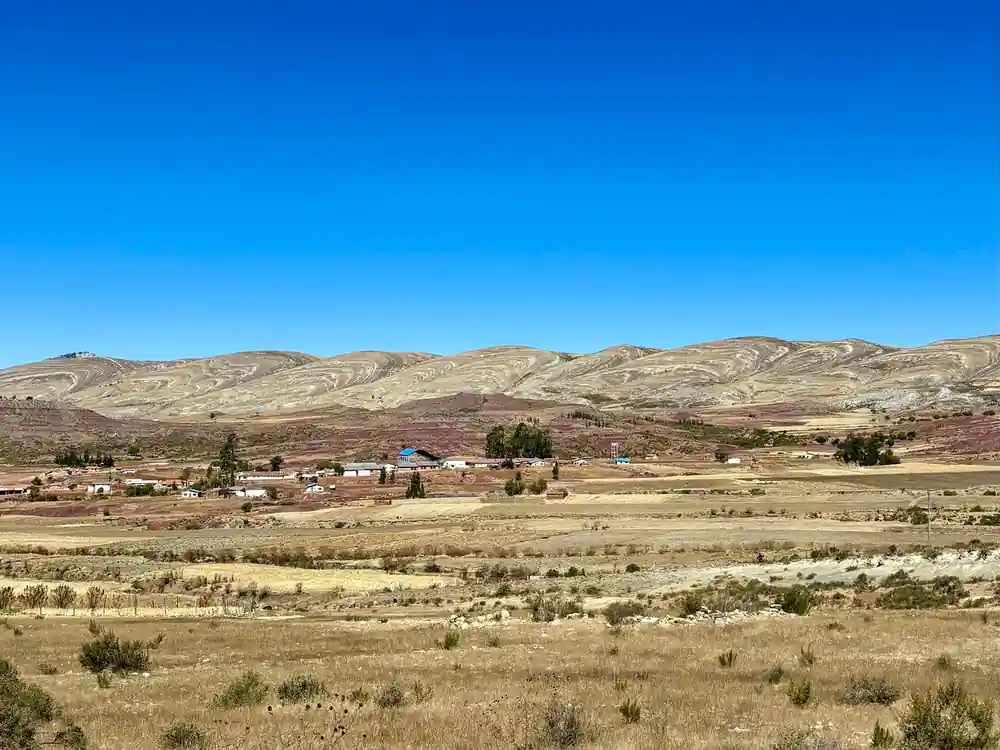
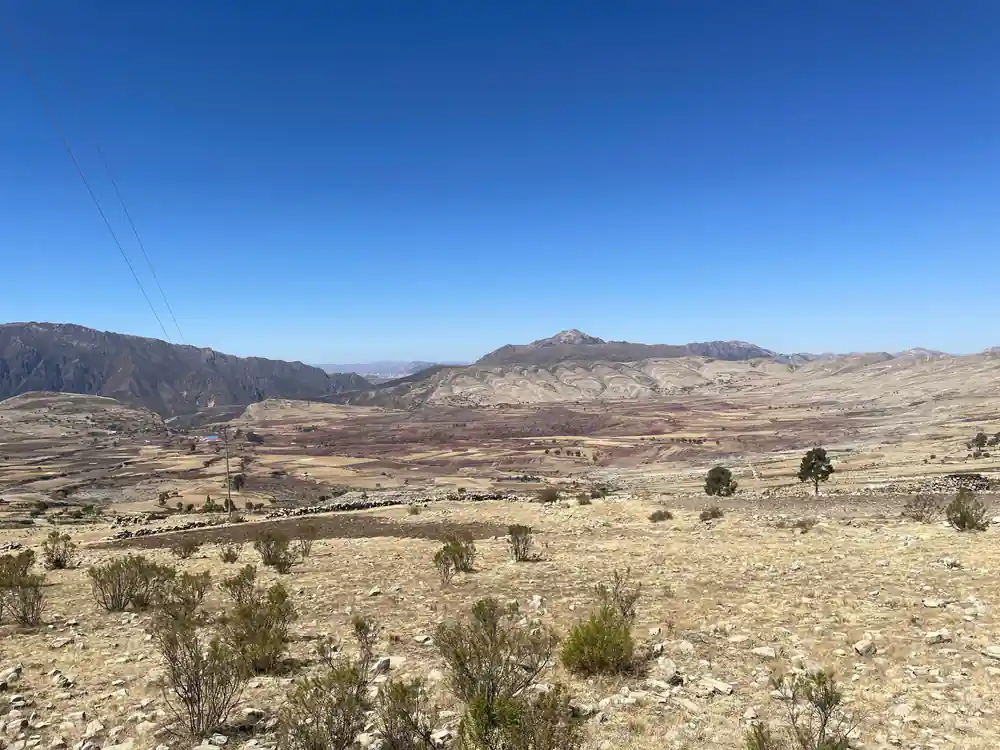
Fields and scattered buildings on the crater floor under a deep blue sky
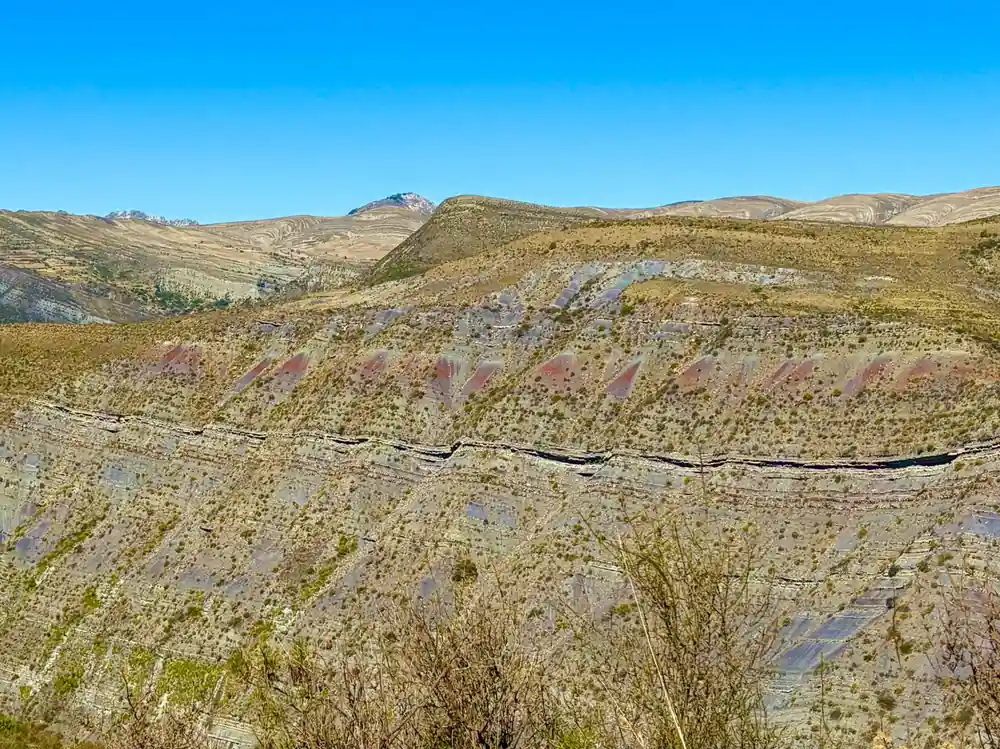
Coloured bands of rock running across a hillside above dry scrub
A waterfall dropping through a rock overhang hung with vegetation
A rocky valley opening between steep hillsides
A wide dry plain with scattered trees below a distant peak
A trackway of footprints running across a tilted rock slab

Ten hours from Sucre, with the walking in the morning

Check availability

The route

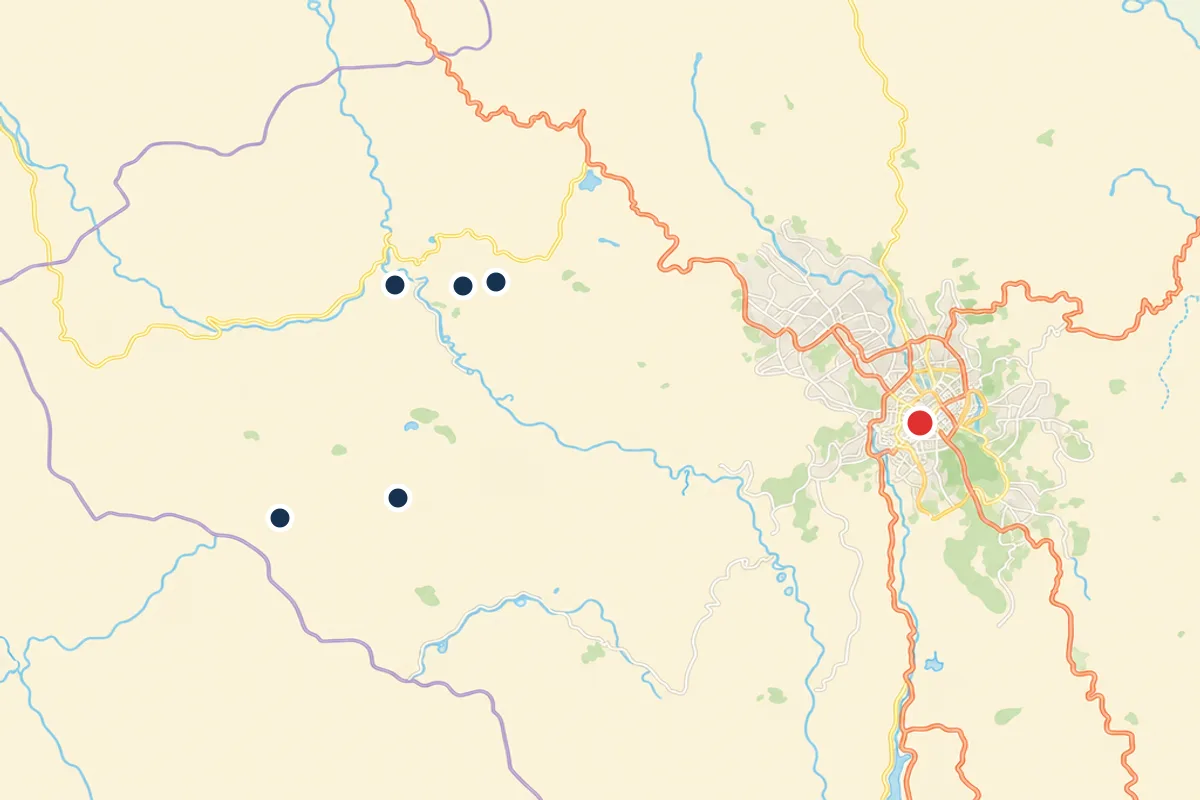
Where you go

  1. Pickup location:

    Sucre

  2. Chataquila30 minutes

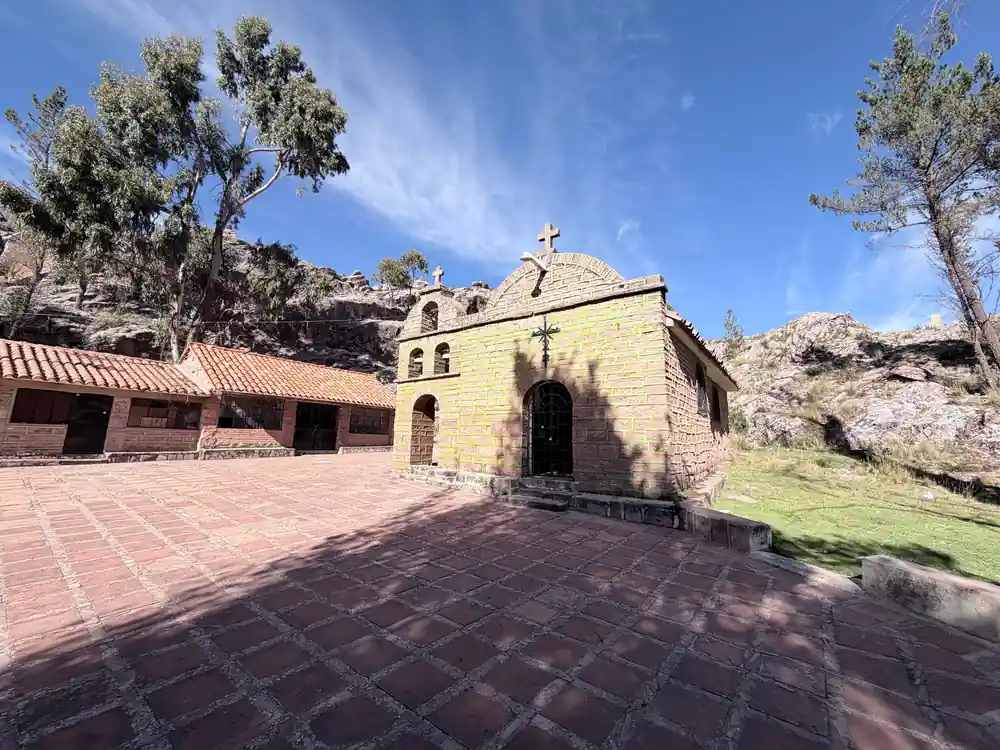
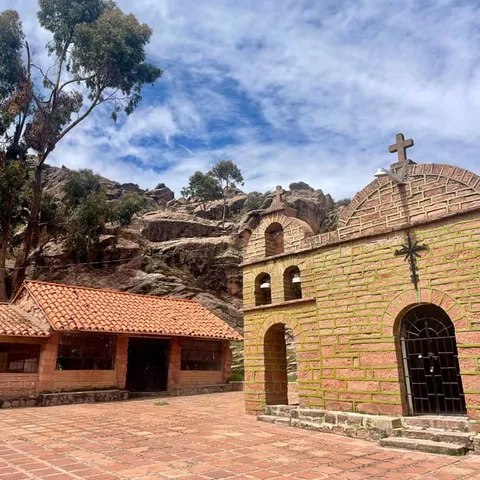
    A chapel on the ridge, where the walking starts

  3. Camino del Inca2.5 hours

    Two hours down a surviving pre-Columbian road towards the valley

  4. CHAUNACA15 minutes

    The vehicle waiting at the bottom of the descent

  5. Maragua Crater45 minutes

    Lunch on the floor, the gorge, and the afternoon at the footprints

  6. Sucre

    Back in the city about ten hours after the pickup

Map data © OpenStreetMap contributors, ODbL.

Weather

When to go

Low to high Days with rain Daylight
Source: NOAA GHCN

Temperature by month near Sucre. The temperature barely moves; the rain is what changes.

2,810 m

The altitude of Sucre, and the trek starts higher than the city does. Nothing about the day is technical, and the air is thin from the moment you land.

Practical

What you get

Included

  • Hotel pickup, drop-off and private transport
  • English or Spanish guide and a first aid kit
  • Entry tickets and a vegetarian lunch

Tour details

  • Duration10 hours
  • Starts08:30 hotel pickup
  • WalkingAbout 2 hours, downhill
  • LanguageEnglish or Spanish

Book

Check dates and availability

Powered by GetYourGuide

Reviews

What people say

4.8

100 reviews

5 ★92%
4 ★8%
3 ★0%
2 ★0%
1 ★0%

How the 13 most recent reviews scored it

What the Maragua crater actually is

Nothing hit it. The name is a description of the shape rather than of the cause, and the shape was made by water and time working on rock that was already bent.

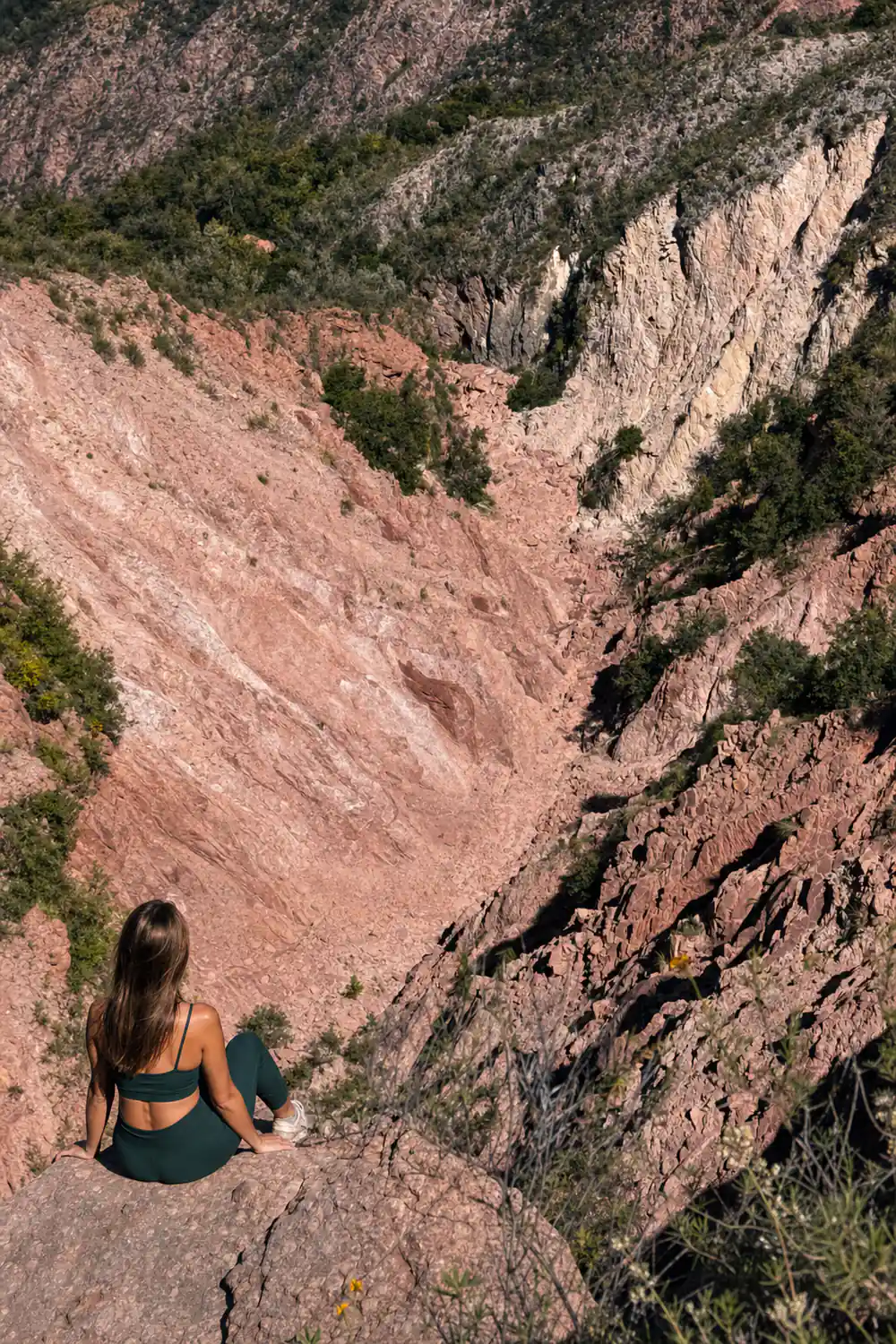
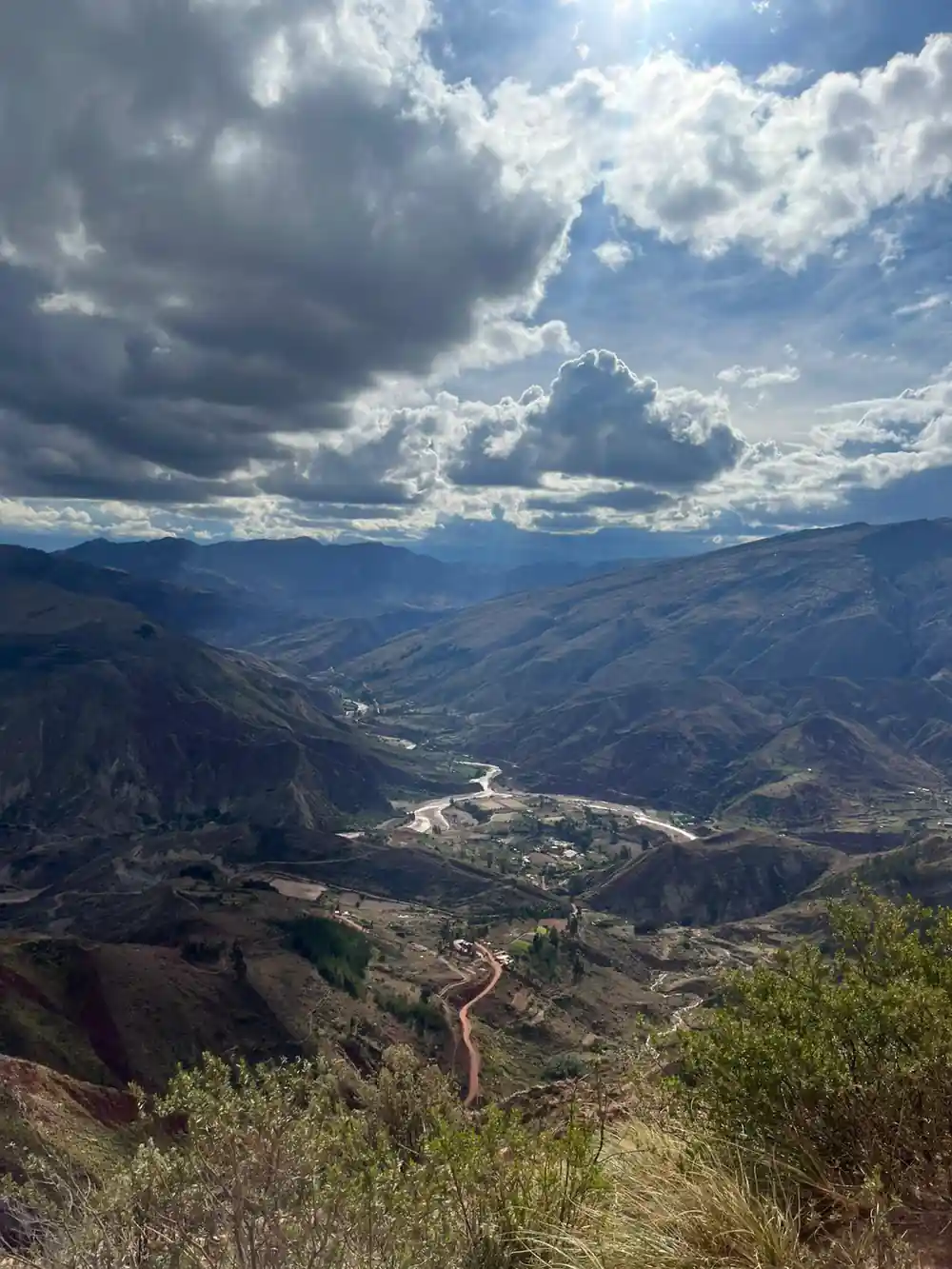
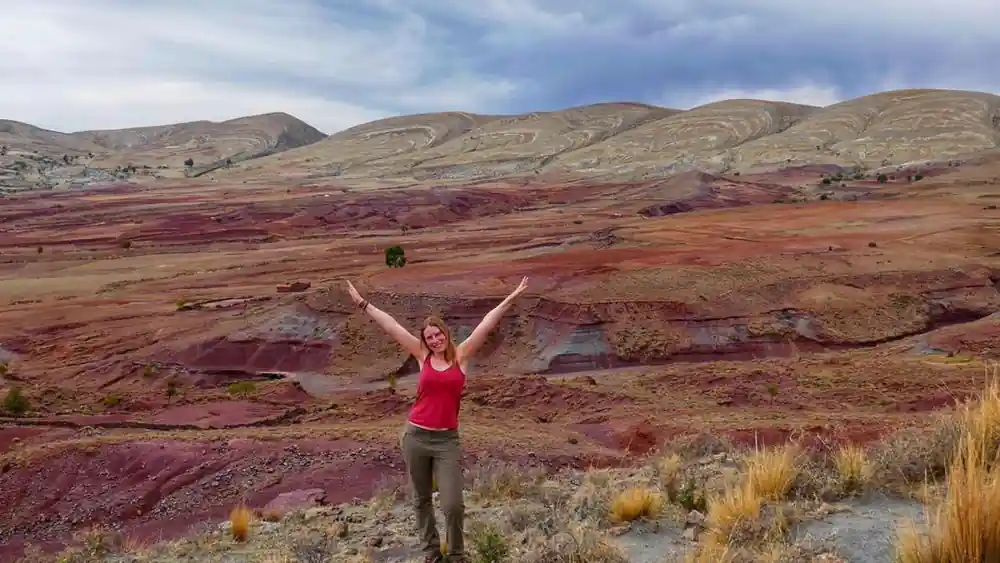
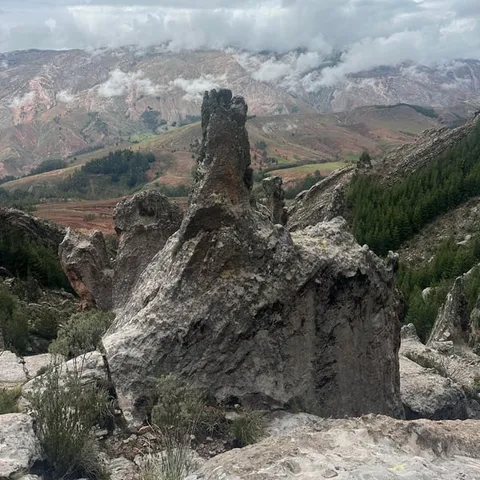
What happened is that the strata here were folded into a dome by the mountain building that raised the Andes, and then the middle of that dome eroded away. The softer rock in the centre went first; the harder layers around it did not. What is left is a bowl several kilometres across with rings of upturned rock standing around a flat floor, and from the rim the whole structure reads at once.

It is a better story than a meteorite, and it is the reason the dinosaur footprints on the way in are standing on end rather than lying flat.

The walking: a pre-Columbian road

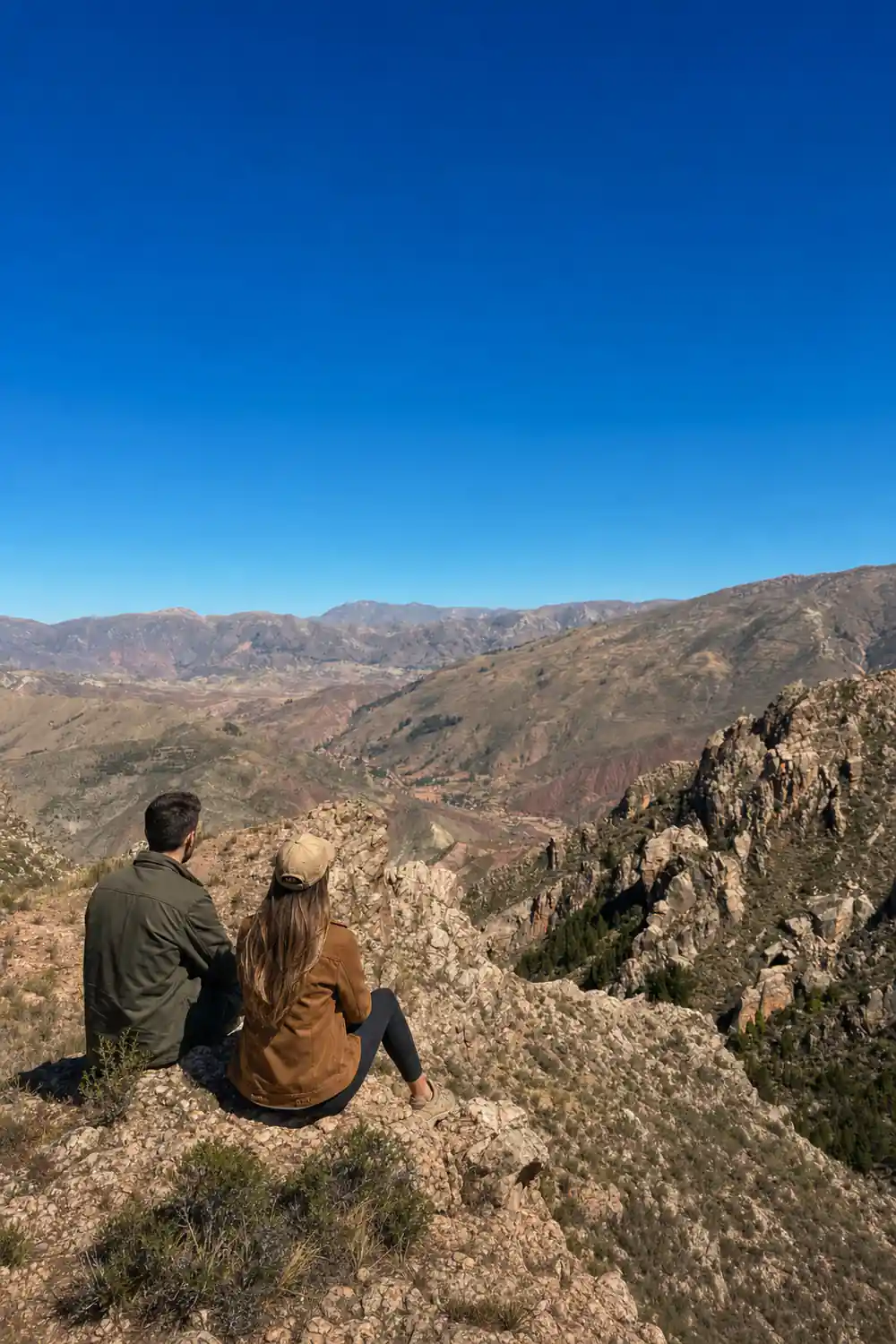
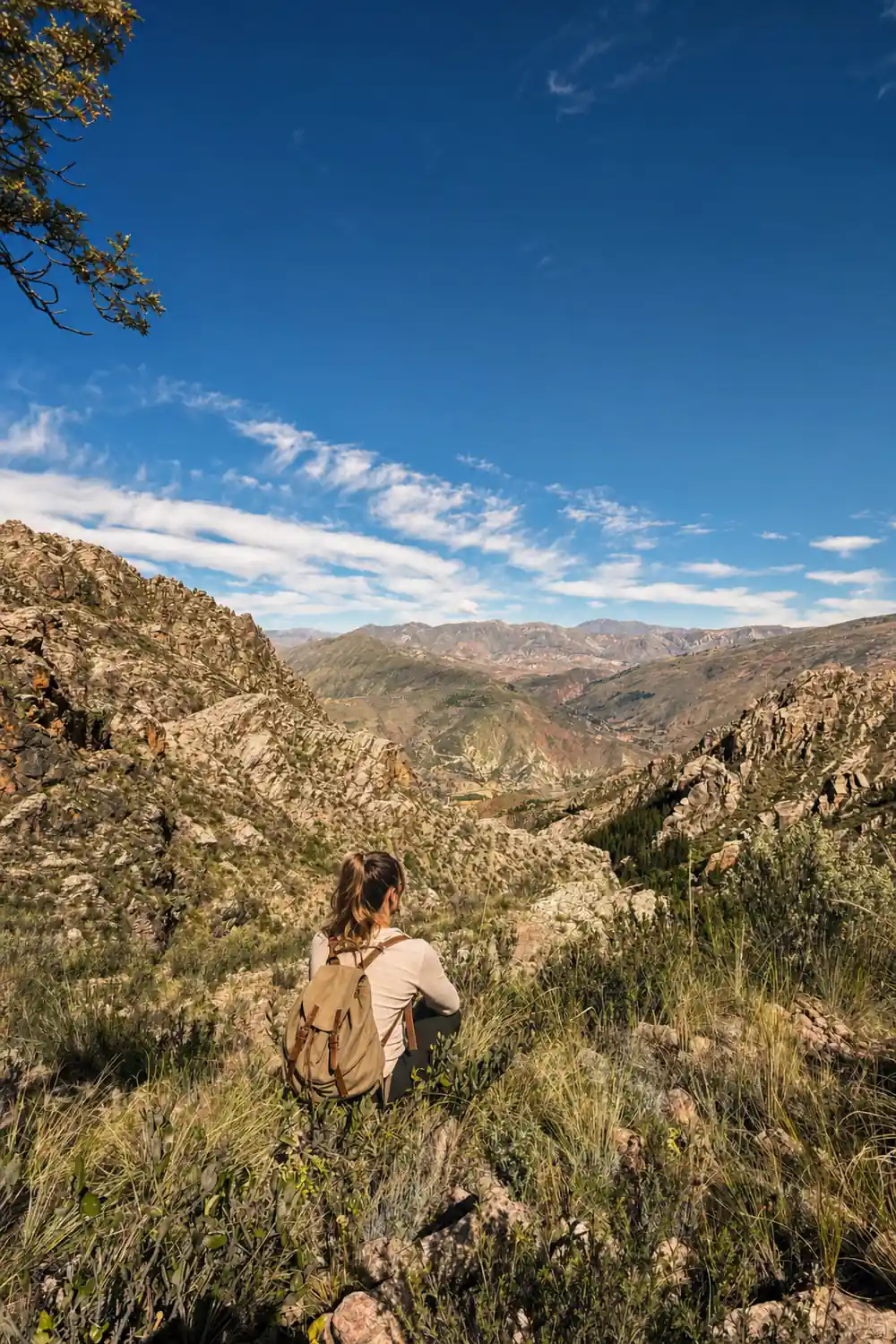
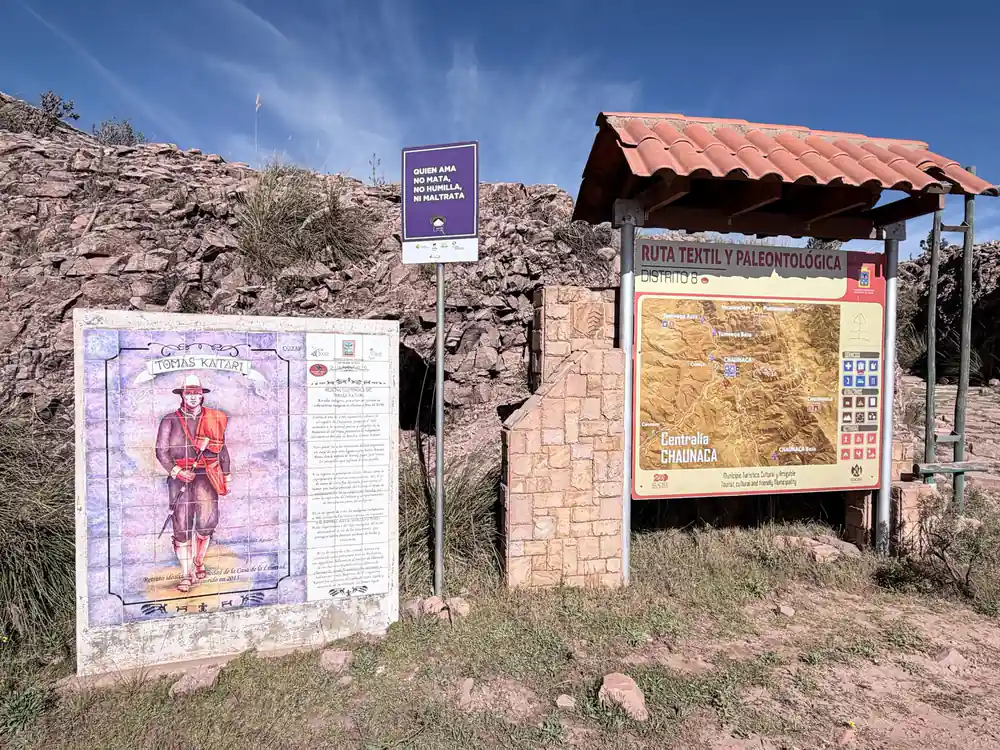
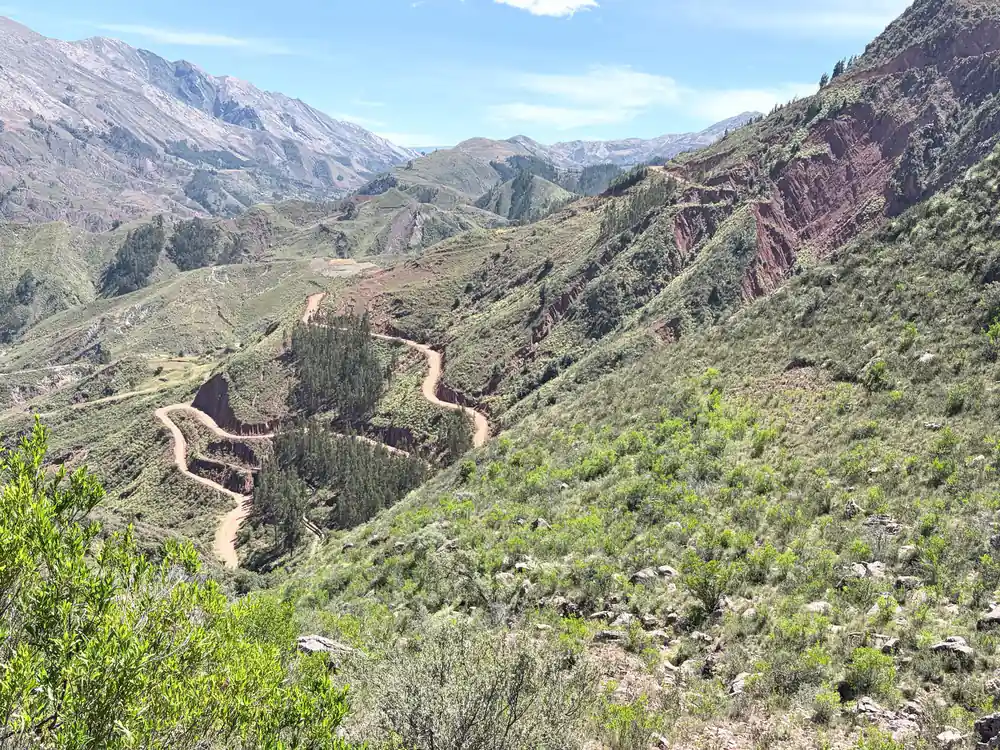
The trekking part of this tour is a two-hour descent on a surviving section of the pre-Columbian road network, from a chapel on the ridge at Chataquila down to the village of Chaunaca.

It is worth saying clearly that this is not the Inca Trail to Machu Picchu. That is a four-day trek in Peru with a permit system and a queue. This is a morning on a stone-paved road in Bolivia that almost nobody has heard of, and much of the paving is still there under your boots.

The walking is downhill and it is not technical. It is also two hours on uneven stone at altitude, which is a different proposition from two hours on a path at sea level, and the guide sets a pace accordingly.

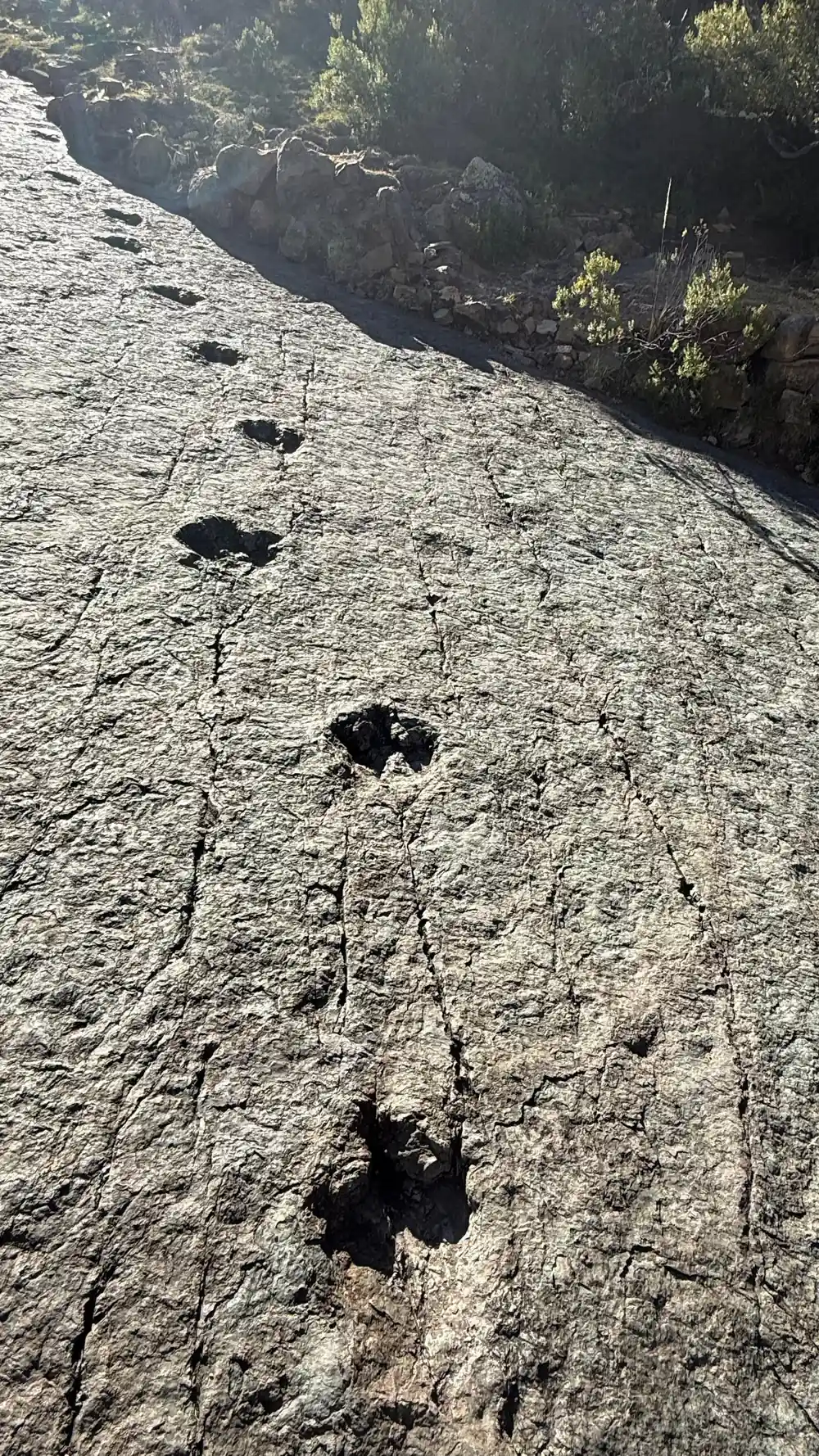
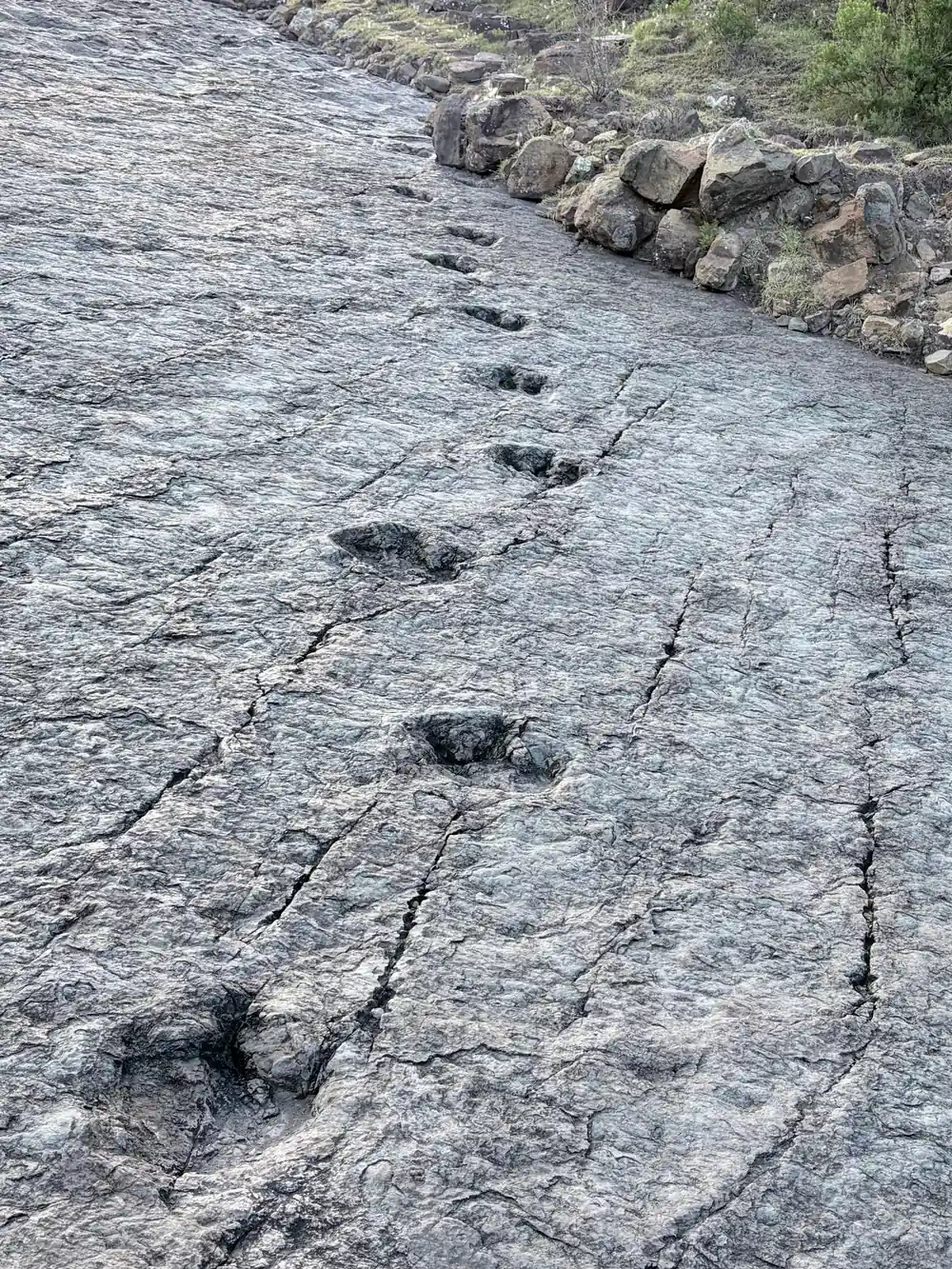
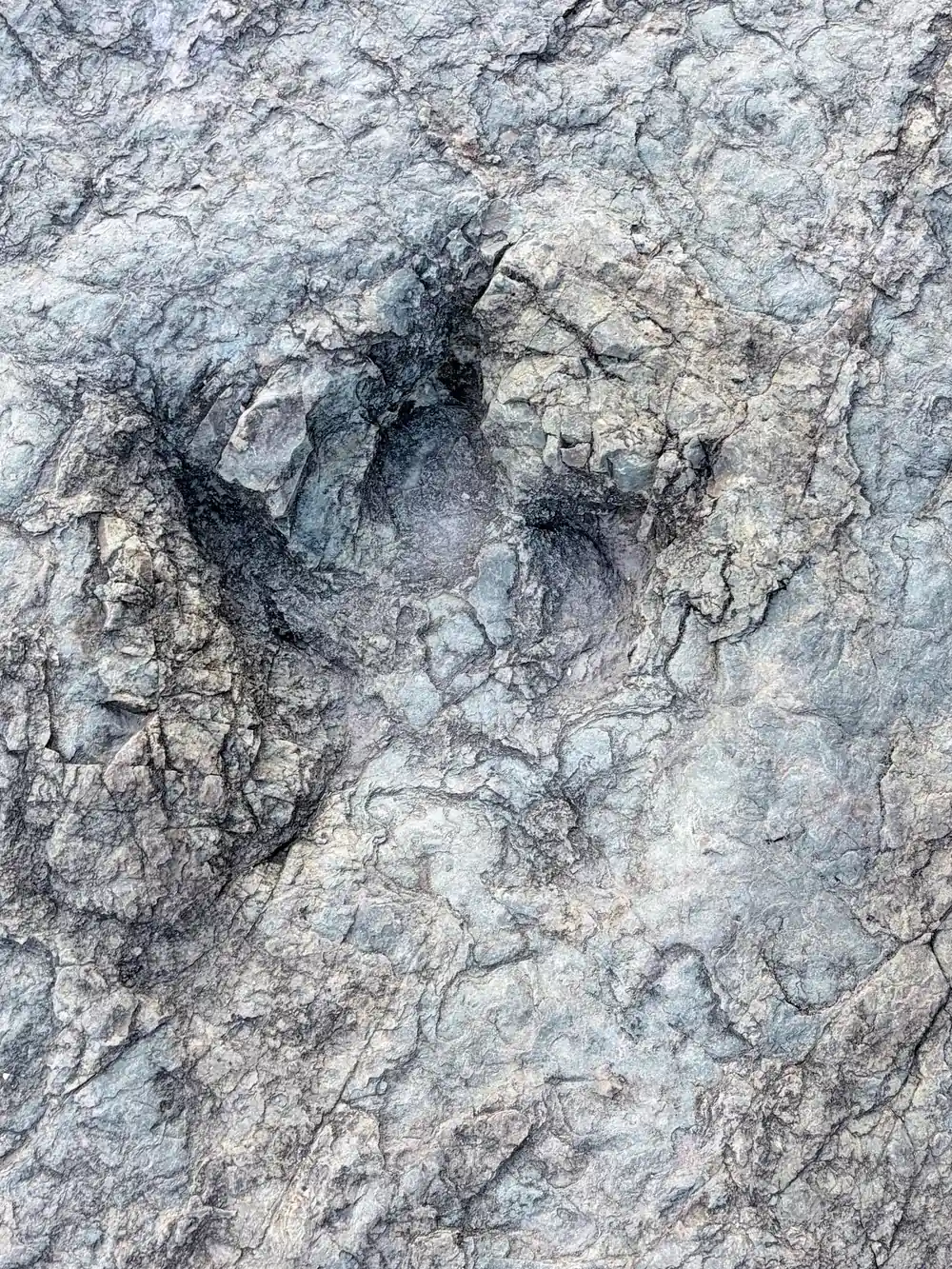
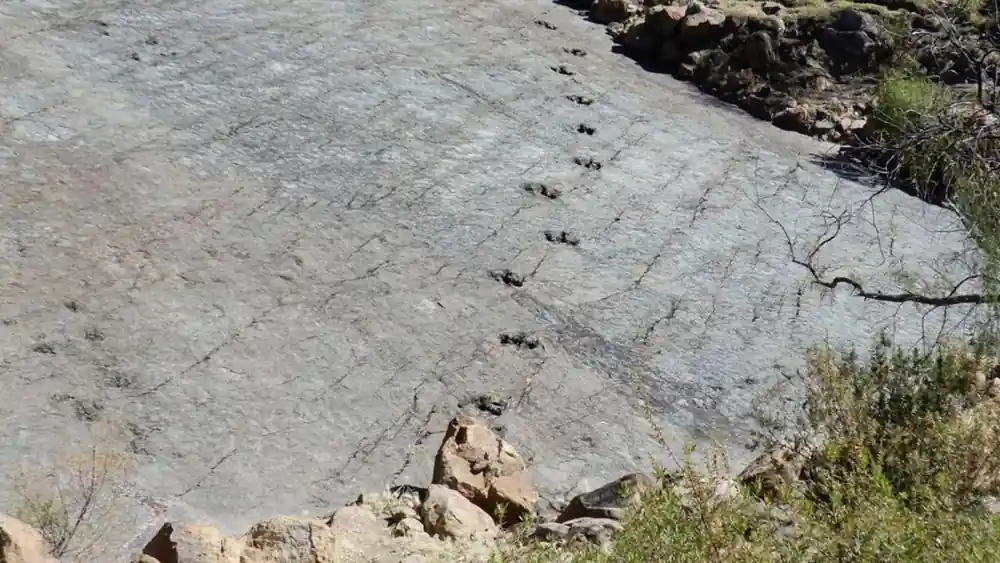
The dinosaur footprints

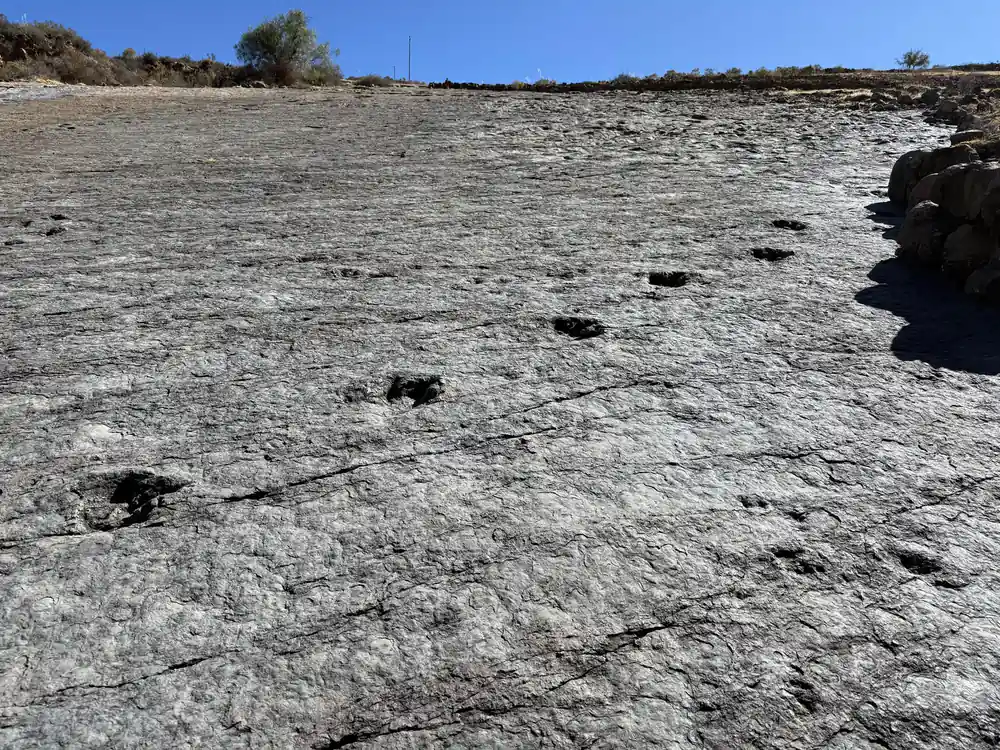
The afternoon is spent at tracks left in what was, in the Cretaceous, a flat and wet lake margin. Animals walked across it, the prints were buried and hardened, and then the whole surface was tilted towards vertical by the same forces that folded the dome.

So you look at them on a wall rather than on the ground. That single fact is what makes the site remarkable and it is also the clearest possible demonstration of what the geology has done here: the footprints prove the rock was once horizontal.

Sucre has a more famous dinosaur site at Cal Orcko on the edge of the city, which this tour does not visit. The Maragua tracks are quieter, less managed and set in a landscape that explains them.

The people who live here

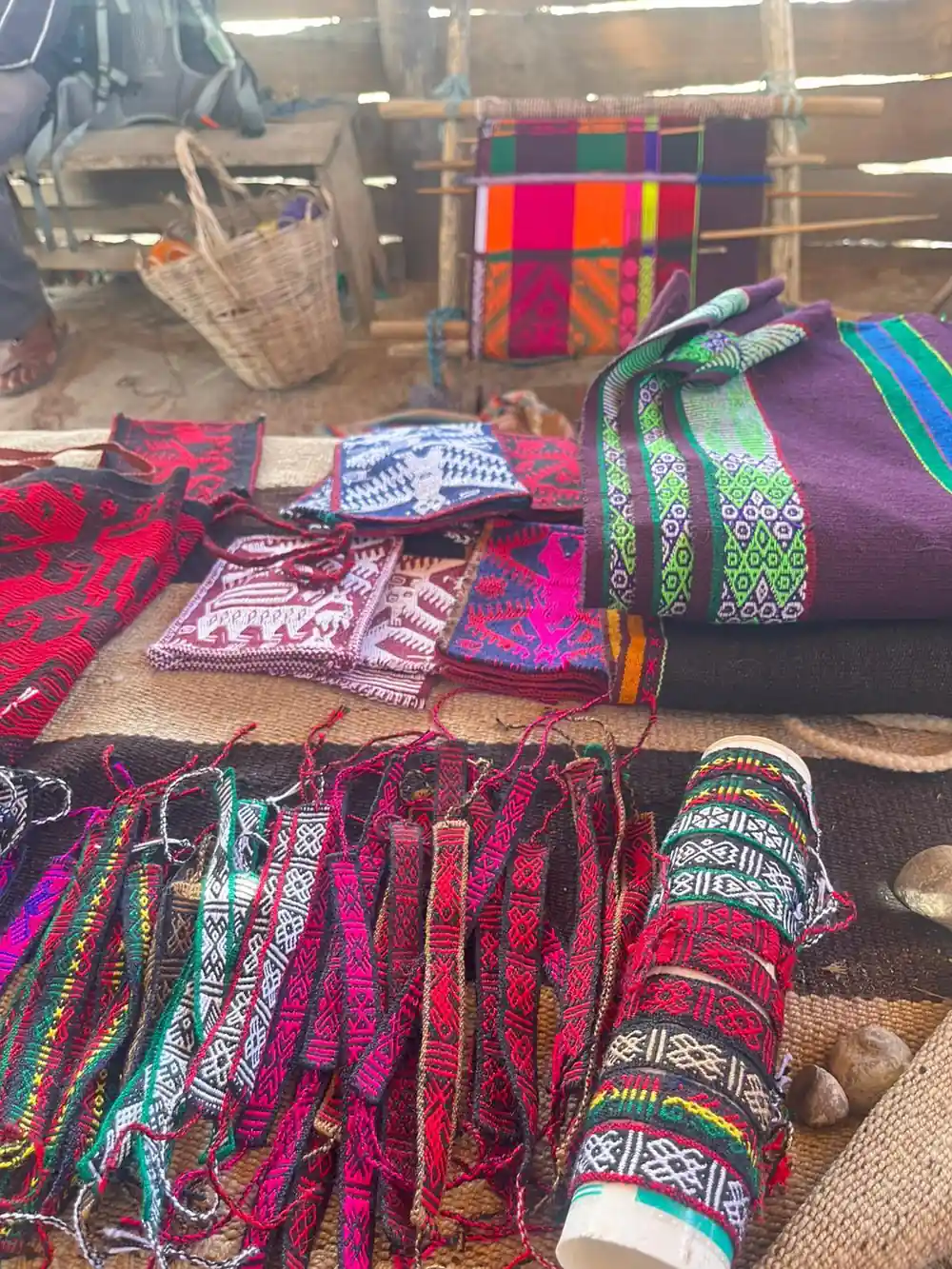
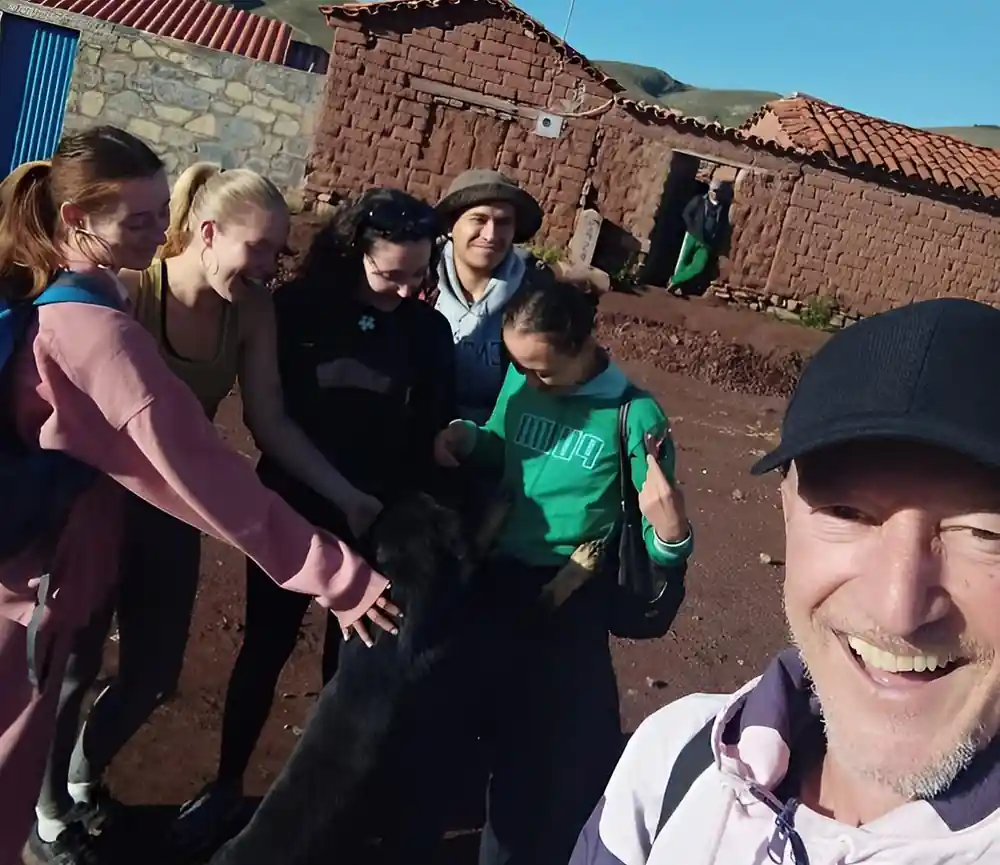
The crater floor is farmed. The Jalqa live here, and if a weaver is available the tour includes time with her and an explanation of the textiles, which are among the most distinctive in the Andes.

Jalqa weaving is dense, red and black, and populated by khurus: imagined animals, asymmetric, arranged without a horizon, depicting a chaotic underworld rather than the ordered upper one that most Andean textile traditions show. It is not decorative in the way visitors expect and it takes a while to learn to read.

Whether you meet a weaver depends on the day, and the operator says so rather than promising it. That is the correct way to describe an encounter with a person who has her own life.

The altitude, which is the real variable

Sucre sits at about 2,810 metres and the trek begins higher than the city. That is not extreme by Bolivian standards, and it is quite high enough to matter if you have flown in recently.

The walking is downhill, which helps a great deal. What does not help is arriving from sea level the day before and going straight out for ten hours. Give yourself two days in Sucre first if you can, drink considerably more water than feels necessary, and treat the first evening as a rest rather than a night out.

The sun at this altitude is fierce even when the air is cool, which is the mistake almost every first-time visitor to the Andes makes exactly once. A hat and sunscreen are not optional.

What the ten hours contain

A hotel pickup at half past eight. An hour by road to the Chataquila chapel. Two hours walking down to Chaunaca. The vehicle again to the crater, where lunch is served, and a visit to La Garganta del Diablo, the gorge cut through the upturned rock.

Then the afternoon at the dinosaur footprints, about two hours, and the drive back to Sucre.

Private transport, entry tickets, a guide in English or Spanish, a first aid kit and a vegetarian lunch are included. What you bring is water, sun protection, and shoes you can walk two hours downhill in.

Who this suits, and who it does not

It suits anyone with an interest in landscape who would rather understand a place than photograph it, and anyone who has spent a few days in Sucre and wants to see what is outside it.

It suits it less well if you have just arrived at altitude, if two hours on uneven ground is a problem, or if you want a short morning out. Ten hours is a full day.

And it suits people who like the idea of a famous thing that is not famous. The Peruvian Inca trail has a permit lottery; this road has a chapel, a gate and nobody on it.
Questions

Before you book

Is the Maragua crater an impact crater?
No. It is an eroded geological dome: the strata were folded upwards and the softer middle wore away, leaving harder rock standing in rings around a flat floor.
How long is the walking?
About two hours, downhill, on a surviving section of pre-Columbian road from the Chataquila chapel to Chaunaca.
Is this the Inca Trail to Machu Picchu?
No. That is a four-day permitted trek in Peru. This is a morning on a stone-paved Bolivian section of the same ancient road network.
How high is it?
Sucre is about 2,810 metres and the trek starts higher. The walking is downhill, but the air is thin from the moment you arrive in the city.
How fit do I need to be?
Reasonably. Two hours downhill on uneven stone at altitude is not technical and it is not nothing. The guide sets the pace.
What are the dinosaur footprints like?
They are on near-vertical rock rather than on the ground, because the surface they were made on has been tilted upright since. The tour spends about two hours there.
Will we meet a weaver?
If one is available. The Jalqa live in the crater and the tour includes time with a weaver when it can, but the operator does not promise it.
What is included?
Hotel pickup and drop-off, private transport, entry tickets, an English or Spanish guide, a first aid kit and a vegetarian lunch.
What should I bring?
More water than you think, a hat, sunscreen and shoes you can walk two hours downhill in. The sun at this altitude is fierce even when the air is cool.
What time does it start and finish?
A hotel pickup at half past eight, and about ten hours door to door.

Check availability